
Most salespeople struggle not because of a lack of product knowledge, but because they get in their own way by pushing too hard for a quick close. True sales success requires mastering the inner game of rural sales by shifting focus from pitching products to helping buyers make confident, informed decisions. In this episode, host Mark Cox sits down with St John Craner, author of The Inner Game of Rural Sales and founder of Rural Sales Success, to explore how sales professionals can eliminate mental interference and build lasting trust. St John shares actionable insights on detaching from outcomes, leveraging authentic curiosity, listening deeply, and protecting your self-worth through disciplined preparation.
---
WATCH THE EPISODE HERE
Listen to the podcast here
Overcoming Sales Interference In The Inner Game Of Rural Sales With St John Craner
The Journey to Rural Sales
St John, welcome to the show. It's great to see you again.
Thank you, Mark. Thanks for inviting me. Absolute pleasure to be here.
You know what? The real pleasure is for me, St John. I'm going to talk about the great book here, The Inner Game of Rural Sales. The second time we chatted, you were gracious enough to have me on your show. We had a great conversation. Everybody can see that show. St John, first of all, tell the folks where you're coming to us from here.
It's a dad joke, but for all the dad jokes, you'll empathise. I'm phoning you from phoning you. You're sounding old school this morning. It's very early in New Zealand, and I'm in a wet, windy, wintry New Zealand. We've had a lot of snow down south. If you're Canadian listeners, that won't be any problem. We're pretty grotty, balmy, ten degrees centigrade, which I do not know, but it's not very warm here.
It's not that warm. It's about 31 degrees Celsius here.
That would be nice.
Very warm. We do not often get this show, St John, where somebody's saying I'm in a snowy climate compared to us because I'm based in Toronto. Now the shoe's on the other foot, just the one time. Maybe for the benefit of the listeners, St John, give us, we're going to talk a lot about an amazing book here, The Inner Game of Rural Sales. Give us a little bit of the short story of your professional journey to get to where you are and what you do.
I'm a farmer's son. I'm originally British-born and met my wife in Australia, New Zealand, and never went home. That was a long time ago. I've done the big corporate games. I've done ad agencies. I've worked for McCann, Erickson, Young and Rubicon, all those big things, and done corporate. I came full circle back to my rural roots, back to my people, essentially. The reason I do what I do is that I think about sales. I really enjoyed our conversation last time, Mark. Sales is, we make it too complicated. It's actually very easy, and we get in our own way.
With the rural folk, men and women, very hardworking, and they usually have to be. Sometimes they're accidental or default salespeople. Even then, up to that management space, which we can talk about maybe later on. They're providing very necessary off-farm income for those farms to keep those farms alive. If we do not, we lose those farms. We lose food. If we lose food as a society, we're in a bit of a problem. That's my big why. That's my mission. You and I have the same philosophy. There are a lot of little ways that maybe sales hasn't been trained very well. We can get into all of that.
That's the one thing that hit me. Thank you for that. Thanks for that background. It really hit me in our first conversation. Although you take this focus on rural sales, the concepts in the book and the concepts we talked about in the show, they're so universal. Because there's some fundamentals in any form of B2B sales in it, if you put our books side by each, St John, one of the interesting things is when we wrote the sales playbook, it's almost like this playbook for how a world-class B2B sales organization should operate. Your book almost speaks to who the salesperson must become to consistently do it, to consistently execute on that playbook. With the title and the framing, you do go to Timothy Gallwey's classic, The Inner Game of Tennis. How did it come to that? How did that resonate so much with you?
The Inner Game Formula: Overcoming Mental Interference in B2B Sales
He talks about this whole formula, potential minus interference equals performance. What happens is, in sales, we get in our own way. When I'm very fortunate to jump on a stage or talk to a group or train managers, whoever it might be, the first question I always ask is, what's the most important part of the sales process? Immediately they go straight automatically to, “It's the customer,” or “It's the product.”
As you know, and I know, Mark, product schmodat, if products are so damn good, they'd sell themselves. We wouldn't need people. We wouldn't need salespeople. The correct answer is that the most important part of the sales process is the salesperson. I ask them, “What's the most important relationship in sales?” “The one we have with our customers.” I go, “No, it's the one that you have with yourself.”
What an interesting start, of course. You touched on that. You said performance equals potential minus interference. Performance equals potential minus interference. With the salespeople that you see out there, St John, what are the biggest forms of interference that actually get in their own way?
It's really simple. They sell too much. They try to sell too hard. They try to close this obsession with closing. We could talk for hours about it, which we do not have, and we won't bore the listeners with that. We sell too fast, too quickly. We prescribe too quickly, like the doctor that writes the prescription in seventeen seconds. We interrupt our prospects. We treat them like a piece of prey, like a dollar sign above their head, and we're already counting the commission.
That's how we get in our own way. I see it, and it's very sad. We just have to tell people that, actually, the problem with sales is selling. The more you try to sell, the less you will sell. You have to remember there's actually a human being across from you or on the phone who's got emotions and prejudice and fears and hopes and dreams and anxieties. You've got to be attuned to that. That's a bit of it.
How do you coach them out of that? If you see that as the old pitch, persuade, cajole, first of all, it doesn't work. When we've got folks tuning in, how do they assess what they're doing or think about it so that we can help coach them out of that behavior?
Instead of telling them, we show them with evidence. What we do is we usually record them. As with any good hockey team, football team, or rugby team, we play the tapes because the tapes do not lie. People lie. Now, people lie because sometimes they're self-presenting, formative, fear of failure, loss of status. At this age and stage, I should know all the answers. The thing is, evidence doesn't lie. We have to be evidential, not anecdotal. What we do is we get them. The best sales trainer or teacher you can ever have is actually listening to your own course because you cannot argue with it.
When you're listening to your calls, do you do the same thing, by the way, St John? Do you listen to your own calls and record them?
I had my own AI tool, shameless sales plug, which we won't get into. It rates me, and it's savage. It's a really hard scorer. It will traffic like me, and it will say, “You were talking too much,” or “You interrupted,” or “Your curiosity wasn't good,” or “You did not establish priority and urgency,” or “You did not build the business case before you presented the price,” or “You did not identify the buying committee.” I'm always scoring my own performance. I have to eat my own dinner.
Where do you fall down the most these days? If you were to analyze the last 2 or 3 weeks, you said talking too much was one of the things you brought up. By the way, it's so great to be a sales coach, a sales trainer, an author, a successful author, and a lifelong learner. This is like professional athletes, trial lawyers. They never stop learning to try and get that few percent better. I know you reference James Clear in your book, and some other great thought leaders will talk about those Atomic Habits. What are you working on specifically for you? When you think about talking too much, what percentage should we be talking versus listening in a sales call?
Look, there's lots of schools to vote on that. I'm going to be, I'm going to be the politician and say it depends. Really, if you're over 50% of talking, it depends on the persona that you're talking to. If you're talking to an analytical buyer, if you're talking to a commanding corporate buyer, you want to be quite short and have brevity and get straight to the point. If it's an analytical buyer, they probably need more information because they're very considerate. I really run a rule. I suppose the big thing for me is that when I listen to my calls, my self-awareness grows, which is really important.
That's one of the biggest traits I look for when I vet salespeople, is I probably do talk too much and maybe over-explain things. Maybe that's the curse of knowledge. Your listeners are probably hearing it here. What I've got to do is I've got to really make sure my conversations count. I've really got to make sure they land and actually have what we call a pregnant pause. The thing is, I've got to give people time to process what I'm saying.
Deep Listening, Curiosity, and the Power of the "Pregnant Pause"
Tell me about the pregnant pause. Actually, what does pregnant pause mean? Do you know the true definition of pregnant pause?
No, I do not. I would love the answer. Who's heard it? That's all I've heard. The power of pause.
I'm no genius on pregnant pauses. We were running a workshop the other day, St John, and I brought up that term, pregnant pause. Somebody said, “Do you know what it means?” I said, “No.” They said, “The idea of a pregnant pause, the symbolism is that when you're pregnant, you're waiting for something to happen. Once it happens, it's fantastic.” You're pregnant, you give birth, but you're waiting and waiting.
I love this idea of the pregnant pause in communications where you've said something, you're waiting, you're listening to make sure that person has got whatever's in their head out before you jump in and start interrupting them. A past guest we had on the show, St John, I'm going to start the conversation. His name's going to be Oscar Trimboli. I was waiting to find his name.
You're deep listening, which is on the desk here. When you kindly came on our show, I just read your Cracking the Curiosity Code by Diane Hamilton. When you give me books, I actually read them.
The most important part of the sales process is the salesperson. The most important relationship in sales is the one that you have with yourself.
Way to go. Isn't it great, Oscar Trimboli? 925, 425, 125.
Amazing book.
Folks, just for those tuning in, the 925, that's how many words the average person can think a minute. 125 is the number of words the average person can speak in a minute. They're thinking far faster than they're speaking. They're not getting everything out. Generally, they're getting like 16% or 17% out. The 425 is how fast we, as listeners, can process what they're saying. There's also a gap there. They're speaking at 125. We can listen and process at 425. Our brain keeps going, “I got to jump in. I already know the answer.”
“I want to say this. I want to say that.” This really interesting point there with listeners is that sometimes, as sales professionals, we've seen the same scenario play out. Again, I'm sure you've seen this as Mark as well. You go, “I know the problem. Just shut up and listen.” It's like actually cathartic and it's really important for your prospect to process their own pain and have ownership of that or that specificity of the pain because then it lands them because they do not believe what you say, they believe what they say to themselves.
How well said. By the way, even though you've seen it ten times, what you're doing is you're noticing that pattern, and then you cannot wait to jump in and say, “I've seen this before, I know exactly how to fix it.” You're exactly right. They're not one of your ten examples. They're individuals with personal needs, wants, desires, and a better future. Their situation is important and specific to them. They do not care. They do not care about the return on investment we might talk about for our sales training for ten other companies. They care about exceeding their sales goals for their company this year, and they're sweating.
I love that, St John. Team, by the way, this is a book. We're talking about the inner game of rural sales. We're talking with St John Craner. By the way, the book is so well put together, three acts. Master yourself. Master the game, and then sustain yourself. Put your oxygen mask on first. There are so many authors that St John references that we love. All of those folks from James Clear, all the way to Benjamin Hardy. I know Benjamin. He's in the same entrepreneur's coaching program I am called Strategic Coach. He's got it. Is Willpower’s Not Enough the book that you?
Yes. He's got 10x is better than 2x. He's got so many good books.
Many great things. Let's pick a couple of these topics because it's so clearly and precisely laid out. We talked there. We're talking there a little bit about curiosity and a little bit about conversations. If we get to stay on the master yourself, talk a little bit about self-awareness. Let's talk a little bit about detachment. This was one of the really cool ideas in the book that said, “Forget about the outcome. Stop getting attached to this outcome. I need a qualified sales opportunity. I need a sale.” Think about committing or attaching to the process. Let's talk a little bit about that, St John.
I'm so glad you picked up on that because that is a very hard muscle to grow. I've struggled with that as a past life and as a younger man in sales. The thing is, we sometimes push or cajole our prospects through some complicated funnel process. They do not want to go there. It's like pushing a cow through a drafting gate. I'm using some biological farming terms here. They do not want to do it. They do not want to go. The conversation becomes rather jagged. It becomes artificial. It comes off as disingenuous, and you're ticking boxes and all those things. The reality is no one wants to be sold.
Detaching from Outcomes to Act as a True Buyer's Assistant
Everyone loves to buy Jeffrey Gittermore. Your job is not to sell anything to anyone. Your job is to help your buyer make good, accurate, and informed decisions because selling isn't about selling. Selling is about buying, but that's not enough. Selling is actually about deciding, and deciding is about human behavior and psychology. The first person we actually start with to master is ourselves and our own psychology, because the highest form of intelligence is knowing thyself, as Plato says.
What we do is we have to understand that if we push, we repel. If we ask, we pull, and we pull people towards us. We want to attract people towards us with sincerity, with authenticity, and sincere intent behind our questions, which are curious by nature. We could talk about that for hours. If you do that and you create those right conditions and the buyer feels safe and they know your true intent, we call this, and I think you might pick up on this, we call this a buyer's assistant.
I like that term, by the way.
We do not call it a trusted advisor because everyone's self-congratulatory. I have nicknames, Mark. You do not know me well enough. Mine are revolting, and I've got terrible friends. I do not self-title myself, self-appoint myself a trusted advisor. I do not want to be a sales rep because that appeals to the wrong part of the brain. What I need to do is I need to be a buyer's assistant that detaches from the outcome, it's early, but attach myself to the process of seeing if I can qualify and clarify if I can help this person with this specific pain or problem.
Now, when I take that intent, it's called emotional contagion. We can get all psyche here, but they feel what you feel. If I'm salesy and nervous and desperate and needy, they pick up on that. If they feel I'm calm, confident, and have conviction, this isn't a problem. No is a perfectly okay answer. Please take your time. I want you to make the best decision because it's an important one. They feel that. The problem is that selling to people doesn't make them feel very safe.
What we do is we say, if you detach from the outcome and attach to the process, which is very simple, just qualifying, clarifying if you can help your buyer or not, and helping them make a good decision, which is what selling is all about, because selling is about deciding. You're going to have a different dynamic. If you do it really well, the customer actually ends up closing themselves, so you do not have to.
The desperation being repulsive, that's the story of my dating history in high school. I wish we had this conversation a number of decades back. That could have made the transition through high school and early university a lot more fun for me.
I hear you. I'd be the same if I only knew then what I know now.
I know we wouldn't have used it for good. How fantastic, by the way, this idea of the intent. The emotional contagion, I love that too as well. St John, such a great thing to bring up. People always ask us, how do I walk into a sales call and make the actual buyer believe that I care about them having a better future? The answer seems so trite, but it's to care about them having a better future. You want to show the buyer that you're trying to help them.
There's no trick to show them. Go in with that intent that says, “I'm just trying to interact with somebody and help them and be able to provide value and insight and knowledge and guidance, but make sure all of it is directed toward them having a better future, not me developing another qualified sales cycle or putting some cash in my pocket.”
You say this so well, and there are a couple of things here that might be useful that I've learned painfully, because I'm a very slow learner.
Without that, by the way, based on this conversation, I've already learned more than I hope to.
To help your audiences maybe a little bit more, what I've learned along the way, for my $0.2, is that I always say to my students, you need to be more interested in the person in front of you than the product or service that you sell. Now, here's another little fun fact for people, because obviously Mark was on my tiny little podcast, which is so generous. I reckon one of the nicest guests we've had because you're a Canadian.
Evidence doesn't lie. We have to be evidential, not anecdotal. The best sales trainer or teacher you can ever have is actually listening to your own calls because you can't argue with it.
St John, thank you.
We were. You were, because you cross-promoted us. Many do not. Anyway, so you talked to me about being well-read. Now, I was reading a book. Do you know where I get all my best sales training ideas? From parenting books. I was reading this book. It's really interesting. Listen to this. This is really interesting. Around the brain, I'm always learning about the brain because, basically, curiosity is a layman's term for psychology. In your brain, you have the parietal lobes, and they're about 25% of your brain at the front of your brain.
They're called the artist lobes. When we say to someone, which we should not say, I know Mark would agree, you do not start your conversation saying, “I'm not here to sell you anything anymore.” Their temporal lobes, their parietal lobes, are responsible for the visualization of language. That's their job. Twenty-five percent of what they hear is, “You're going to sell me something.” It processes that. When you say to a child, do not, you're a teacher, elementary school, do not stand on that chair. The kid hears 25% of what they hear, stand on that chair.
This is why it's so important to cultivate curiosity about yourself so you can tune into yourself and tune into others. This is the whole point I wrote the book because, so many, it doesn't matter what vertical, what you're selling in, FMCG, SaaS, tech, agri, farming, whatever it happens to be, the same principles apply is that you really have to get deeply curious and it opens so many more doors for you. You have to start with yourself.
Harnessing Brain Science and High-Impact Questioning in Sales
By the way, great. It's almost, again, our books are very similar, I think, St John, in a number of different ways. I couldn't agree more in terms of the impact of curiosity. We've talked about a couple of different authors we've had on the podcast whose entire methodologies, their PhDs, were just on the impact of authentic curiosity. Folks, we've all had those friends in our lives, and we have them now. There were a couple of leaders back in the day, a couple of them, even now when I see them, super successful people. When you're speaking to them, they're so zoned in on you. It's just incredible.
They just want to know everything. You have a conversation with them, and you're so interested in them because these are some of the most successful people I know, so I always meet them for a coffee, and I'm really trying to pull stuff out of them, but they won't have it. They're wondering about me and this. You're almost fighting to get a question in, and then I'll leave. My lovely wife, Donna, will say, “How was it meeting John for a conversation?” I said, “I love meeting John.” She'll say, “What's going on with John?” I'll go, “I actually do not even know. He wouldn't let me ask him any questions.”
It's so true because there's another beautiful quote that's often quoted, and I hope I cite it well or source it well. Maya Angelou says, “This obsession we have with product, we actually need to be obsessed with the person in front of us.” I say not in a creepy way. They do not care how much you know till they know how much you care. This obsession with product and feature creatures shows up, throws up, verbal vomiting, like it's got to stop. The thing is, you talked about care.
Coaching is about caring because we coach the person before we coach the player, because the player won't play for the coach unless they know they care. When we talk about talking to a client or a prospect, we have to convey a sincerity of intent or care. They distinguish that by the quality of our questions. You, Mark, ask very good questions. Traditional sales training for me is so broken because we say, “When they say this, they say that.”
It's like a joust. It's like a fight. Honestly, the stuff I see on Instagram with the bros, I just think it's damaging. It's dangerous because it's like a battle. It's not because if you take that intent going in, it's going to put it in the back of your brain. The point of the matter is you have to convey your sincerity of intent to serve by the quality of your questions, and you'll be judged not on what you say, but on what you ask.
I love that you talk about sales as serving. I really love the quality of your questions. It shows your effort. That brings up such a good point as well, St John, in that critically important interaction with a buyer. We do want to be curious. Frankly, their engagement with us is going to be based on the quality of those questions. For example, if we come in and go, “What's keeping you awake at night?” In this day and age, they're going to politely grab you by the scarf at your neck and throw you through the door.
They're going to quietly throw up inside their mouths. Tell me what your biggest pain point is. This stuff went out in the 1980s with power sets.
It went in the ‘90s with my hair. Different story. We cannot get any of those dates back, by the way. I've been searching for Doc Brown's time machine for a number of years to fix the problem with my hair. These are really important things to take away. One of the things, I love your opinion on this St John, we write a little bit about is the quality of that sales call with the buyer, is it a certain level where they’d actually pay for it. Now, that's a very high bar. When you're going in to have that conversation, and you're working together on something, is it at that level where it's so helpful and effective because of your value, insight, knowledge, the quality of your questions that they'd actually pay for it?
I love that as an assessment or an evaluation of it. It really comes back to what we've been talking about is your job is to serve. It's not to sell. I talk about Serve to Sell. That will be the next book.
Great title.
Thank you. I use it as a mantra because it gets me in the mode. When I say mode, I do not mean performative. It means I set myself up saying my whole job here with Mark is to be non-assumptive, make him feel safe, ask him really good questions, show him that I'm more interested in him than I am in myself, and then qualify if we can help him or not. Now, I did not mention the word sales once. That's it.
If I could push a little bit, St John, my mission in life is to make sure people understand what you just said is the definition of sales. All that other stuff that we bucket sales into is a stereotype that's 50 years old. If you've sold anything material, if you've done material things, sold major transactions, you did not do any of that pitching and cajoling. It just doesn't work. You did what you just talked about.
By the way, when we've got the show notes in the transcripts team, I would be absolutely copying St John's feedback here verbatim. An even better way of doing that is when you go and pick up his book, an Amazon bestseller, The Inner Game of Rural Sales. The link will be in the podcast here. Team, we talked about the three sections of this very well-written, interesting book, master yourself, master the game, sustain yourself. St John, let's go to that third section for a little bit here.
I need to put that in.
Building Resilience and Sustaining Mental Well-Being in Sales
It's just one of the things that I have a lot of empathy for with everybody out there, whether it's sales leaders or salespeople. Everybody seems to be talking about what goes wrong with sales organizations. First of all, we see a tremendous amount of what goes right now. These amazing people are doing really difficult things. Frankly, it's so critically important for their organizations, large and small, whether they're publicly traded, to make sure everybody has a good future. If they're a small business, revenue growth, the right sale, check, fixes everything.
Sales solves all problems.
It's just so good. I know we all have tough jobs to do, and it's so critically important. How do we actually think about the longevity aspect of this? A career in sales, managing the ups and downs, the rejection, the ebbs and flows, the need for resilience, the isolation in some cases. Let's talk about some of the strategies.
I'm so glad you picked up on that, Mark. I'm just going to, again, I'm just going to make you very uncomfortable and give you another compliment when you came on my tiny little show.
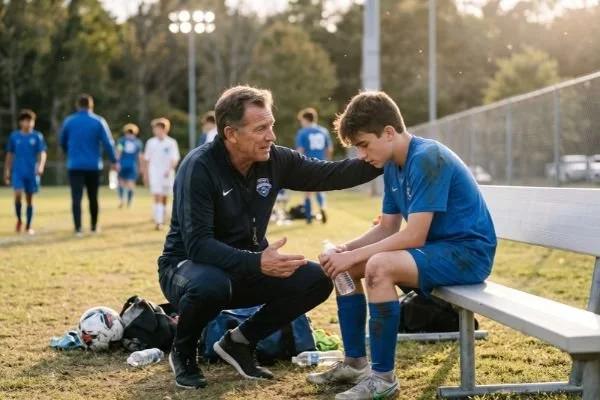
Rural Sales: They don't care how much you know till they know how much you care. Coaching is about caring because we coach the person before we coach the player.
Not a tiny little show at all. It was one of the best interviews I've had. It was fantastic.
You said something very personal, and it really, it really, we got a lot of views. I sent it to you, remember? You talked about if you have to, you reminded me so selfishly as an audience of one, even if it was what the gift that you gave us was that you're not going to win them all the time. You won't win. That was such a healthy reminder. I want to remind everyone that as long as you prepare, do everything to prepare to win, and you do not win, and you leave no stone unturned, which is the concept we talk about.
If you leave no stone unturned, if you did everything you wanted to do, if you did that and you prepared to win, but you did not win, That's okay, because sometimes you're not going to win. The beloved All Blacks here do not win every game. Your hockey teams do not win every game, but you need to do everything you possibly can. What we're talking about here in terms of sustaining yourself is your self-worth. Yourself concept. What we do is, here, I'm just going to do something very flashy. Look at this, Mark.
That is flashy. Our shows are moving to video, by the way. This is coming out on YouTube first, but then it'll be on all of the platforms.
It's very early, and I'm pressing buttons, hoping like hell it is going to work. We talk about the three selves. There's a shame self, there's a current self, and there's a future self. What happens is that the way you sustain yourself is by doing difficult things and proving yourself. James Clear talks about how the actions you take are the votes you make for your future self, your future tomorrow. This whole concept, and I probably bungled that as well, is that the most important thing is called a psychological contract. This is why I'm talking about the mindset behind sales.
It applies to any vertical if you break the promises you make to yourself. Mark, I know you do this wonderful charity gig with the drums. I know you're trying to get fit again because you work really hard and you travel a lot. When you do not do the things you said you were going to do and you break the promise, you actually rob yourself of belief, conviction, and confidence. What happens is we call this. Psychologists call this breaking a psychological contract because we all have inbuilt standards. When we violate our standards, we drop into shame.
If we actually do the things we're supposed to do, we rise to our future self much faster, which is where you're going to be more successful. I really just wanted to share that with the guys and girls because that image is really all about making sure that you have high levels of self-worth. Now, I'm going to drop a heavy on the team here with your permission. Forgive me. If this is a hard hitter. If you're currently listening to this and you really struggle with the no's and the inevitable knockbacks and rejections, I have some advice for you, or maybe a hypothesis.
The reason you're feeling these rejections, and they trigger you so hard, is that you're rejecting yourself. The reason you're rejecting yourself subconsciously, unconsciously, not aware of it, is because we cannot do something until we see that something is not doing what you need to do. When people say no, it's because you did not do the things you're supposed to do. Therefore, you feel hypersensitive to that rejection because you subconsciously already rejected yourself. That's why it triggers you. That's my hypothesis.
Let me play that back just so I understand it, because it's really, really important. By the way, that was fancy, the way you shared that screen, just for future reference. Engines do not ever show up on my own show. Do not come in here.
I'm not coming to Canada either. I know that.
Do not come in here with your fancy New Zealander technology.
I’m nowhere near the bonus, I know.
Do not come in with that fancy New Zealander technology and try to flash me on my show. Listen, I built this thing for three years.
Too much flexing.
That’s it. Let's talk about that. If I've well prepared for a sales interaction meeting with a client. I've done everything I can within my power to properly prepare, properly do the work, and I lose, then I can just say, “Listen, I want to learn from this, and there's always going to be that opportunity, but that's going to happen.” This is the game. Nobody's got a 100% win rate. No goalie in hockey stops 100% of the shots. No baseball player gets 100% of the at-bats.
Got it. If I do not make that commitment, and then I show up for a sales call, and I haven't had my best self, and I did not do the preparation, and I skipped some steps, and I'm not in my best self. I'm pushing, and I'm trying to cajole. It seems so obvious. I'm getting a little frustrated. They cannot see the answer, and we lose. I'm chipping away at my self-confidence.
Protecting Self-Worth and Internal Validation Through Preparation
Correct. That's why it's, again, another painful lesson I've learned. I'm 52 now, so I'm a very slow learner. What I did not say was that. I wouldn't say it was the best lesson I've learned. Is that your value does not come from external? Your validation comes from within by doing the work. This isn't woo-woo spiritual, and I'm not in any way being unkind to people on that. It's just doing what needs to be done. It's planning, preparing, being a professional, not winging it, not wasting it, respecting people's time, turning up with the right intent, asking the right questions, and being that biased assistant. If you did everything you possibly could, your self-worth remains intact when they say no. It's very simple. That's how you sustain yourself. That's how you pick up and go again.
For the amazing team of Sandra and Melissa, who do the quotes for this and team leave this in the show, that's the clip. There's nothing I'm going to say in this show before or after that clip right there that's going to be of more value to the people tuning in. Of course, all we can do is control that which we can control. That also helps, I think, St John, at least for me, and this took a long time for me to get comfortable in my mindset that says, “I'm in a world where I'm trying to influence somebody to make a decision on my timeframe, not theirs, perhaps, to invest money they did not think they needed to invest in a product or service they did not even think they needed until we started having a conversation.”
There's a lot of uncertainty in that world. Add to that the other things that'll take place, macroeconomic factors, microeconomic factors, industry trends, technologies. For the last dozen or so years, we in B2B sales, we've had a few things come at us here, as everybody in life. To be able to navigate the uncertainty and to be in this for the long haul, I love this idea of just saying, all we can do is do our best. There's going to be so many people you talked about in your early days in the UK. My parents were British, and God bless them. They were dynamite.
Even I was always somebody a little bit too intense and trying too hard in everything. They said, “Listen, relax, just do your best, but do not worry about what happens. There's going to be a slap shot team that comes from the point, goes off the ass of two players in front of me, hits the post, and goes in. That's going to be one. For me, that's one every three shots. On most NHL goalies, that's one in 95 shots. It's not a frequent occurrence. Just do what you can control. It gives you this calm that there are portions of this that we do control, which is how we show up.
I love how you snuck in there too. Again, the intent, the intent. There was a great guy, St John, Dr. Nick Morgan. We were on the show. He's got a couple of books. He coaches folks at Harvard. Due to a brain injury when he was very young, he realized he had some real trouble communicating after a brain injury. It took him a year to get back to normal. He chose a life of studying nothing but brain science. One of the things he found is, and I'll get the specific numbers wrong, but when we're interacting with someone, there are conscious triggers that we can spot.
St John's smile, the movement of his eyes, his body language, how he's leaning, the angle of his head and his hands, all these things. There are these conscious triggers. There are literally a thousand times unconscious triggers where you can pick up on the intent of somebody. This is the reason you go to a cocktail party, you meet somebody, and immediately you have this great connection with somebody. You cannot explain it. You feel like you're old friends. The same thing happens every once in a while where you're at a cocktail party, and you just get introduced to somebody.
You need to be more interested in the person in front of you than the product or service that you sell.
For whatever reason, they're saying all the right things. “Mark, it's great to meet you.” You really are almost repulsed. You can tell the intent. They're these subconscious things. Getting, not just saying, these things, but believing you're there to help that buyer make a better decision, help them achieve a better future, a better outcome. If you just drive that in, in terms of a mindset, pre-call preparation, you're going to drive better outcomes for you just by default because that's what they need.
We talk about stoicism here. If you can only control the controllable, do your best. Doing your best is actually respecting the prospect and actually turning up with the right intent. It's really interesting. You've just got to make sure that you show how much you care, and you convey that by the quality of your questions, and the quality of the questions will then convey a great conversation, because all sales are made in the conversation, not the estimation. Quotes do not qualify. It's incredibly important to do that.
Top Sales and Psychology Books for Lifelong Learners
You reference the questions. You just keep coming back to the questions, which I think is so critically important. By the way, you also referenced Diane Hamilton's work on curiosity, two great books. Let's ask the obvious question. What are your favorite sales books of all time? Let's just start there because people tuning in are like you, St John. They're going to take a tip or two, and they're going to go buy these books and read them. What are you reading that you love? You reference Carol Dweck a lot in terms of money.
There are so many.
I see your library, by the way.
It's an absolute mess. I will tell you the best sales books. I think of psychology books. The best book I read about human behavior and decision-making was Thinking, Fast and Slow by Danny Kahneman. It is a hard book to read, people. Take it one chapter at a time. It's going to require a lot of you've read it. I've read it. The executive summary, the extreme executive summary, is prospect theory or loss aversion. That's the main thing I've got, but there's so much more, system one, system two, and everything else. I love any books about the brain.
There are so many books. It's such a hard question to ask. I think anything that has to do with psychology and human decision-making. I'm a massive fan of Dan Pink, so you've got, if you've got Dan's number, up Dan, we'd love to talk to you and come on a tiny little show in. New, you should grab, and you should go for anything by Dr. Robert Cialdini. It's amazing. Influence was the first book I ever read on social science. That then literally paved the way for me to start reading the way I did. Those have probably been my seminal books.
The book that really moved me is Man's Search for Meaning by Viktor Frankl. When I say books, you say sales books. I'm learning books. They're all sales books. Parenting books are sales books. Psychology is a sales book. We're all in sales. It's actually all those books about the first sale is to yourself. It's so important that you understand that you are the most important part of the process because they bind you. What you were talking about with that beautiful thing from Dr. Nick Morgan, I just, in layman's terms, call it, they sense, and they feel what you feel. Dan Pink calls it, in his book Drive, attunement, like a tuning fork.
That comes back to our caveman brains, our biological brains, where we couldn't talk. We would literally look for unconscious cues to pick up. Are you being genuine or disingenuous? Are you a friend or are you a foe? If you're not, I'm going to shut shop and go on the back of my brain, the amygdala, and I'm going to shut down on you. Our job is not to close anyone. Our job is to keep them open because you cannot close a closed thing. It's a physical impossibility. This obsession with closing, Mark, it's just nauseous.
By the way, let me take a pause. I want to talk about the closing in a sec. We'll close with closing. Those books, team, we love all of those books. It's so funny. I've said at least 30 times on this show that Thinking, Fast and Slow is the hardest book I ever read.
I agree. It's so hard, but it's so dense because it's so good.
135 cognitive biases and shortcuts. By the way, I go into self-aware people going, “I have no biases. I'm a progressive thinker. I have no bias.” You go through 135. I have every single one.
I'm a great driver, and I'm a great parent.
I have every single bias he referenced. Every exercise he pulls out, I go, “I've done that so many times.” These are all just, by the way, one of the things that just strikes me so much that I hope people take away, and on all of our platforms for the podcast, folks, we're right at the time where they're all moving to video now. Apple Podcasts, Spotify podcasts, they're actually enabling video content. Look at the energy and the enthusiasm that growth orientation that St John has provided. He's giddy when he's explaining some of the hardest books you could ever pick up and read. He's absolutely giddy about it. Were you always a lifelong learner like this, St John, or is this something that's been triggered?
Here's my story. My dad was an agricultural merchant, and we used to go to the varsity match at Richard Cambridge and Oxford at Twickenham, which is our big rugby stadium in London. He used to take us because we did not have much money, and we had a farm, which meant we never had any money as well, as he would go to the varsity match instead of the England games, because the tickets were very expensive. He'd take all these truck drivers, and there'd be all these burly truck drivers drinking pints of bitter and me.
It all started, and I watched the hoardings around the stadium, and I went, Why did they get Whitbread, and why did they get, like, Samsung or whatever else. How does that make people buy? Literally, from about the age of, I think I was 17 or 18, I then went to university. I had some lecturers who really lit up that curiosity, that wick of curiosity, that candle in me. They were consumer behavior people, and they came from all the ad agencies, and they used to test their ads out on us, and that's where I got interested.
I suppose I just got it because I think I do not think psychology, you do not need to read the big fat books. Psychology is curiosity. That's what it is. I suppose what it is I learned with Warren Buffett. He said, “The more you learn, the more you earn,” and I am a lifelong learner. You are a lifelong learner. You're a ferocious reader. We've talked about how the more you read, the better you write. You've written some amazing books. You'll learn to love selling books, being number one for like forever.
Thanks, St John.
You are very good at what you do. There's a generosity to what you do. I'm trying in my small way to do the same thing to develop curiosity, not just about other people, but about yourself, because the most important part of the sales process is not discovery. It's not need analysis. It's not rapport building. It's not closing. It's you, the sales professional. That's where that love of learning comes from. I'm giddy. I haven't had that word used about me. I'm giddy because when books arrive at my house, I'm freaking excited. I'm like a boy on Christmas. It's very sad. I'm like a boy because I'm like, I get to learn something new. Now that will serve you very well in life.
Cultivating a Growth Mindset and Final Episode Takeaways
Great advice. By the way, that's one of the reasons I love the podcast so much. In the beginning, St John, when we started, I think we were probably 3 or 4 years into it. We've got about 120 episodes. When we started beginning, I thought it was marketing. At that time, we had great advisors, and they said, "It's going to be great marketing and jumped into the show. It's worked out to be pretty good marketing.” The true joy is just this, because we had a podcast today. I got to read your book.
You were great enough to send a couple of digital versions and so on and so forth, ramping up. I'm studying these concepts, seeing what you're bringing up. It forced me to cram every book because we're doing 2 and 3 of these a week. You get into this habit. One of the things that I've just learned is that in the earliest days, 3 or 4 years ago, I might read a book and I was thinking about it, thinking, boy, I do not agree with that. I do not agree with that. I had a real scarcity mindset about it. I talked to the person and went, “Hang on. They had some real value in this conversation.” They had some. It wasn't mine versus somebody's or so and so. It's ours. It changed everything.
I've never had a conversation on a show where I haven't learned an enormous amount. Frankly, that's the whole joy of just having this conversation because this is a profession. It continues to evolve and change. Frankly, the folks who are going to keep getting better and move up the ranks, you have to be a lifelong learner. You have to be a lifelong learner in this world. By the way, you'll enjoy life more. You see how excited St John is about being a lifelong learner. It's exciting to learn new things. What any person can learn, anybody else can learn.
When you break the promises you make to yourself, you actually rob yourself of belief, conviction, and confidence.
I agree. It's so fascinating when you can cultivate curiosity. The best advice I've got is that you can be critical, and it's going to close a lot of doors for you. That judgmental, even judgmental of yourself. However, if you're curious, it's going to open more doors. Those doors get you to new rooms, and those new rooms need new lives and new people. For me, with my little show, I do not care if there's an audience of one, which is selfishly me. I get to learn this stuff. How lucky am I? The thing is, the more you learn, the more you understand what you do not know, so you need to know, and it propels that.
You become a fascinating individual. Life is, I think, enhanced. The relationship with yourself and others is enhanced. It actually then makes you a really good salesperson. Down there, All Blacks here, our beloved All Blacks who go pretty well. They're not going too well at the moment against South Africa. They're winning. They've got the edge on us. They say great people make great All Blacks. Great people make great salespeople. Do I. Always start with yourself.
St John, we're going to do a mic drop there because there's nothing we can do to top that. What a great way to end the episode. It's been just honestly an amazing treat to re-engage with you. I know I loved the episode last time. I had you on my list for so long to get you on our show. I'm so glad we had you. For everybody tuning in here, they're going to want to learn more about St John. First of all, team, we're going to have the link to the bestselling book, The Inner Game of Rural Sales, by St John Craner. How else do they connect with you or learn more about you?
First of all, Mark, thank you for having me on and thank you for coming on to my show. It's an absolute joy to talk to you, to learn from you, to riff with you. Again, you were the nicest guest we had on our show. It's very simple, guys. If you want to get hold of me, just connect with me on LinkedIn. I'm sure Sandra and the team will put those in the show notes. LinkedIn's great. We've got a resources page called RuralSalesSuccess.com, and you can find all our resources and all our books there.
Fantastic. Thank you. Team, thank you for tuning in to another episode of the show. We run this show to help improve the performance and professionalism of B2B sales because we believe in doing so. We actually improve the lives of everybody in professional sales. Thanks so much for tuning in. If you enjoyed this episode, let us know. Like, subscribe, share with your friends because that's actually how we get great guests like St John. The actual reach really matters.
You've been doing a great job on that. We really appreciate it. If there are ways that we can improve the podcast to make it even more valuable to you, please let us know that as well. We love constructive criticism. By the way, you can send me notes directly. MarkCox@InTheFunnel.com. That's my personal email. I personally respond to every piece of constructive criticism that we get for the show because we want to learn. I'll also do a shameless plug. We've started the ITF Office Hours Podcast.
You'll see those intermixed with the show moving forward. What we do in that show’s team is take your digital questions, 2 or 3 questions each time. Dave Hanley and I talk about the answers almost like a university professor having office hours. He just throws questions. We talk about them back and forth. You can email us your questions. You can use LinkedIn to send us the questions. Join us for the ITF Office Hours Podcast as well. Thanks again, team. We'll see everybody next time on the show.
Important Links
Mark Cox: How to Learn to Love Selling (Even If Sales Wasn't Your Choice) to Love Selling (Even If Sales Wasn't Your Choice)
The Loud Impact Of Power Cues With Dr. Nick Morgan - Previous Episode
About St John Craner
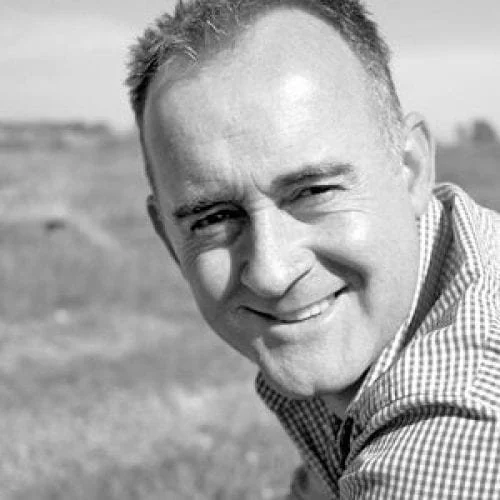
St John Craner is an international rural sales psychology coach with over 20 years of experience teaching some of the best and biggest rural businesses and agribusiness brands in Australia, New Zealand, Canada, United States, the UK, and Ireland.
He and his training company specialises exclusively and only in the rural, agricultural, and agritech sectors.
He is a speaker, host of the #1 globally ranked rural sales podcast (The Rural Sales Show), author and blogger and often a regular chair or speaker on the New Zealand and Australian Ag speaking circuit.
He has also written for the New Zealand Herald, The Listener, Newsroom, interest.co.nz, Idealog, Farmers Weekly, Radio New Zealand and the Gisborne Herald.