
Are your sales demos causing more confusion than conversion? In this episode of ITF Office Hours, Mark Cox and Dave Hanley dive into the trenches of B2B sales to help you stop wasting time and start closing the right deals. We’re breaking down actionable strategies to turn your product demos into high-impact conversations, how to coach your SDRs to identify your ideal customer profile, and the art of asking for referrals without the awkwardness. If you’re ready to stop the "glaze-over" effect and build a more profitable sales pipeline, tune in for practical, no-nonsense coaching on mastering your sales process.
—-
Watch the Episode here
Listen to the Podcast here
ITF Office Hours Podcast - Episode 3
Team, welcome back to another episode of ITF Office Hours. By the way, this format mirrors what we do oftentimes when doing deep consulting with clients. In addition, the formal meetings we are coaching on and running, and the formal training we are running, we oftentimes just select an hour one day of the week, probably over lunchtime, and it is back to the university days of office hours, where people can just drop in and have a quick conversation with me about anything.
You never know how big the lineup is going to be to get in the office, but you get some one-on-one time. We will continue on with that. Again, we have got our Sergeant at Arms, Dave Hanley, a three-time founder and CEO, certainly somebody who has built sales organizations literally from the ground up. I would like to thank everybody, by the way, for continuing to send in your great questions and queries. That is what feeds the office hours here. Dave, good morning. How are you doing?
Mark, we have got a long weekend down here, and you had a long weekend up there last week. Looking forward to a good one this weekend. Neither of us is really working very hard.
We are just skating through here, running podcasts. How does the digital mailbag look this week, Dave?
We got a couple of good ones this week, a good selection. It looks like this week we have got, I know in, I think the last couple of episodes we have had a few that were kind of management leadership focused. We have actually got some from people who are out there pounding the pavement, hitting the phones, and doing the deal. We have got some sales questions from account execs and sales reps. Why do we kick things off here?
Let us do it.
For question number one, we have Rick, and he says, "I am a SaaS account executive. One of my main roles is doing demos for prospects. We never really got any training or guidance on doing the demo, other than simply learning the product inside out. I feel like a lot of the time, the prospect's eyes glaze over in these demos. What is the best approach for making the product resonate with a demo?"
Making The Product Resonate Through Discovery Instead Of Feature Dumping
Listen, gang, this is a question we get asked loads and loads of times. In fact, one of our most popular LinkedIn posts or blogs ever was one that Dave Hanley wrote for In the Funnel, talking about doing demos. Just a couple of high-level thoughts to think about first. Companies do not buy technology. They buy what the technology does for them. We created this demo process thinking we could pitch a product twenty years ago, and just by showing a product, somebody would buy it because it looks so great.
The first thing is just getting this concept through our heads, which is that nobody buys technology. Actually, buy what the technology is going to do for them. If you have to get to the point of doing a demo at any point in time, really, we are using that as a trigger to do work before that demo and then do work after that demo to truly understand what this technology is going to do for our client's business or a prospect's business. When we go back to our models, this is all discovery. By the way, if somebody says, "I want a demo," which I am sure happens lots of times because people still have those digital journeys where a prospect can ask for one of these, that is fine.
Nobody buys technology. People buy what the technology will do for them.
That also gives me the opportunity to reach out to them as an account executive and say, "Listen, I am looking forward to showcasing our capabilities here. Before we do that, to make sure I make the best use of your time, let us talk a little bit about you and your business and what you are hoping this technology is going to do for you." I would absolutely do that to prepare for something like a demo with everybody who is going to be in the demo. I want to walk into a room and make sure that I already know what they want to see and get out of it.
By the way, I am also going to walk into that room knowing I want more conversation about this before I start showing technology, because of course, eyes are going to glaze over when you start talking to somebody. I would be much more interested in figuring out how this is going to help them run a business. That is how you start the “demo.” Let us say I did not get a chance, by the way, Dave, to interact with people in advance of the demo. Maybe when I walk into the room, if there are a couple of people there that I have met before, I might say, "Listen, team, let us just get aligned on what we are trying to do here.
What we want to do is figure out how to drive an outcome for your business that is meaningful. I have got technology. Of course, I love my own technology, but I am more interested in understanding how this can help you and your business. Why don't we go through the room here and you just let me know exactly what you do for the Hanley company, and let me know why you are in the room, and what you are looking to get out of the next 30 or 45 minutes with me." This gets people engaged, Dave. At the beginning, we started to have this conversation.
Most of the competitors that you are going to be up against will not be doing that, because this is not the norm. Most companies are like, feature, feature, feature. Look at how many features we have. The people in the room are like, "I am confused. Where are we?"
Tracking Prospect Needs And Confirming Value During The Demo
We will come back to the features in a sec. That is great. Once we go through the room, I am going to digitally let us say I am on a Zoom call. We have people all over the world digitally. I am going to keep track of what they said they want to see. Whether I am using my AI assistant to keep track of what they say, whether I am doing whiteboarding in the digital room to keep track, but say, "Dave, one of the things that you said was really important to you when you are thinking about a sales enablement technology is you want to make sure that when I am in a live conversation with someone, the technology is prompting me with questions that I can ask."
I am going to do that when I am going through the demo, I might show that and go, "Dave, does this meet your needs? Is this what you wanted to see? What questions might you have?" If you come back and go, "Yes, I think this would be super helpful," 90% of salespeople go fantastic, and they write a little check mark down. Ten percent of salespeople go, "That is great, Dave. Why would this be so helpful? Tell me more."
It is going to save us time. Exactly how does it save you time? You are getting into this conversation where you are trying to help them, and you start to build this business case of how this technology can drive a better outcome for somebody. When we look at our models, everybody likes a sales process, and the middle stage of our sales process is discovery.
The way we build it, we say discovery is never-ending. It is a stage of the sales process, but it is also across the entire sales process. The demo is really just a part of discovery. Dave, I love your opinion on this because you have done this three times. You have been through this with three different businesses, but oftentimes the person most interested in the demo is the person with the least amount of influence over the sale.
Yes, totally.
I am going to get basic terms from a hundred years ago. Economic buyers make decisions. Technical buyers, people who are going to decide whether this can be used or not. Mostly, they can only say no. "I do not like your sales enablement technology because the info security is weak." I am to have user buyers, people actually using it. Oftentimes, people most interested are the ones who have the lowest degree of influence. I want to keep coming back to how this helps your company.
Do not be afraid of the team in a demo to ask a question at the end, saying, "Listen, how would you justify this? There is great technology, but we at In the Funnel run a small business here technically. We do not make any purchases unless we can justify them." It is a good thing to share with somebody else, saying, "How is it you make financial decisions?” When you raise this to the CFO, and he says, “We have got 50 other things to spend money on. Why should I pick this one? How are we going to answer that question? Should you even pick this one?” Do some of those things help Dave, by the way?
That is going to be good feedback for Rick. As you said, just to underscore this point, too many salespeople treat demos as a tour when they should be treating it as more of a conversation. "Tell us about your problems. Here is how we solve that. What do you think? Tell me more." The prospect should be doing a good amount of the actual speaking during the demo. It should not be like you are talking 95% of the time and then you ask, "What do you think?" They go, "Great," and then you just keep going. That is not good. This goes back to many years ago when we started working together.
We were in that boat. We would do a lot of things like, "Here are all the features, just throw it all out on the table." Oftentimes it would resonate, but oftentimes it would not. Especially if you are in a competitive environment. The process that we put together was basically that you go into the demo. You are not doing 56 slides on the company and the history and that stuff, because they do not care. You basically go to the demo and say, "Look, slide one, here is who we are, here is why we exist. Slide two, here are the problems that we solve for companies like you."
If you have done your research, you already know that four of those eight problems resonate with them. You get agreement. "In the demo today, we are going to look at these four problems. We are going to show you exactly how we nail that. We are not going to review every single feature." The next slide before you dive in, is, "Just so you know, here is all the companies or a good list of companies that we have already helped, just like you." They are like, "These guys look like they are pretty put together, and they have got customers like me," and a little bit of FOMO perhaps because their competitors are there.
You go, and you actually hammer those four problems and show them exactly how you solve those problems. At the end, you circle back and say, "Problem one, everybody agrees that that is solved? Problem two, check. Problem three, we are not quite sure. Let me jump back in and show you just to reiterate." At the end of the demo, everyone is nodding their heads like, "Yes, this solves all our problems. What's next?" As opposed to, "What do you think?" "It looks really great. Looks cool." That's the worst thing to hear at the end of exactly.
By the way, here is the thing. Everything looks cool. I am the biggest problem in the funnel because every time I see a demo, I want to buy everything. Somebody on our team goes, "I am not sure this is a good idea." The next thing you know, I have a tech stack that is a mess. I like that idea, though. We talked to Dave about how we prep before we get in the room. We get in the room. When we got in the room, I loved that you said that.
The second message was, "Listen, I am really excited to be here because when I did some conversation, I had some conversations with you before this, you talked about issues of A, Dave, you said B, Nancy, you said C. Frankly, team, I want to show you this slide because those three problems are three of the five problems that we exist to solve. I will walk in, I will be honest with your team, from my perspective, you are a perfect client for us. I said, that does not matter.
What matters is whether we are the right solution for your business. That is what matters more at this point in time. The intent here today is just to try and sort that out. That is what we are trying to do." Sometimes, by the way, giving somebody a back door or an out, saying, "Listen, I am not just trying to convince you of something today. I just want to have a conversation to figure out if this makes sense for you today.”
“We want to see if you are a fit for us. Because if you are not, we do not want you as a client because it is not going to be good for either of us." A hundred percent.
We talked about prepping before, then you have the demo, and then I would follow up afterwards and reach out and have one-on-one conversations and go, "Nancy, thanks so much for sponsoring us to go and meet with the rest of your team. I just want to follow up. How did we do?" How do you know exactly three or four big open-ended questions to get some feedback and counsel? Keeping in mind, I am not trying to persuade or cajole somebody. I am actually just trying to help them. By the way, Rick, thank you. Super important question. Even today, this continues to be what we see in the field.
Yes, even more so because, as you said, Mark, everything looks slick and amazing when you do a demo. I am a bit of a demo nerd. I like that question from Rick. Next question, number two from Tony. Tony says, "Our sales team works with a team of SDRs that do prospecting to bring opportunities to the table for us. Lately, I feel like a lot of the opportunities that I have got are not a good fit for our product. I want to bring a solution to the table for my sales manager to fix this, but I do not really know how to approach it. What would you recommend? I feel like these bad fit opportunities are wasting a lot of my time."
Refining Ideal Customer Profiles To Eliminate Wasted Sales Efforts
Who gave us that question, Dave?
Tony.
Tony, thank you for that. Tony, this is the second step of the sales playbook. If you go back to learn to love selling or the core sales playbook, first, we have to understand our value proposition of the market. Secondly, we have to prioritize the pursuit of the market, and that starts with a clear definition of the ideal customer profile. The ideal customer profile, and you can never be too specific with an ideal customer profile. Size, scale, industry, geography, business problem they solve for, business problem they have that we solve for, does that business value our differentiation in the marketplace?
After understanding clearly the ideal client profile, the company we want to go after, the second thing is, are we speaking to the right buyer? For an SDR team, it is the leadership's responsibility to clearly define these things. We cannot expect people in the field to figure these out because what SDRs will default to in the field is, "I will take a conversation with anybody who will give me a conversation."
Anybody who is interested, we get excited, right? I think that is one of the biggest problems with salespeople and salespeople, and especially a lot of the folks that I work with, who are typically founders doing sales. Anybody that is interested, I am down to talk with them.
I am down to talk with them. By the way, they may not even be that interested in what I sell, but maybe I can adjust what I sell because they are so friendly and they want to work with me. This is a huge, by the way, huge problem. Startups and founders, huge problems because you want to be everything to everybody. A massive problem for very large companies. We work with a lot of very large companies from a consulting perspective.
You would be surprised, but the Pareto principle still applies where you look at the revenue base, and they have got 4,000 clients, but they are not the 80/20 rule where 80% of the revenue comes from 20% of their clients. They are even more than that. They are the 90/10 rule. You get 5,000 and 4,000 clients. There are 150 of them that give you 90% of your revenue. All we want is more of them. I am spending a lot of time trying to do deals outside my core ICP. It is harder to sell if it is outside your ICP. When I do sell, it is less meaningful for me. They are usually less profitable.
It’s because you are wasting a bunch of time trying to put a square peg in a round hole.
This is exactly it. There are a couple of things. For Tony, you can help. This is not up to over-delegating to the leader of the SDRs. You could offer to run a little workshop over lunchtime for the SDRs to refine with them our A, our ideal client profile, and then B, our buyer personas. Always remember to explain why. Why did we pick these? Why is this the business strategy? We have to give immediate feedback and coaching. When you get a lead, and you have a conversation, and it was Mark Cox who passed it over to you, and it is completely the wrong ICP, pick up the phone and have a conversation with them and coach them.
Give them some guidance. This is still to this day, this idea of the wrong ICP. It is harder to get to them, but if we get to the right ICP, we end up doing fewer deals, but they are more meaningful for the business. They really move the needle. We have to get away from the noise or wasted effort. This is the core of sales productivity. It is right in the sweet spot of the sales playbook, the second territory management or territory planning, the ideal client profile, and then the buyer persona. What would you add to that, Dave?
You hit the nail on the head, Mark, and I think the key thing is that not all deals are good deals, and we only have a certain number of hours in the day. As a salesperson, think about it. If you have your work in ten deals in a week and eight of them are not a good fit, you just wasted 80% of your time when you could say, "Look, even if I do not touch any other deals except the two that are a good fit, I am probably going to do a better job on them. I am probably going to close them at a higher percentage probability." It is all about maximizing your time because it is your most valuable asset as a salesperson.
Finally, team, what we see out in the field today is that it is compelling to throw over any lead because someone's friendly and they're personable and they're engaging with you. The truth is, you are not going to win it anyway, because let us say we do sales training for midsize companies, but very large enterprises come to us and ask for it. In fact, law firms come to us all the time and ask for sales training at a senior level.
I know at some point in time, after going through an agonizing process because they do not value the discipline of sales, somebody is going to say, "How many other law firms has In the Funnel worked for?" We are going to say, "Not that many because law firms do not value sales. In fact, it is a bad word." They go, "We are not going to engage them." Even though I had one or two managing partners who really saw the need, they could not drive it on their own, and they did not want to be the first in the industry to do active sales training, so it is just going to waste our time. We point them in a different direction. Great question, Tony. Thank you.
Terry Nielsen, who Mark, we all know and love, is one of my former partners. He said, "Some of the best deals I ever did are the ones I did not do."
Exactly right. We love Terry.
Question three, let us see, we have Katie here. Katie says, "My sales manager is pushing for us to get referrals from existing clients, but has not really given us a specific process to do this. I feel uncomfortable asking for referrals. What is a good approach to do this and actually get some good referrals from our happy customers?"
Sometimes, there are certain “salesy things” that make you feel a bit uncomfortable.
This is definitely one of those topics.
The thing is, if it makes you feel uncomfortable, you cannot do it. Jumping outside a comfort zone, public speaking makes people uncomfortable, but you have to do it, so you will get through it. If there is something like, "I just do not like, I got to get my mind around what I am doing," here is a mindset concept I think might be helpful for this. This is how we do it. We might initiate a conversation, Dave, with someone like you and say, and authentically, "I want to know how we are working with you, Terry, and DC for Risk Control Technologies? I want to make sure that we are providing value. Are you getting a return on investment? How is it going?"
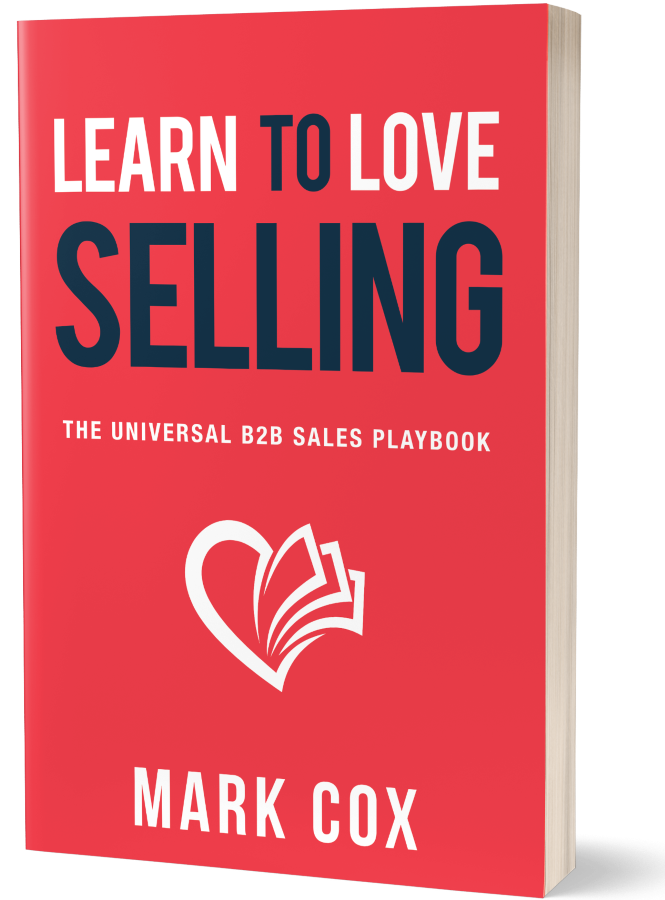
Typically, I call this a health check meeting. We have got this in the book, Learn to Love Selling, as well, but saying, "Listen, this is not about the recent past. I would just understand. Let us get out of the noise. Let us go have a conversation. The first question. How are we doing?" I am to have a lot of multipliers like what, why, how, tell me more. Typically, when those conversations go super well, I will keep saying, "Tell me more, tell me more. Why, why, why, what is working? How do we emphasize that?" I go, "I am thrilled to hear it." Oftentimes, those things will lead to "How are things going with you, Mark? How is business with you?"
Positioning Referral Requests As Making Capabilities Available To Networks
It will. That is where I will pull up, and I will, "Listen, Dave, business is great. By the way, thank you so much for all the gracious comments. One of the things I wanted to make you aware of, Dave, is that, believe it or not, about 80% of our business comes from referrals from super happy clients like you. What ends up happening is we work with you, and then you might think of somebody who is also an entrepreneur, but also likes to scale their business. What I wanted to do is just make myself available in the event that you have anybody in your network that you think needs the help we provide.
Dave, just so you know, if you connect me with somebody, we show them the same respect we show you. All we are going to do is have a conversation with them about their business. I will tell you, if I do get on a live call with anybody, anytime, I am going to make sure they get 2 or 3 nuggets that are really helpful for their business, regardless of what happens. Dave, is there anybody that comes to mind for you that you would like to make sure that we make our business available to them?" What often happens when asked the question that way is that I am trying to first take it away from, "Can you give me some leads, something where I am taking from you?”
No, I want to position it where I want to make something available to you, to your network, because you know you made a smart decision. You also know businesses that need to grow. Who else should I be making our capabilities available to? Dave, when I ask a question like that, and typically this happens with referrals, you cannot think of anybody at the moment. I will tell you that, and I will go, "Dave, listen, every time I have one of these conversations, I ask somebody, is there anybody you think of? You might think of 1 or 2 people, but here is what happens most of the time. A week later, you will call me up and go, 'When I was working out, a couple of other names came to mind.'”
“Dave, is it okay with you? I wanted to plant the seed. No pressure. By the way, I will follow up in a week's time because when you are not thinking hard about this, this is when the answer comes to the table. If you do not mind, I will just follow up a week from now and see if anybody comes to mind. If yes, great, I would be happy to have a helpful conversation with them. If it does not, nobody comes to mind. That is great too." Does that help Dave, by the way?
Yes, I think that is a great one, Mark, great way to approach it. That is not uncomfortable for Katie here. The other thing that I actually read in a book called Software as a Science, a little while back, which is literally putting this into your implementation and sales process, great idea, especially in the software business space, and honestly, it probably happens in a lot of different industries. You get in, you make the sale, everyone's high-fiving, "Let us go, let us get this thing going," and then it inevitably goes down a little bit. People are like, "They're in the trenches, they're implementing it, everyone's upset because their feature wasn't exactly as they thought," and then they get back on track, and it goes up.
There are all these a-ha moments that happen throughout your relationship, and it could be the first week they go live, and they start to see the fruits of the system that they put in, and then maybe a month later, when they first do their month-end close, and it takes a third of the time as it used to. There are all these moments, and they have this framework called the win-ask framework.
It is like, you do not want to ask for a referral when the client is deep in the trenches of implementing, because they are like, "This thing is a nightmare. This is consuming all my time. I cannot do my job." You want to highlight, “When are these a-ha moments that happen throughout your relationship?” You literally have a part, like stop, ask for a referral, use Mark's approach there, but do it when the client is at that moment of being really happy with you, so timing is everything. Doing it at the time when they see the light and go, "Man, this is a great solution here, and we're so happy."
Building Trust Through Proactive Feedback And Ownership Of Issues
I love that, Dave. I think it is a great thing to think about. With both suggestions there, first of all, make sure your clients are happy. The key element to this entire thing. It sounds so funny, but I was at my chiro's yesterday, just getting brutalized and talking to her while she was punishing me, trying to work through some problems I have on my upper back, we're talking about business. One of the things I came back to and she was talking about scaling our business, and there was some anxiety there.
The key to all of this is making sure your clients are happy.
I said, "Listen, one of the things you have got to come back to is you're extremely good at this because I am highly picky for this thing. You are really good at this. Same thing, you've got to pick the right ideal client profile. Try to get somebody who is a bit of an athlete who needs work all the time." She did say, “If you're doing intensive weight training, you do need to work regularly, like a couple of times a month.” I said to them, "At the end of the day, sleep well, because good things happen for people who are really good at what they do."
If I went through that process and said, "Dave, how are we doing?" You're saying, "Mark, I am not really as thrilled as I thought I might be." I am to go, "Dave, I am so glad we're having this conversation. Let us please talk about this," and I am going to get my listening cap on. I am going to understand why we are not meeting your objectives. I am to go away and come up with a plan to do that and get back in front of you and say, "Dave, given what you said, here is what I would like to think about doing. Why do not we have a touch point, Dave, in another 30 days to see if we're moving the needle in the right direction?" Referrals off the table.
For sure. Mark, that goes back to your health check you mentioned earlier, which is in your book, which is literally worth the price of the book.
Thanks, man. Just by asking for feedback, you're already better than 90% of the vendors or solution providers out there, because nobody asks for feedback because they kind of do not want it. They're like, "They keep paying the bills. Let us just hide here and hope they keep paying."
Yeah, I am afraid to ask. The idea of, oftentimes, and we have all done this, oftentimes, something that goes wrong is the opportunity to build a better relationship. I think everybody understands things will go wrong, but it is how we respond and react. Do we hide? Do we blame somebody else? Do we just take ownership of it and say, "Let me work through this. Thank you for sharing this. I am sorry this has happened, but I am on it. Let me go get some work done and come back to you." We can build a better relationship from there. Living through a few of those things, that's where you really develop trust, credibility, and deep relationships.
Boy, I am loving this digital mailbag. First of all, Dave, thanks for joining and driving us.
Mark, as I said, I learn just as much during this session as I contribute to it, probably more. It is always good to talk about these topics and get some of your insights as usual.
I also learn a ton from you. You have been through so much with this, and team, we're hoping you're learning a bit from this, too. If this is helpful, share this show with your friends. You have got other people on the team. You have other people in your networks who are in B2B sales. We want these things to be helpful to everybody. If you get just a little bit better at what you do, kind of think of Atomic Habits with James Clear, then it becomes creative. You start to love what you do when you start to develop mastery.
Do not forget this is hard, selling, convincing somebody to invest in something they had not thought of on your timeline, not theirs, and to spend money they did not budget. These are hard things to do. Helping a client achieve a desired outcome, which is what selling is, is very tough. We appreciate you tuning in and investing in your career and trying to future-proof your career. Keep the digital questions coming in through either email or LinkedIn. We will see you next time during office hours.
Sounds good.