
Stuck on the sales treadmill using outdated tactics while buyers cut through the noise? The rules are changing fast—AI is raising the bar on what “good” looks like. In this episode, Dr. Philip Squire and Mike Sparling break down new research on how buyers want to be sold in 2026. You’ll learn why sales success is now a values problem—not a technique problem—and how to master authenticity, client centricity, proactive creativity, and tactful audacity. Discover the rise of “intellectual authenticity” and how to combine human insight with AI to avoid “AI slop” and elevate your sales game.
---
WATCH THE EPISODE HERE
Listen to the podcast here
Intellectual Authenticity & AI: How To Achieve The Sales Mindset Buyers Demand In 2026 With Philip Squire
We've got an amazing show for you. Our guest is Dr. Philip Squire. Philip's the author of a fantastic book called Selling Transformed: Develop the Sales Values Which Deliver Competitive Advantage. Philip's also the CEO and the Founder of Consalia, which is the UK's only sales business school with executive master's pathways in leading sales transformation and key account transformation.
Philip's work intersects with a bunch of things that matter deeply to us, such as the professionalism of sales, the role of values and trust in B2B selling. Also, the idea that sales performance is not just about techniques or process, but how we show up. Originally, Philip's book talked about the sales values that buyers wanted to make sure that we made it to the top 10% of salespeople in the winner's circle. When he originally wrote the book, those values were authenticity, client centricity, proactive creativity, and impactful audacity.
He had some research done in 2025. It's The State of Sales Mindsets: How do customers want to be sold in 2025? A great update to some of the work. Frankly, the original book, Selling Transformed, was like an MBA in B2B sales. The research was so thorough. It was the most interesting textbook you've ever written. The reference points and bibliography are something I continue to go back to.
In this episode, we talk about a lot of the themes in Selling Transformed and the updated research, including why it is values that matter more than process or techniques, and a little bit about what values buyers don't want to see. We've got an AI view to most of this because we're joined by Mike Sparling, our AI thought leader, who's been joining us for the last couple of episodes here. We get into something like authenticity is a value that buyers want in their salespeople. How can we be authentic if we're leveraging AI in a significant way?
There are a few excellent questions posed during the course of this interview, and some great discussions amongst Philip, Mike, and me. I weigh in a little bit, too. If you enjoy this episode as much as I did, please like and subscribe to the show. Here's a great conversation with Dr. Philip Squire and Mike Sparling.
Philip, welcome back to the show. We're so delighted to have you back on the show.
It's super exciting to be back with you, Mark. I've admired what you've been doing over these years. I can't wait to get stuck into this particular episode as well.
We're joined again for this series of episodes by our pal, Mike Sparling. We see Mike as our AI Sherpa in many ways, or a Canadian thought leader on AI. Mike, it is great to have you on the show here again.
It's great to be here. It's exciting to meet a unicorn in Philip. I go back to my days as a dean in a business academic setting. The two hardest things to find were terminal degrees in sales and terminal degrees in accounting. Your PhD makes you a unicorn in my books.
I've never been described as a unicorn before, Mike, but I'll take it as a compliment. Thank you. I was interested in your academic journey as well. I'm particularly looking forward to getting to understand your thinking a bit more in this episode. It’s good to be here.
Sales Transformation, Values, And The Role Of AI
When we started the show, which was a few years back, Philip was one of our original guests. There were two reasons I knew I had to chase down Philip to get him as a guest. One is his LinkedIn byline, which says, “Helping make sales the world's most sought-after profession.” As soon as I read the book and saw the byline, I thought, “I've got to get Philip on the show.
The second thing is what I loved about the book. I'm speaking to Selling Transformed: Develop the Sales Values Which Deliver Competitive Advantage. This is one of the best sales books I have ever read. When I prepared for this episode, Philip, I was going back through it. I still like hard copy books, so it's got dog ears all over it.
Page one, what can you expect from Selling Transformed, the book? First bullet, considers the role selling has played in the context of world history and suggests that its contribution to global economics and cultural development is both profound and unrecognized. I'm sold. As soon as I read that bullet, I'm on the team.
Philip, let's do a summary or touch on the book very briefly because some of the original stats in the book are so powerful. You talk about some of this detailed research. The book is both a textbook and a fantastic read. I've never come through that before. I've never seen this before. It's a textbook you use to learn the profession of sales, but it's also incredibly interesting.
There are some alarming stats in there, to be sure. Some of the research spoke to 80% of senior buyers seeing only 30% of salespeople adding value, and in some contexts, even less than that. I know we've come back to some of these stats in the updated report, but tell us a little bit about why we had to write this book and some of the challenges or issues we were seeing in professional sales back then, Philip.
I suppose before the book was the doctorate. That's where the research has started. It was by chance, interviewing a number of customers of our customers about how they wanted to be sold to. We were using these interviews to help support a big European sales kickoff event. One of the questions that we asked was, “Having told us what you like and dislike about salesmanship, what percentage of salespeople sell in a way that you want?”
I'll never forget the very first person I spoke to, who said in his view, 95% of salespeople are a complete waste of time. Some people are born to be slightly controversial. It wasn't planned that I would keep this question in all the interviews, but the question was kept in. The second person said less than 10% of salespeople sold in a way that he would want.
At this stage, it wasn't part of an academic research program, but it was a little spark that ignited what has become a twenty-year journey. I wasn't an academic before, Mike, but I found myself being drawn into the academic world through a suggestion made by one of the professors I met. He said, “Why don't you turn this research into a doctorate?” That's where it started. It's so interesting when you look back on life, isn't it, to look at how serendipity sometimes triggers events in a way that you wouldn't normally expect.
It ends up triggering this research, the doctorate, and then the book. In the book, one of the most provocative ideas or unique takes on it is that sales success is just not a process problem or a technique problem, but it's a values problem. We'll get to the values, but what did you see or hear in those early days that convinced you the values were the area to focus on to elevate sales performance?
You could possibly link that back to what we refer to as lead and lag indicators. I remember halfway through the research, and this is having interviewed 80 to 90 people from different roles and different parts of the world, coming together in London, working with a professor at London Business School at the time. We wanted to draw conclusions as to the research findings. We came up with flip chart pages that failed in my view to push this story along because there are solutions to this 10% problem that we mentioned earlier.
You need to be good at listening and have curiosity. You need to be professional in the way you present yourself. You need to have commercial acumen. I knew from my own experience that companies spend billions of dollars on this kind of training. I wanted to say, “If we're training people on the right behavioral things, why aren't they doing it? Clearly, there’s a mismatch between what organizations are striving to train their people to do better. It's not being experienced at the customer end.”
If organizations are training people on the right behaviors, why aren’t customers experiencing them? Clearly, there’s a disconnect between what companies teach and what customers actually feel.
Much of the training had been oriented around behavioral techniques of selling, processes, and methodology of selling. It was one particular professor who challenged me about what my values were from a sense of bias. Mike, you would probably resonate with this a little from your academic work. I realized that I was looking at the data through a lens that was so influenced by what I had been taught. I wasn't opening up my mind for new ways of thinking. The new ways of thinking were related very much to understanding how you think, and this links to values.
Once I started to play around with this concept, I realized that values were like the operating system of human beings, and that our behaviors, competencies, skills, and what we end up doing are because of them. No one had defined what values customers looked for from salespeople, and what values they often saw that they didn't like.
Once I got onto that trajectory, it became relatively quick to define what would be the core values that would lead to, in customers' views, success, and what would lead to a negative performance. I feel as though I might be repeating what I said before, Mark, but for me, that was a pivotal moment in terms of what got me to where we are and this values-based approach to selling, which I know is close to your heart as well.
I'm glad we're summarizing some of this, Philip, because the forgetting curve is alive and well. We recorded that original episode a couple of years ago, 100 hundred episodes ago for us. As your newest research points to, though, that concept still resonates. We're going to talk about the 2025 research. The work was spot on and so important.
What I always found interesting is when we've talked about helping sales organizations, and Mike and I have spoken about this before. I love this thought of culture. You say, “I'm going to hire for culture.” The only way to create culture, as defined by how we do things around here, is to lead to values. How do we define the values that are going to create the culture?
I loved this thought of saying, “What are the mindsets or values that the client most wants to see in a salesperson? Let's call out the ones they don't.” I'll list them both quickly. Team, for your identification, those who haven't had a chance to pick up Selling Transformed, in chapter 4, when you lead through the history of sales training and coaching, and then get to the values that matter. It's one of the best, most concise summaries of all of the training methodologies. Going back to the start with Dr. Neil Rackham and SPIN Selling.
That was the first major one, if you get past Dale Carnegie and all of these kinds of things. It’s such a great academic review of it. I'm such a nerd for all of this stuff. I love it. I didn't see In the Funnel in there, but we'll give you a pass because we weren't a global powerhouse yet. I understand why we might've been absent from that summary.
Next release.
The next release of the book. Everybody reading is going to say, “If I haven't read the book, what are the mindsets?” The positive values or mindsets are authenticity, client centricity, proactive creativity, and my favorite was always tactful audacity. I get half of that right most of the time. I'll leave it up to you to decide which half I don't get. Maybe let's touch on it briefly before we talk about the updated view originally. How did we land on these four, Philip? Why wasn't it six? Did 1 or 2 of them surprise you most when they made the list?
The Core Values Of The Winner's Circle
We went through so many analyses of conversations and then started to group what buyers were looking for, both positive and negative. We began to cluster them under different headings, such as authenticity, trust, and integrity. These words surfaced very quickly. Client-centricity is a no-brainer. Obviously, customers are looking for sellers to be client-centric.
What we began to realize is that those two values are the baseline for building trust, but it doesn't put you into what we call the winner's circle. The winner's circle has rarer, more exceptional mindsets and values. These were the proactive creativity. Salespeople are very often very good at being reactive creatively. A customer goes with a problem, and they're very good at coming up with a reactive solution. Proactive creativity was a very important nuance that we wanted to surface, which is rarer but important for exceptional salesmanship.
Tactful audacity is having the emotional intelligence to push an idea hard if you believe it to be correct, but at the same time, respecting the person that you are pushing your idea to, if you like, or suggesting that they should do something differently than what they've asked you to do. Tactful audacity is my favorite as well, Mark, but it's hard to do. It's important to do it in different stages of the sales cycle.
People say, “When do you use these values and mindsets?” It's important at the very beginning. Sometimes, getting meetings with people requires you to be tactfully audacious and proactively creative. When you have qualifications, it's more about client centricity, solution development, proactive creativity, negotiation, and tactful audacity. You've got this interplay of the mindset.
What we realized was that you can't have one without the other. You can't have bucket loads of tactful audacity and proactive creativity without having the authenticity and client centricity. Clients need to trust you. What we've begun to realize through the analytics of the sales mindset survey, which we've got thousands of surveys that people have done, is that less than 10% of salespeople score what we would call in the winner's circle across all four. Some may be right up there on 3 out of 4, but not all 4. I don't know, Mike, what you think about what I've shared, but with you on that topic.

Sales Mindset: Audacity and creativity are hollow without authenticity and client-centricity. In business, you simply cannot have one without the other.
It's a good question, Philip, because Mike's a chief operating officer and chief technology officer. In addition to that time in academia, he's run large organizations and large groups. Mike, from your perspective, two questions. Would the percentage of effective salespeople calling on you over the last couple of years resonate in terms of the 10% or the 30%? Are those the values that you're looking for? Authenticity, client centricity, proactive creativity, and tactful audacity? Do those resonate with the folks that you're trying to partner with or work with?
That’s a great lead-in, Philip, and a great couple of questions, Mark. I've probably spent a vast amount of my career carefully building a never-ending maze of sandbags and other things to prevent salespeople from getting too close to me. A part of it is to look for those mindsets that you're calling out. In particular, I think you're very accurate that a lot of people pursue selling without fully understanding why or the direction that they're headed in.
Part of what I loved about your background, as I was researching it, was the notion that your mission statement is to make selling the world's most sought-after profession. I hear that in Mark. I've often said that people that I've met through Mark or, in other cases, professionally trained sales leaders or salespeople truly understand that critical intersection between the value the firm creates and the needs that the client has. It's a little bit of a rough way to describe it as the tip of the spear, but I do use that analogy.
I'll go back to say that my transition from being a computer science undergraduate to being a business leader driven by technology, I credit it to people like Mark and some of the other sales leaders whom I've had the pleasure of working with and learning from. Taking an understanding of what we could do as a firm and aligning it to what we want to do in order to please customers is a big shift for a lot of people. Your mindsets resonate as do your percentages of who gets it well, who doesn't, and how important that is to moving to a buying point.
I'll probably say one more piece. To me, proactive creativity is one that resonates as an AI practitioner. If I decouple those two words and say, “What does proactive mean?” Credit to Mark. He and I have been talking a lot about the importance of signal reading in the professional sales space. Being able to subtly recognize the signals that are admitted by all parties in a conversation, negotiation, and exchange, that signal detection, to me, is what proactive means. If I can recognize the signals, that's going to trigger something within me.
For creativity, from an AI standpoint, I'm not in the camp that says AI can be creative, but I think AI can synthesize across a broader set of inputs and produce rapidly broader results that we can then, as the human in the loop, finesse and improve to the offering that we make. Figuring out the novel responses is the creative side. Identifying and detecting the signals is the proactive side.
As a partnership, we can do a lot with AI or technology to further that piece forward and deliver proactive creativity to buyers, factual for what we intend to achieve, tuned to the signals being sent, and resulting in those outcomes. That's the path, and I'd be curious about your thoughts, on raising those percentages much higher. It's the people who understand in our world, “How do I synthesize this artificial piece with my core strengths and bring the how, what, and why together to lead that tip of the spear further into the organization?”
Intellectual Authenticity: The New Sales Mindset
It’s so interesting how you brought the topic of AI into the conversation as well. What's interesting, Mike, is that this is quite personal. If you go back to the beginning of 2025, when the great AI wave hit everyone, I felt it was a dystopian moment in a way. There was so much that was the promise of AI, and the seismic changes that we could expect as a consequence of this incredible technology that was about to take over the world. I felt there were moments of what is the point of being human. It has been interesting.
If I could perhaps relate this also to where I am, I suspect I'm similar to many people. We've all gone through something where we know something's going to hit us that we don't know much about. We don't quite know how it's going to change the world, but we'll figure it out. We're probably in a much better position now, but what happened in 2025 has had quite a profound effect on how we have started to look at the sales mindsets again, which is, in part, being triggered by AI. It's sometimes a word that a customer says that triggers a train of thoughts that you haven't thought of before.
We conducted a similar exercise of research across the world, asking similar questions to those I did many years ago for my doctorate. Buyers were using the word intellectual dishonesty as something that they don't like. A completely different buyer used the word intellectual honesty. I can honestly say that in all the interviews that I did many years ago, the word intellectual did not surface. That, in itself, is interesting. Connecting the word intellectual to salesmanship is quite something. This idea of intellectual dishonesty and intellectual honesty got me thinking about the values of mindsets.
In our academic focus, one of the skills we teach people who come to our master's programs is about critical reflection and how to think. We knew that this was one of the transformative components of our programs. I had that in the back of my mind, looking at this word intellectual, and then connecting it to authenticity. The nuance is subtle, but huge in that we've added the word intellectual to authenticity.
Authenticity is integrity and the moral compass that you would have as you reflect on yourself. Intellectual is a quality of thinking that customers are saying that they appreciate in salespeople in the way that they solve problems. I've broken down the word intellectual into three components. One component is the ability to integrate sources of data. Synthesizing information, if you like. The other is instinct. It's having an instinct about something. The other is imagination.
It was interesting what you were saying earlier about artificial intelligence and creativity. I'm beginning to define the intellectual part of authenticity into those three dimensions. This is another neat thing. This is not a marketing gimmick. If you have two pages of a book and some wet ink. On one page, you've got AI. If you close the book, on the other side, you have IA. To me, the secret, moving to the future, is combining intellectual authenticity with the way you use artificial intelligence. Customers are expecting you to have both. This is where the nuances come.
Moving forward, the real differentiator is pairing intellectual authenticity with artificial intelligence. Customers don't want one or the other—they expect both.
These words have been intellectually triggered by AI because knowledge is all-pervasive. There should be no excuse for salespeople not doing the research and not producing effective account plans by using, perhaps, AI technology to do it. You need it, but you need that magic something, which is not AI, which is the human component.
It’s the human element.
I've defined that as intellectual authenticity as a key attribute.
I like that. That was something that I latched onto here in the research that you’ve worked on.
Thank you.
It’s the piece that you transition from authenticity through what I would call human in the loop, which you refer to as the person, and then into the intellectual authenticity and the importance of that. That's a much more eloquent way that you framed in that research of saying nobody wants more AI slop. One of these words we hear is the endless wave of clearly generated, never edited prompts that are posted on LinkedIn or social media or released in a statement to try to appear intelligent without understanding the connection between appearance and actual value creation.
I love that research. I wrote intellectual authenticity down in my journal and double-underlined it as something to pay careful attention to. You are so on mark with that transition from individual authenticity through aided human in the loop to create that outcome that we're seeking in the intellectual authenticity space. Hats off and kudos on that.
It seems like such an interesting one. The research also says that authenticity is one of the most important but lowest-scoring values for salespeople.
This leads on to another question, doesn't it? It’s around complacency. Are people relying too much on AI to write the proposals and do the research? This is what buyers are alluding to when they talk about intellectual dishonesty. They can tell or sense when something isn't original and authentic. My worry is that standards of sales professionalism will diminish because of AI.
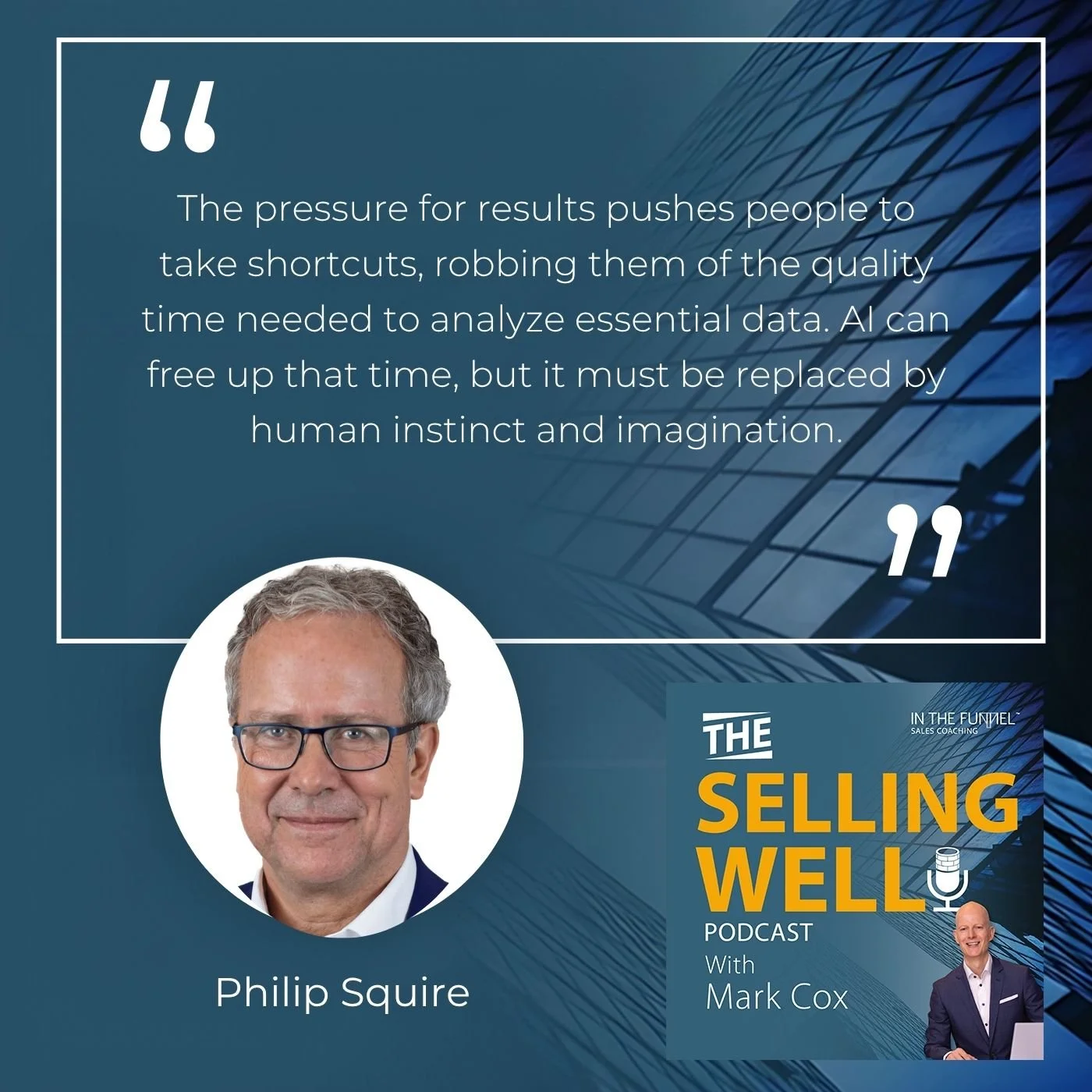
This might be slightly controversial as well. I think salespeople are lazy. People want to take shortcuts. There's too much pressure on producing results for that quality time that you need to be able to look at what the data tells you, which you absolutely need. AI can free up time, but you'd need to replace it with this instinct, imagination, and some of these other things that play in. This is my concern. Maybe in a year or two, we could come back to the research and say, “Am I right or wrong?” I hope I'm wrong, but this is my fear.
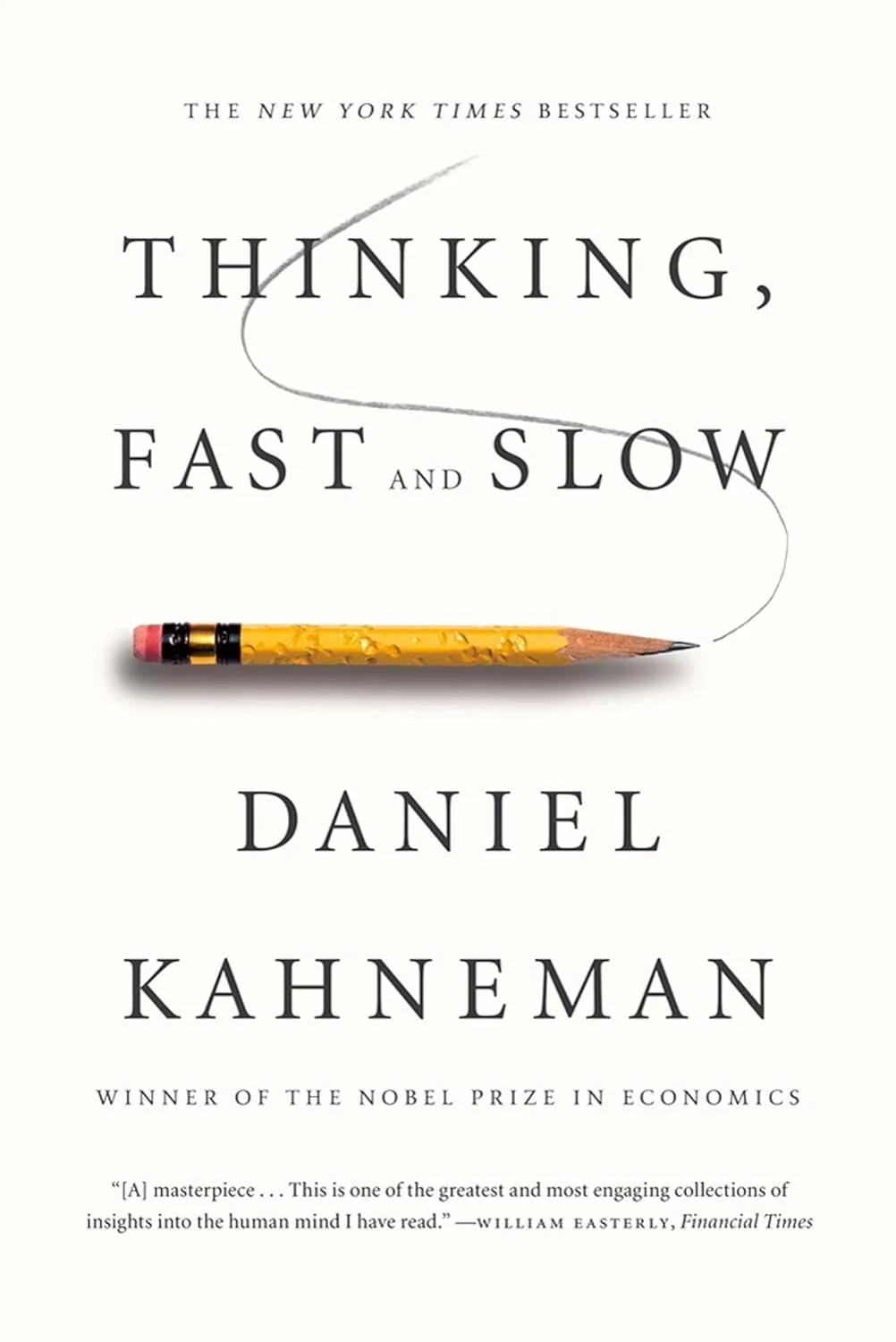
First of all, to baseline, the research we're talking about is The State of Sales Mindsets: How do customers want to be sold in 2025, with Dr. Philip Squire and Eddie Guevara. It is an update to some of the research in Selling Transformed. I don't think there's any fault in terms of calling all of us lazy. We go back to Daniel Kahneman's work in Thinking, Fast and Slow and evolution. As human beings, we evolved to try to take the path of least resistance and burn as little energy as possible. A lot of these things, in terms of shortcuts or not doing the research, come down to the environment you're in and the expectations of sales management, leadership, and coaching.
When I go to the gym, I'm not with my trainer. I'm going to have my coffee. I'm going to be jacked up. I'm going to do the best I can. There's no question, though, when I'm with my trainer, I will perform better because someone's watching me. I've gone through this so many times where I think, “Do I have to pay this person? Why am I paying this person?” You perform better when there are a couple of sets of eyes watching.
This is where a conversation like this is so important for a sales leader. Is the sales leader ensuring that we're working far less, but we're far better on the deals that we're working? We put in that time, attention, and care. We'll all take the shortcuts if they're given to us because we feel pretty overwhelmed at times as professional salespeople.
That's so true.
Let's keep going, if you don't mind, down this path of AI. Prior to that, maybe we'll jump back to the 2025 research. Was there anything else that came out of the updated research that surprised you? I wasn't surprised to see that the core sales values haven't changed. The ones that you originally identified are still the core sales values that are out in the marketplace. What would be 1 or 2 of the insights when you went back to this that maybe surprised you a little bit?
Improved Buyer Satisfaction And The Risk Of Complacency
Thinking, Fast and Slow
There are two things. One is that when we did the research many years ago, 80% of the respondents said that less than 10% of people sold to them in a way that they wanted. This time round, the figure was 30%. That's an improvement.
Something's working.
I felt that was a positive message. I must admit, I'd always felt, when we'd spoken about the 10%, that there's a rather negative message to convey. I was slightly concerned that our marketing team talked about it too much. It's much better to be positive than negative, generally. That was something that surfaced. The other thing that surfaced that we've touched upon already is this nuance of authenticity to intellectual authenticity, which is pretty profound. There's a third nuance that came about. I'll have to come back to it, Mark.
Maybe I can help you because there was one that stood out to me. It was the notion of clients demanding greater transparency around data sources and reasoning. That point leapt out and said much like what we say to up-and-coming staff, or if you're using AI effectively. You either notice the subtle changes that happen towards the tail end of 2024, something Mark and I have sometimes referred to as the November threshold or such.
Part of what gives me confidence that these will become much more helpful tools going forward is that showing your homework is crucial, whether it's an employee who says, “I've arrived at this conclusion.” You spend time coaching them to say, “The most important things are explaining how you understood the problem, what you considered as the solutions, and why you've chosen one solution as the result. That's more valuable than what the solution is that you have in hand.” That shows your homework in particular around how salespeople behave, how they provide and produce content, and how the AIs work.
One of my favorite parts of modern AI is that you see the little drop-downs that start appearing that say, “Show calculation. Show logic. Show reasoning.” We open those up and see, “This is how the model is going about, determining how to take Mark's book and produce a summary for me, or search the web for these results, or reason through what this stack of numbers is telling me about customer demand.” Seeing the homework is so crucial. I thought that point you made around the transparency of source and reasoning was a crucial element as well.
I remembered the third point. I'll come back to that later. What concerns do you have, Mike, about AI? I know we're talking about this in a sales context, but you must have some major concerns about AI as well as the positives. You've explained both. Mike, I'd be interested to hear your point of view on that.
Using AI As A Thought Process Challenger
Since you opened the door earlier to being controversial, I'll follow you through that door. I'll declare my biases upfront. I'm not a doomer. I don't think the world's going to end. I think employment will continue, and I think humanity has a future. There are many things that can derail us. AI is one of those things. The real, biggest risk is that, continuing the theme we were on, we become intellectually lazy. We stop understanding why or what and concentrate on how fast we can produce an outcome, throw it out there, and let it go.
Time management will become more crucial, depth of reasoning and understanding the social aspects that we're sharing here, pushing at ideas, but being equally willing to learn something new to take and challenge a base assumption based on the input that someone else has provided. If we fall into the echo chamber of stupidity and let AI take over from us, then we're going to get the “reward” that we deserve. If you use AI as a tool to enable your improvement, great things can happen.
In the last episode that we recorded, I brought forward the idea that a real skill that everybody needs to develop is engaging thinking and challenging by using commute time or using fifteen minutes when you're otherwise busy, but not intellectually occupied, to have a conversation about any topic you want with any AI that is handy. Force yourself to go through 3, 4, or 5 layers down and throw a curveball in.
It’s like saying, “It’s great that we arrived at this point. Now, tell me the exact opposite perspective on where we are, and explain why that is what it is or why you chose not to present that information to me thus far.” It is using the tools, not as an outcome creator, but as a thought process challenger, and then using the time that's available to improve on that.
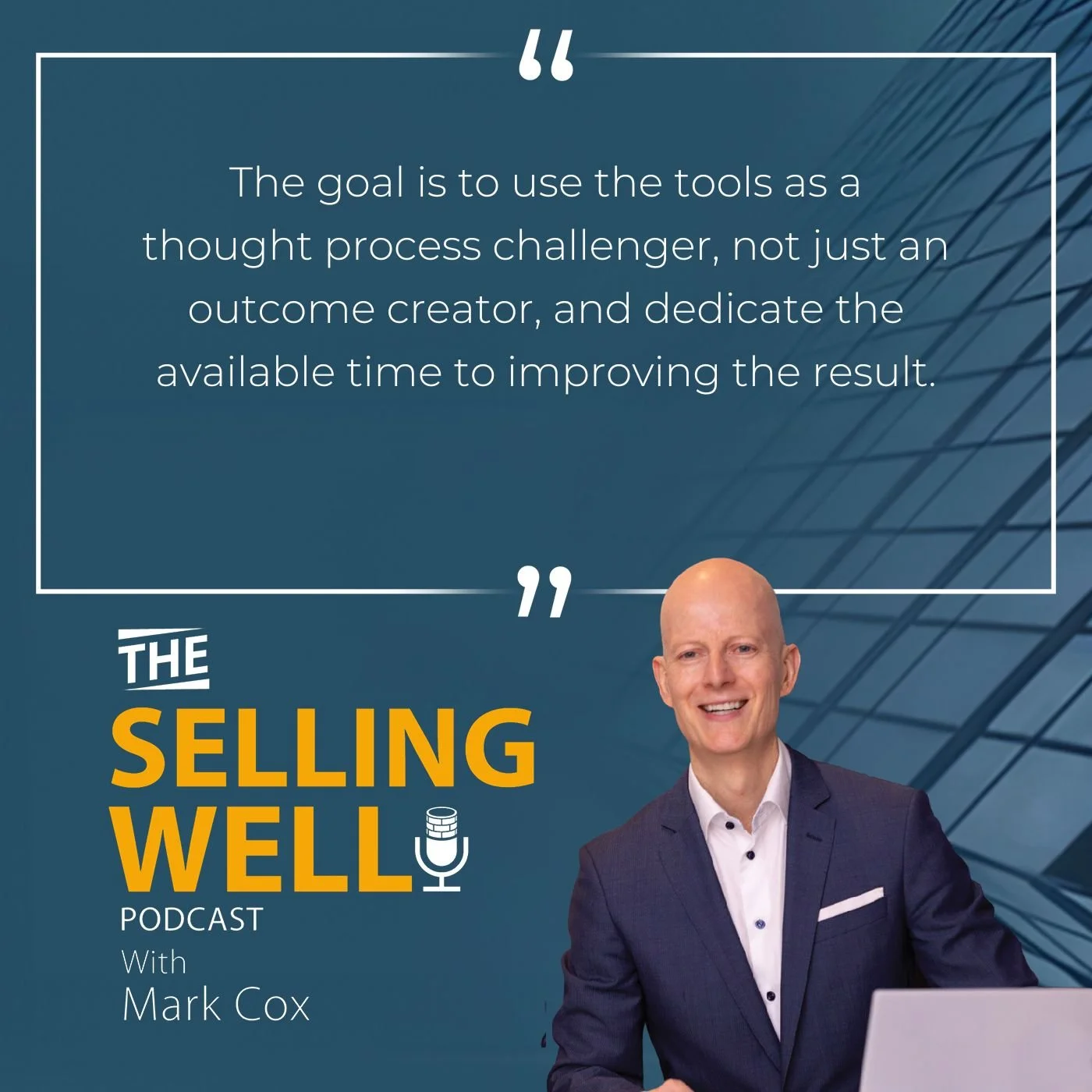
Sometimes, I'll call it the how trap. If we don't fall into the how trap, where we let the machine do faster outcomes without focusing on the why and what, like, “Why am I doing this, and what is the result I'm anticipating?” We're going to get our rewards, whether that's from the staff around us, the people we work for, or the tools that we use. Bad things happen if you don't pay attention, but good things can happen if you use tools effectively, like a beautiful piece of furniture a craftsman makes.
We got two sources of clickbait. People are lazy, and humanity will continue. If those two things don't drive some viewership of this episode, I don't know what will. First of all, what a wonderful conversation. This is the kind of conversation that should be taking place, in some capacity, at most Q2 sales kickoffs globally. If you're a sales leader and you're not at least engaged in this conversation, you're probably going to fall behind a little bit.
I always pick up a nice tip, Philip, from chatting with Mike here, and also with you. This idea of driving home and commuting, having a conversation with AI, and then asking for the opposite point of view, I love that. We could talk about this for hours. At some point in time, we'll do that in person over a pint, but we do need to wrap up.
First of all, I'd like to say thank you to both of you for joining. Number one, what you are going to be doing is picking up and reading cover-to-cover Selling Transformed: Develop the Sales Values Which Deliver Competitive Advantage by Dr. Philip Squire. You also have to read the updated report we referenced called The State of Sales Mindsets: How do customers want to be sold in 2025? It’s a great summary and review. Philip, can you tell us a little bit about Consalia and a little bit about how clients or readers might learn more about you and what you're doing?
Neglect breeds failure, but mastery of your tools breeds excellence—much like a master craftsman shaping a beautiful piece of furniture.
We have the website, which is www.Consalia.com. We also have our own Sales Transformation Podcast series, of which, Mark, you've been a guest as well.
What a pleasure.
We're very easy to find. The website is probably a good starting point. I welcome anyone wanting to reach out to me on LinkedIn and contact me via that platform as well.
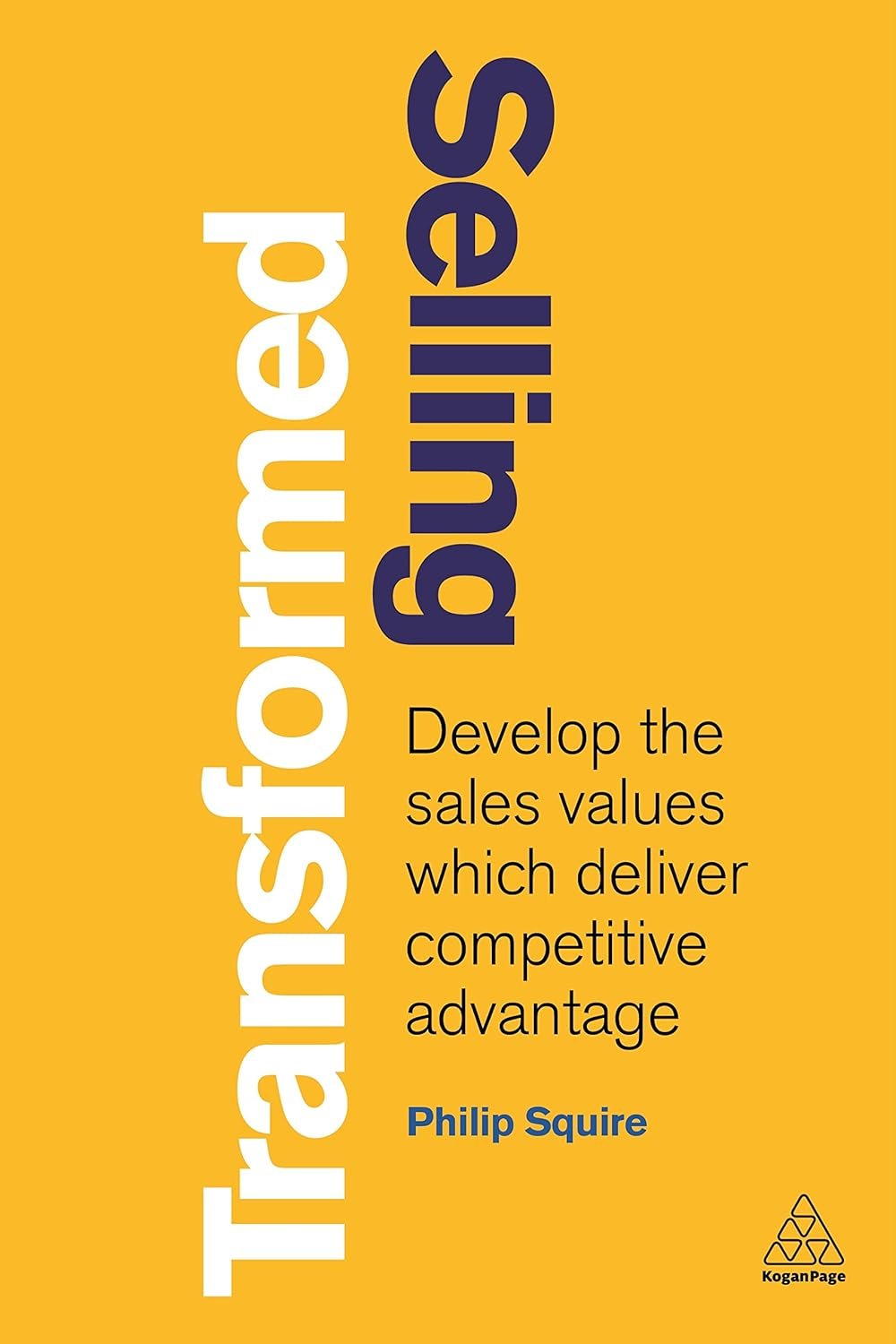
Selling Transformed: Develop the Sales Values which Deliver Competitive Advantage
Thank you, Philip. Mike, how do people connect with you and learn more about your work?
I'll say the same thing. LinkedIn is the best place. That's where I'm existing from a professional standpoint. I'm happy to connect on any topic and any way with anyone interested in the space that I have thoughts around. Philip, it’s a real pleasure spending time with you and researching your work leading in. Keep being a unicorn.
Thank you, Mike. It's been great having you in the conversation here as well.
It sure has.
It has been brilliant.
Thank you both for joining. Team, thank you for tuning in. If you enjoyed this episode, please like and subscribe to the show. When you do that, it enables us to get amazing guests like Dr. Philip Squire and Mike Sparling. If you think there are ways we can improve this show, we're all ears. You can send your feedback. We love constructive criticism. Send it to me at MarkCox@InTheFunnel.com. That's my personal email. Anytime somebody gives us an idea or a thought, I respond personally to each and every suggestion we get. The way we run the show came from great suggestions from you. Thank you for doing that. We'll look forward to seeing everybody next time.
Important Links
Selling Transformed: Develop the Sales Values Which Deliver Competitive Advantage
The State of Sales Mindsets: How do customers want to be sold in 2025?
How AI Is Revolutionizing Professional Sales & Strategy Execution With Mike Sparling
About Philip Squire

Dr Philip Squire is the co-founder and CEO of Consalia, a UK- and Singapore-based specialist sales business school. Philip has been educating companies such as BT, Hewlett-Packard, Microsoft, Royal Caribbean Cruises, Santander, SAP, Sony, Zurich Insurance, and many others, in leading and executing sales transformation approaches for four decades. He is one of just a handful of sales professionals internationally to have a research doctorate in sales. His passion for professionalizing sales led him to create the world’s first sales consultancy delivering university-accredited undergraduate and postgraduate degrees in sales. He sat on the 2018 UK government-initiated Trailblazer group, created to set standards of sales practice in the UK, which has led to government-recognized sales apprenticeship degrees. He is a Visiting Professor at the Seoul School of Integrated Sciences and Technologies. In 2016 he co-founded the International Journal of Sales Transformation to bring practitioner and academic research to the global sales community and is also a trustee of the Association of Professional Sales, a not-for-profit body responsible for promoting ethical sales practice.