Emotional Intelligence

The Selling Well Podcast – It's Lonely At The Top With Nancy MacKay

Are you a leader struggling with isolation and burnout? Discover actionable CEO leadership strategies that help you inspire yourself and your team while driving long-term success. In this episode, host Mark Cox welcomes Nancy MacKay, the Founder and CEO of MacKay CEO Forums. Nancy discusses her acclaimed book, It’s Lonely at the Top: CEO Strategies for Inspiring Yourself and Your Team, and reveals how to master the "House of Ego" versus the "House of Leadership." Whether you are a CEO or a sales professional, this conversation offers a powerful roadmap for taking ownership of your time, health, and emotional well-being to lead more effectively.

---

Watch the episode here

Listen to the podcast here

The Selling Well Podcast – It's Lonely At The Top With Nancy MacKay

We've got a great show for you. We’re interviewing Nancy MacKay. Nancy is the Founder and CEO of MacKay CEO Forums: Peer Learning Groups for CEOs. She's also the author of this fantastic book, It's Lonely at the Top: CEO Strategies for Inspiring Yourself. As you all know, we run the show and talk with these thought leaders on mindset, coaching, leadership, and sales. This book is not just a book about CEO leadership. It's almost a book about self-leadership. It's fantastic the way it's been put together.

Nancy's got what she calls the MacKay Mastery Framework that talks about Time Mastery, Ego Mastery, Proactive Health Mastery, Relationship Mastery, Passion Mastery, Innovation Mastery, 100% Responsibility Mastery, Shared Experience Mastery, and then finally, Social Contribution. These ten chapters are laid out with each of these key components.

In this conversation, we talk about three of those chapters in detail. Relationship Mastery, Time Mastery, and Ego Mastery. A lot of these talks about taking care of yourself first, too. Some great thoughts and discussion points about how important it is to manage ourselves first and take care of ourselves both mentally and physically, so that we're in good shape to inspire and lead others.

There's the subtext of the book, CEO Strategies for Inspiring Yourself and Your Team. Team, I was certainly inspired by this conversation. I was inspired by reading the book. We only put people on the show whose books we love. I love this book. You will, too. You'll love the conversation. When you do enjoy this show, please like and subscribe. That helps us, team. Thanks for doing that. That's how we get great guests like Nancy MacKay. Here's the episode. Enjoy.
Nancy, welcome to the show.

Meet Nancy McKay: A Journey To CEO Leadership

Thank you for inviting me. I am excited to be here with you.

I'm thrilled to talk to you. Everybody who tunes in to the show knows that the way we invite guests to the show is I read the book first, and then we go and find people when I love their book. This one's a little different. We started working together, and then I read the book.

I love the book. The book I'm talking about is It's Lonely at the Top: CEO Strategies for Inspiring Yourself and Your Team. You're going to want to pick up this book. You don't need to be a CEO to get value from this book, as we're going to talk about in the episode here. First and foremost, maybe give us a reasonably short story, but not too short. How did you get to where you are professionally? What was that journey that led you to become the CEO of MacKay CEO Forums?

Thank you for your kind words about the book.

It's great.

I’m quite excited about it. I'm very passionate about helping CEOs. It's heartbreaking to know that so many CEOs are feeling lonely at the top. It doesn't have to be. I'm the Founder and CEO of Mackay CEO Forums. I started the company because I could see that it was lonely at the top. If you surround yourself with successful peers, it's a whole other way to live your life.

It's heartbreaking to know that so many CEOs are feeling lonely at the top, and it doesn't have to be.

How I got here, as an answer to your question, is that there are three chapters of my career. My first chapter was when I was a professor. I taught executive MBA students for many years. I taught leadership, IT strategy, and various topics. I loved teaching and helping CEOs and executives in the audience, and then I realized I wanted to start working directly with CEOs and executives to have an even bigger impact. That's when the second chapter of my career started as a consultant.

I did a lot of work with global companies. I spent some time at Ernst & Young, which was the best career decision I made. You heard me tell the story. I met the love of my life, Robert, who is my husband of nearly 30 years and my business partner. We worked together at Ernst & Young. Chapter three is my entrepreneurial journey. That's where our kids were going off to grade school. I said, “Rob, it's time for us to quit our jobs and become entrepreneurs.”

After 90 days of panic attacks, what have we done with two little kids and a big mortgage? We got through that phase with a lot of support from mentors, coaches, and lots of people who helped. Since then, we've been very passionate about populating the world with inspiring leaders and helping especially Canadian CEOs. That's our main focus. Canadian CEOs and executives.

Having them get access to other successful CEOs to help them solve their toughest problems and maximize their best opportunities. We've had over 5,000 Canadian CEOs and executives participate. We continue to focus on what we can continue to do to raise awareness that it doesn't have to be lonely at the top and support the Canadian business community.

First of all, thank you. What a great story. I did my MBA in an executive format, too. I can see why you would have loved being a professor because that was fun. It was challenging to do an executive MBA, but it was so much fun. What a great start to a foundation for what you've done. I love the way the book is structured. For every topic that we get into, there's this concept that's shared. There is evidence and facts that back it up, daily success habits, and then an end-of-chapter check-in. In addition to being some great information for all of us out there, it's also a great read. It's an interesting read.

The first thing that hit me is you talked about heartbreaking things in terms of what's going on with some CEOs. You reference a Deloitte study that said 70% of C-suite executives have seriously considered quitting their job for one that better supports their wellbeing. Two paragraphs earlier, you talked about this leadership quarterly note that leadership loneliness is unique and different from general loneliness. How unique and strange. Why is it? Let's start there. Why is it so lonely at the top? Why are they going through all of these challenges with loneliness? What causes that loneliness?

Why It’s Lonely At The Top: Leadership Loneliness

It's quite interesting that as a CEO, I'm spending all day long talking to people and being with people. It's not like I'm not having human connections. It's that for CEOs, there are challenges and opportunities where we can't talk to our boards, our top team, and our significant other or spouse. It's pretty hard to be inspired every day to jump out of bed in the morning and make a big impact when we're feeling lonely and isolated. The key is that we make bad decisions and a lot of mistakes when we're leading alone.

A lot of CEOs will reach out to their buddies or whoever it is. At the same time, we live in this exponential change world. Having a ready-made group of fourteen peers, non-competitors, to help you solve those problems is so much more time-effective than reaching out and trying to find somebody that might be able to help you. You can access ready-made peer groups, whether it's with MacKay or any peer group organization. Surround yourself with a group of peers. You're going to save a lot of time. You're going to be a lot more successful.

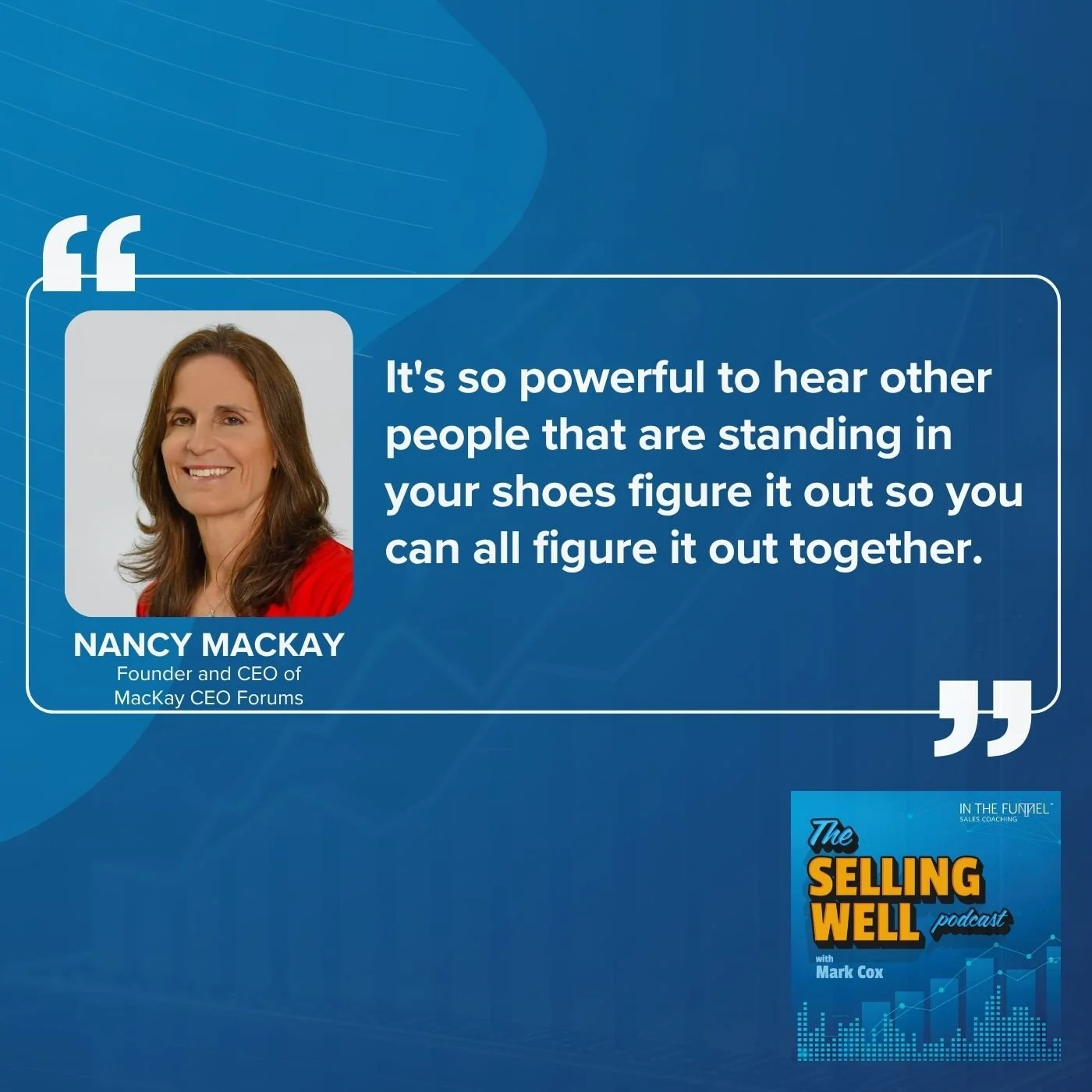
For me, ever since I started MacKay CEO Forums years ago, I'm very passionate about helping CEOs with their careers, and I don't want them to sacrifice their health and their important personal and family relationships. When you sit around and hear other CEOs talking about, “I work out every day or I've been able to figure out how to set boundaries, so I can have date night with my wife or I'm able to find ways to keep up my hobbies,” and what have you. It's so powerful to hear other people that are walking in your shoes figuring it out so you can all figure it out together.
We're going to get into the different areas of mastery in the MacKay Mastery Model. It's so critically important. It's so logical the way you've laid these things out. Hearing it and reading it sometimes is such a good refresher and reminder to us all. I had this conversation coincidentally with someone over lunch. A person tuning in to the show will remember this.

They were a very senior C-Suite executive. They said that after going to Medcan and getting some news about something, they had this epiphany that said, “I have to take care of myself first.” Medcan, for American readers, is concierge health. It's where we go for more significant concierge health. The whole idea here is it doesn't have to get to that. Whether it's a physical challenge, a mental health challenge, or anything, there are ways of setting these boundaries. There are ways of building that model.

I love the way you came up with this structure, the mastery model, during some of the toughest times for all of us. During COVID, you started to take a look inside and say what was providing you with inner strength, fortitude, and energy. The elements of the mastery model are the chapters of the book. We talk about time mastery, ego mastery, and proactive health. We talked about that mastery. We talk about relationship mastery, passion mastery, innovation, 100% responsibility mastery, shared experience mastery, and then social contribution mastery.

I love the way it's laid out because each chapter is such a clean read. I've been reading this over the last week. I mentioned to Nancy that I used one of the habits, which was very helpful in a situation, talking about relationship mastery. I put myself in a better frame of mind because I remembered I loved not the behavior, but that the person was very helpful.

In this episode, we're not going to go through every chapter in detail because we've got time constraints. You're going to do that when you click on the link and buy the book. You'll be glad you did. You can send me the notes and tell me that. I'm going to pick a couple that were favorites for me to talk about, if that's okay.

We start the whole book by saying, “You go first.” The quote I liked you put in was, “CEOs who truly excel find deep fulfillment while delivering exceptional results. They all share one critical trait they've mastered. The ability to inspire themselves first before attempting to inspire others lies at the heart of everything.” Let's talk about that. Why is it so critical that we inspire ourselves so that we want to jump out of bed engaged at 4:00 in the morning before we try to run our companies or sales teams, for that matter?

Inspiring Yourself First: The Mastery Framework

I'm glad you used Medcan as an example because they're one of our national partners. They support all of our members across Canada to make health their number one priority. I'm often quoted as saying, “Dead CEOs don't meet their targets,” because twenty years of listening to CEOs in their peer group meetings, not getting their annual health checks, and not doing preventive assessments is heartbreaking. They are so talented, and yet, they don't take care of themselves first. That is a fundamental philosophy that I have in leadership.

I have spent twenty years helping people become more effective leaders through peer support when I was a professor, consultant, and what have you. I came to this conclusion, especially during COVID, that it all starts with me. If I can't figure out how to inspire myself every day so that I can show up as the best version of myself, not just at work, but even more importantly, our kids are more important to me than anyone else, I want to be doing everything I can every single day.

I'm showing up as an inspired human being and making the biggest contribution to the people around me in all aspects of my life. That takes a lot of work. It's not a simple thing to figure out. All the different ten chapters of the book, like passion mastery, emotional mastery, and all these things that you mentioned, are a daily journey of blocking the time so I have time for me.

I make sure I work out every day. I make sure I do my mental fitness. I make sure I spend time with my husband and my kids. There are all these sorts of things every day, every week, every month, and what have you. All of that is part of how I feel like I'm living a dream life. I'm not trying to be Pollyanna. There are lots of bumps in all aspects of my life. When I start by saying, “I need to figure out how I can show up every day as the best version of myself.” It’s a full stop. I don't spend my days going, “How am I going to inspire everybody else?” I don't know what's going to inspire you.

I'm glad you said the book is not just for CEOs. That's the main target because that's been my world for twenty years. I want that toolkit for everyone because then they can figure out how to inspire themselves and take that 100% responsibility and accountability. You're not waiting around for the boss or somebody else. It's a very fundamental principle of leadership. Focus on yourself, and you can be an exemplar for others to then learn and grow. We're all on the journey together is the way I see it.

Leadership is just focus on yourself and you can be an exemplar for others to then learn and grow.

That is so well said. You're right. I was reading the book, and it touched everything for me. At heart, I'm a sales leader. I know I run a company, I'm an entrepreneur, and all those kinds of things, but if you look at my passport, it says sales leader. I thought about the first early days of being a sales leader, and I was so confused by the role. It was a very difficult time for me. I was not good at it when I started doing this many years ago, running large sales teams.

At one point in time, I remember having a conversation with somebody on the team who was a good performer. I almost dropped this thing, saying, “If this keeps up, hopefully, we could see about getting you promoted. You could step into my role. At some point in time, you can run other people.” He said, “That's the last thing I'd ever want to do.”

I said, “You seem so ambitious. Why wouldn't you do it?” He shared and said, “It’s because you're so unhappy. You make it look so awful.” What a wake-up call. He was right. I was unhappy. I didn't have these strategies. I saw the team as tools for me to hit my bigger goal. I didn't understand the job was about elevating them. It was such a great piece of direct feedback that was so helpful to me back then. We're different now.

During the Proactive Health Mastery, you can talk about the fitness regimen Nancy has. She's at the caliber of a semi-pro athlete. Peloton five times a day, Zumba, and weight training remotely. I got tired of reading it. For me, I've got a good fitness regimen. I prioritize working out because of mental fitness. The better I feel physically, the better everything else works.

If it's okay with you, let's jump into a couple of chapters. I'll be selfish here. These are the ones that either resonated with me or are going to be resonating with everybody who tunes in to our show, not just CEOs, but sales leaders, salespeople, and lots of different business professionals. Chapter three is Ego. A couple of things resonated with me.

First of all, I talked about these models and methodologies. The House of Ego is becoming aware of the negative state and the use of thousands of thoughts. This House of Ego is built on looking good. Who hasn't been there? Our brains are wired that we want to look good. We don't want to look silly or look exposed. Playing the blame game, judging from a high horse, being defensive, and being right. Tell me a little bit about that. First, we'll talk about the House of Ego, and then what do we do about it to get back to the house of leadership?

Mastering Ego: From Negative States To Leadership

The House of Ego is such a great way to help people build awareness. Generally speaking, when someone is in a negative emotional state, they're angry, frustrated, annoyed, stressed out, and freaked out. They feel all the negative emotions. Guaranteed, your ego is going to be very loud. A number one tip I give people on how to learn how to park your ego is when you're in a negative emotional state, do not talk to another human being. Do not pick up the phone. Do not send an email and copy everyone you know. I call it crazy talk. We say things that we would never say if we were in the House of Leadership, which is showing up as the best version of ourselves.

When someone is in a negative emotional state—angry, frustrated, stressed out—your ego is going to be very loud.

This ego gets in the way of relationships, wastes a lot of time, and causes a lot of huge mistakes to be made when people are in ego talk. You have to become self-aware. If you're in a negative emotional state, you want to take a deep breath, and you want to get yourself into a positive emotional state before you interact with other human beings. That's a fundamental leadership principle.

Most people are not self-aware that they're in a negative emotional state. They're showing up in the House of Ego 80% of the time. The number one thing is I want people to become aware. We're all human. I get into ego talk, too. My husband and kids will tell you that I'm not perfect. I keep getting better, to your point. It's a lifelong journey to master each one of these areas of leadership and self-leadership.

Become aware that you're in a negative emotional state. Don't point the finger at the people. Point the finger at yourself. How do you get yourself into a positive state? The number one way to do that is to focus on success, winning, and what you want. It's impossible to be in a negative state and have ego talk when you're getting yourself into, “What does success look like? What is it I want? What does winning look like?” That's the opposite. That's the House of Leadership, when you get yourself into a positive state. There's a lot more to it, but that's the principle of how you learn how to park your ego.

The most important thing is when someone else shows up, and they're sending you a nasty email, like, “How dare you do this?” or they get defensive, or they play a blame game, or they're making you wrong, most people fall into that trap of, “Now I have to get back.” Then, two egos are talking to each other. Nothing good can come from that.

When you see someone else in their ego talk or in a negative emotional state, the number one thing you want to do is have compassion and realize that this person is in a negative emotional state, and they're saying things that they're going to regret. Instead of making them wrong and getting into it, you want to say, “I'm so sorry to hear that you're upset or angry. I've got some tools in there.” Mirror back, validate what they said, and have empathy. That's the very fundamental leadership toolkit of how you park your ego and not judge other people when they're in a negative ego state. The world would be a much better place if every single human being on the planet could learn that chapter of Ego Mastery.

When you see someone else in their ego talk, the number one thing you want to do is have compassion and realize they're just having a negative reaction.

We'll double-click on that. I love that thought. It’s not just about managing our own emotional state. The book is pretty clear that nobody is going to be in the perfect emotional state 100% of the time. Let's play with the 80 rule. Eight out of ten times, 80% of the time, being in the right emotional state. I love how you say we've got to take ownership and accountability for that, and then identify when a trigger is coming.

For me, there are things even in a business setting that I find as triggers. I've been open. We've talked about this on the show. Those are things like a lack of accountability or complacency. We're not a large corporation, but working with large corporations, you're going to come across some people who are not just disengaged, but they're actively disengaged. We’ll get into the Deloitte research later on.

Those things are triggers for me. I recognize that coming, and I go, “Don't respond.” I've got the lizard brain that everybody else has, so everything in me is screaming, “You're right. Address this a certain way.” It never works that well. It's never the right thing to do. We'll double-click on MV and CVA when you're in the House of Leadership. MVA means Mirror, Validate, and Empathize. CVA means show you Care, be Vulnerable, and be Assertive. These are ways we show up in our best selves. These are all elements of the House of Leadership. The roof is to give others credit.

This is one of the things I love so much about the book. I find that there are these universal wisdoms that you’ve captured from multiple different sources and developed yourself. You did the old Mark Twain thing. The Mark Twain quote is, “I wrote you a long letter. If I had taken more time, I would have written you the short letter.” You took the time to write the short letter so people like me can process it. You can capture it and apply it in those daily habits to get a little better.

You talked about that emotional state. I found one of the things I found most interesting. You are a Time Mastery expert. You and Nico Human wrote another book, which is I Don’t Have Time. It’s a bestselling book. It is also a great, quick read. You want to pick that one up. When I read chapter two, Time Mastery, I was thinking we're going to get into schedules and being tight. There was nothing about that. It was so great where it said, “We take this up a level.”

Let's talk about the gaps or the problems that a CEO gets in trouble with. Where do they get in trouble in terms of their Time Mastery? Number one, the 724 mistake, which is, “I've got to work all day, every day, and every night. I've got to be exhausted to get the work done.” Number two, the do-it-yourself syndrome. It’s like, “I've got to do everything. Nobody can do it as well as me. I'm great at everything.”

It is tied to this third one, which is making poor decisions in a bad emotional state. The amount of time you waste because you're trying to fix something. You have to go back again. Tell us a little bit about other strategies on the Time Mastery front. You also touched on a cool happiness formula, which is pretty important for people to know.

Time Mastery And Breaking The 24/7 Mindset

This is why Nico and I wrote the book called I Don't Have Time. It is because we consistently hear CEOs saying, “I don't have time to do my annual health check. I don't have time to spend with my wife or my kids.” That's a mindset. Time Mastery, in my view, is a mindset that you have 100 waking hours a week if you get the recommended 7 to 8 hours of sleep a night. We all have time. We have 100-plus waking hours a week.

Time mastery is a mindset. We have 100 plus waking hours a week, and time mastery is really about taking the time to think about how much time I need to take care of me.

Time Mastery is about taking the time to think, “How much time do I need every day to take care of me, my health, my fitness, and my me time?” Whatever it is, and blocking that in the calendar. “How much time do I need with my spouse doing date nights? How much time do I need with my kids and any other commitments? How much time do I need to have some free time and hobbies?” Get the vacation time and block it in the calendar. That's the most important of the 100 waking hours.

Whatever time you have remaining, you can do this thing called work. What most CEOs do is they do this thing called work, and they fall into the 24/7 trap because they feel it's the only way to be a successful CEO. They’re like, “I have to work. I'll then stuff in time with my wife or my kids if I can or take care of my health.” The mindset shift is that you go first. Block the time you need to be the best version of yourself. That's not a selfish thing to do. It's a necessary thing to do to get rid of the burnout that we see happening in spades.

It's historic levels of CEO burnout, so much that we have the highest level of CEO resignations. We have CEOs who are done. They're exhausted, burnt out, and overwhelmed. They don’t want to do this AI thing. It's heartbreaking for me because I know that. Figure out that you have 100 waking hours. You're human. You don't have to work 24/7 to be successful. In fact, you'll be more successful if you take care of yourself.

You'd see so much more of it. You've worked with 5,000 CEOs. To me, even as an entrepreneur, that was the hardest concept to get through my head years ago. You have to step away, and when you step away, you'll be better. After years of putting it in, it's so clear to me now. It's so clear to me that my brain will work far better at certain times of the day, for sure.

I like some of Daniel Pink's stuff. I'm way better in the morning. I do stuff where I don't have to be sharp in the afternoon, typically. I've got to step away. When I come back, I have more to give everybody. Not just my team, but our clients want that, too. They're paying for the best version of our team. We've all got to be rested, relaxed, and recharged.
CEO Leadership Strategies: The number one way to get into a positive state is to focus on success, winning, and what you really want.

It's tied to the do-it-yourself. I was coaching a CEO, and he wanted to take some vacation time. He was like, “I can't because there's too much going on.” I'm like, “That's exactly why you need to be taking the time.” The do-it-yourself is, “I'm the only one that can keep the sense of urgency, the momentum, and everything going on. If I take time away, then the whole thing's going to break down.” I'm like, “That's tied to ego. If you're running a company with all these people, this is a pretty significant business. The thing is going to go down because you two take two weeks off? That is not reality.”

We get sucked into the busyness. Oftentimes, it takes someone to hold the mirror to go, “Block the time. Let people know you're not available.” I've said that probably thousands of times to CEOs. I’m like, “Block the time off. The world's not going to end. Other people are going to step up. You're building future leaders. There are about a million reasons why. You have to let go of the do-it-yourself and realize it's about building future leaders and enabling people to step up.” We get in the trap of the do-it-yourself and the 24/7. It causes a lot of burnout. It's a problem.

My experience with some entrepreneurs and some CEOs is that I find they're very good coaches for other people, but it's tough when they're looking in the mirror. We jot some things down on paper, and I say, “If we were talking about somebody else's business that you're not so emotionally connected to, what would you think they should do?” Suddenly, there's a bit of that distance.

These are folks who, I'm assuming, are the same thing as people who run sales organizations, are super confident and super deep in their industry. They've been doing it for years. They have a lot of things that showcase that the way they do things has made them successful. Whatever habits and approaches where they were burning themselves out worked because they became the CEO. Sometimes, breaking those habits is a little bit tricky. I played with that in my own head for a long time when I was running sales organizations. People would say, “You work too hard,” and I go, “It's working for me. Look at the success of that.

How do you earn their trust so they can take the feedback, process it, and work with you? You've got a model here where that's worked. You've had so many major league CEOs working with MacKay for so long. How is it you get them to come in, and then change behaviors, and you build trust and credibility in the organization with these people in such a short period of time?

I have to be honest that the highest-impact way to get people to change their behaviors is sitting around the table with their peers and hearing their peers talk about, “I was in your shoes, and I burnt out and what have you.” That is the most effective way to get the behavior change. They learn from each other. It's an add because then, as their chair, if I'm working with them, and there's a lot of trust, then I have permission to challenge and say, “You can keep doing it the same way. At the same time, what if there was a better way?”

It's so hard to let go of the past. That's one of the biggest challenges. To your point, if you've been successful doing it the same way, why not keep doing it the same way? There's a moment in time with AI and exponential change that's going on. More CEOs are realizing they can't keep doing it the same way. There's too much information coming at them. They have to set those boundaries. They have to be able to take care of themselves and be very focused and strategic around the big rocks that you need to move based on who you are and the influence that you have.

It makes all the sense in the world to me. It's so logical, that support from the peer group, and also in a third-party organization where you're not going to be judged. Sometimes, when you're in your own corporate organization, they say, “HR is there to support you,” and so on and so forth. Sometimes, that's true, but it's not always, so you can't be as vulnerable.

If you're running something major and reporting into a global CEO, you can't go into that meeting and be vulnerable. You're going into that meeting to show that global CEO that you've got things under control, and you're going to hit your goals and objectives. It's nice to have somewhere else to go to say, “These are the things that are tasking me right now or challenging me. I need some help. It feels like a safe space to do it.”

I will reinforce those of you who have been in our workshops. Sometimes, they're private custom workshops for large companies. Frequently, they're public workshops with 3 people from this company and 4 people from that company. We've got a room of 60 people made up of 12 or 15 different companies. The feedback is always that the best learning comes from hearing what somebody else is doing. Different industries with completely different products don't matter. It's the same thing as saying, “I'm interested in seeing what everybody else is doing.”

Given the time, let's talk about one more chapter. Folks, you can already hear the value you're going to get from reading this book. This one's a powerful book. I'm a little old-school, as everybody knows. I love a printed copy of a book. I love a hard copy. I'm going to keep coming back to it. My books are all dog-eared. I always remember there was a piece of research in a book. This is why I have a small number of 100 to 150 books on my bookshelf. They're never going to leave. This is one of them. It's fantastic and beautifully written.

Chapter six is Relationship Mastery. Here's one thing. I got it by the end of the book. I'm an emotional person. I'm a caring and loving person. Friends, family, and even clients would identify me as being warm. Don't chat and contradict me for this, people, but they'd say I'm warm. We reference love quite a bit in this book. Tell me a little bit about the definition of business love.

Relationship Mastery: The Power Of Business Love

You're masterful at showing love.

Thanks.

The work that you've done with me personally and MacKay CEO Forums. You're helping us with our sales playbook. The whole idea of showing love is all about love to every human being. You don't have to love their behaviors. I honestly go through life that it doesn't matter who I'm interacting with. I love every single human being, especially if I'm going to walk into a difficult, challenging conversation.

Someone's upset that they didn't get the promotion, or someone's upset that they're in a conflict with someone else. I get myself into a positive state, and then I remind myself that I love every human being. It doesn't matter how they show up in their behaviors. That helps me. It's that 5:1 ratio of positive and negative. You have to keep the emotional bank account full. It doesn't matter.
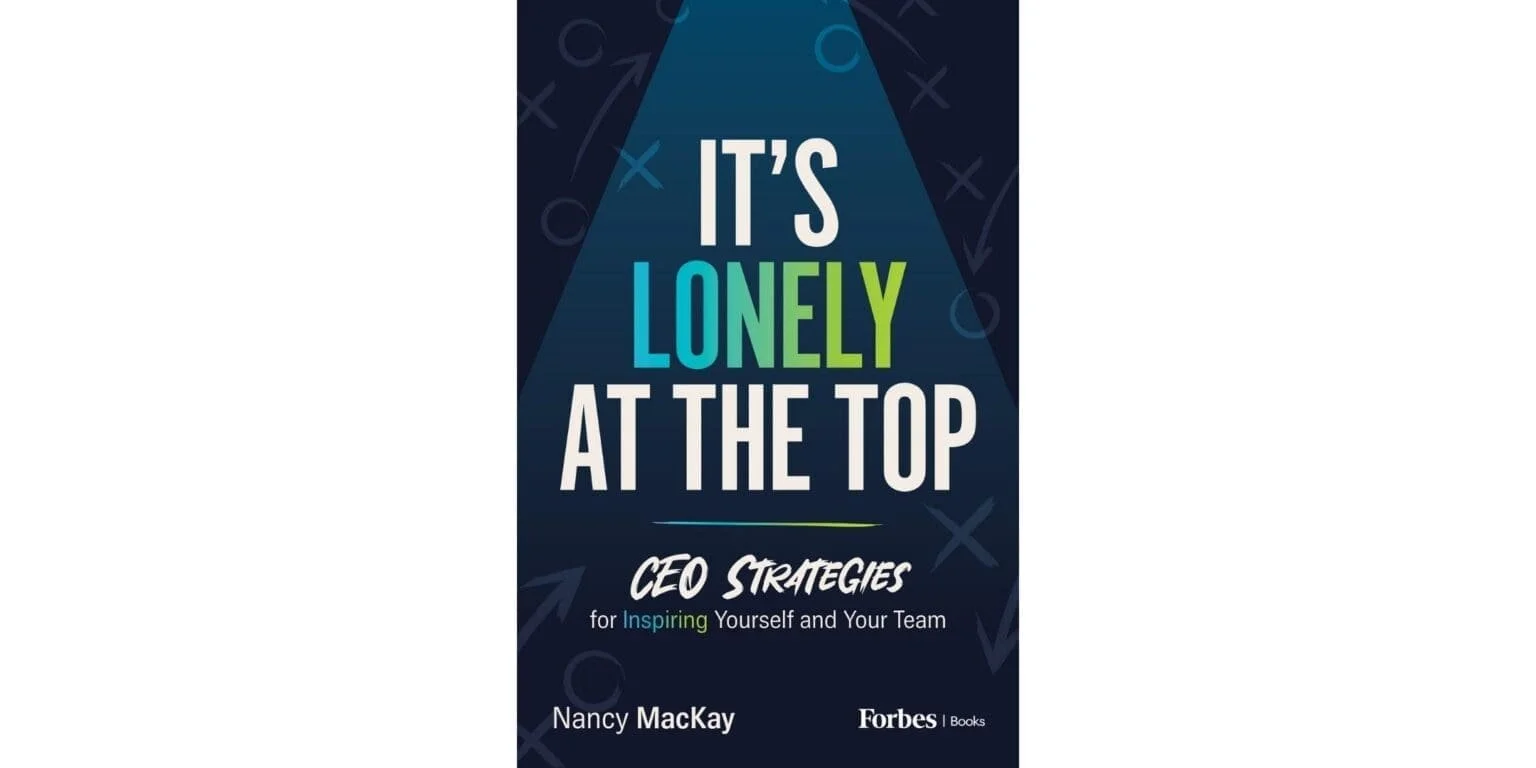
It's Lonely at the Top: CEO Strategies for Inspiring Yourself and Your Team

I've had people yell, scream, swear at me, and all of that over twenty years of coaching CEOs. I don't take it personally. When someone's in a negative emotional state, it's crazy talk. Why would I take that personally? I feel like, “How do I help them get into a positive state being a caring, vulnerable, and assertive human being?” I’m like, “You're important to me. I understand that you're upset.”

It is using all of that so I can get them in a positive state. I know if I can help people get into a positive state either with me or with each other, then we can problem-solve together. It’s noise when people are saying negative things. Many people take it personally, hold grudges, and write people off. It's not the way to show up.

What a great mental framework for you walking into that meeting. We had a guest on the show, a guy named Dr. Nick Morgan. My memory may not be perfect on this, but he was a coach to professors at Harvard. The long and short of it was he'd had a brain injury as a child where he was in a coma for a very long period of time. He was about 17 or 18. He came out of it, and for a year, he couldn't relate to people. Although he could think and speak properly, he couldn't make human connections. When he came back to normal, he decided to spend the rest of his life on brain science and understanding what was taking place.

I'll get the numbers wrong, but the idea was that when we're interacting with somebody else, there are some conscious triggers that we're going to pick up on. Nancy's smiling at me. I can see her eyes. She's nodding every once in a while, when we're talking. She's got positive body language. There are conscious triggers.

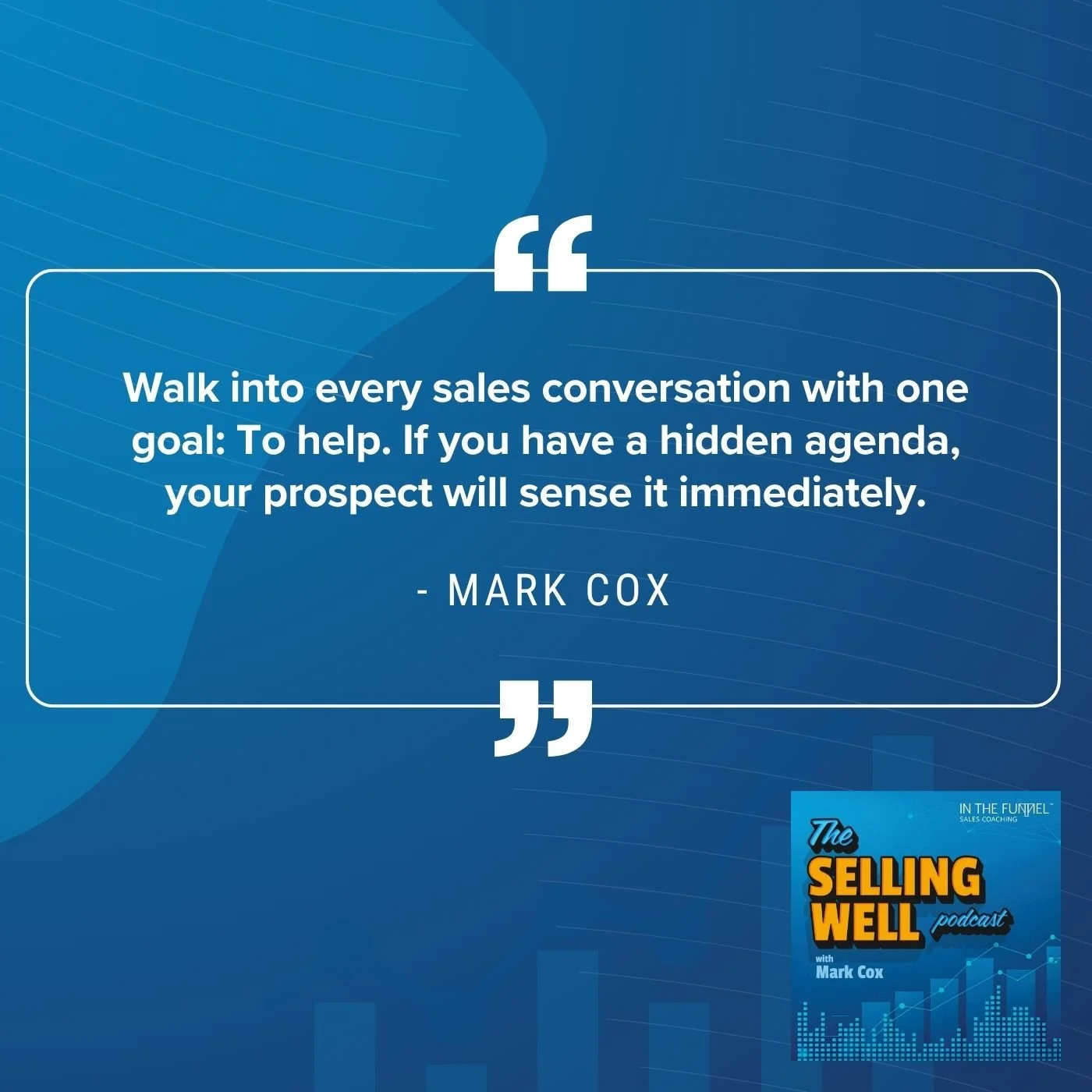
I can say, “Nancy is engaged in this. This is going well.” There are 1000X subconscious triggers where Dr. Nick Morgan definitively said, “People can sense your intent.” It’s so important for interactions with folks when you go in with that mindset. Even if you are having a tough time, people can sense your intent.

For us, in the world of selling, we're always coaching people and saying, “Walk in and try to help somebody. Forget about selling. Forget about building pipelines. If you're a sales leader or CEO, and you're walking into a meeting with a peer or a direct report, figure out how to help them. Your job is to elevate performance. If you go in with some other sort of intent in your back pocket, people can sense it.” I love that mental framework. It also makes you more resilient walking into those meetings that could otherwise be quite uncomfortable.

Resilience And Closing Thoughts

I'm not perfect. Sometimes, I do get defensive. I stop and say to myself, “Did I get enough sleep last night? Did I get my workout in? What got in the way of my ability to show that I am a caring, vulnerable, and assertive human being?” Business is about people. Life is about people. It's worth it to learn how to master relationships. You don't have to be that person that's spreading the negativity virus. You can be that person to lift other people up, especially when they're being challenged and either in their ego talk or in a negative emotional state.

How beautifully said. We'll talk again, for sure. Team, we've been talking about It's Lonely at the Top: CEO Strategies for Inspiring Yourself and Your Team. There's nobody out there who is tuning in to our show that shouldn't pick up this book. You're going to get value, insight, and knowledge. Also, Nancy is growth-oriented. There are so many other great authors, some of our old pals that we always loved. I hadn't heard Tony Robbins referenced in a book for a long time. I loved Tony Robbins. I loved that stuff back in the day. It's still relevant. For the people tuning in, they want to learn more about you and MacKay CEO Forums. What's the best way of learning more about what you do?

The best way is our website. They can visit anytime at MacKayCEOForums.com.

Thank you so much for joining me. What a great conversation.

Thank you for inviting me and for all the great work that you're doing. I am excited to be able to introduce you to our MacKay CEO Forums community because of the impact you have on companies, especially at a time here in Canada where we need to help Canadian CEOs win, grow, and have the right sales talent pool and sales playbooks to be able to grow their businesses. I am so grateful for our time together. Thank you for your contribution.

It has been a real pleasure and a privilege working with you. That's going to continue. Thank you. Team, thank you for tuning in to the show. We run this show and talk about coaching, leadership, mindset, and B2B sales to overall improve the performance and professionalism of B2B sales. We believe in doing that, we're improving the lives of everybody in sales.

Thanks so much for tuning in to the show. If you liked this episode, please like it and share it because that's how we get great guests like Nancy. If there are things we could be doing on the show to make it even more valuable to you, we're growth-oriented. We love constructive criticism. You can send me an email at MarkCox@InTheFunnel.com.Let us know what we can do to make this even more valuable to you. That's my personal email. I respond to every piece of constructive criticism. Please be direct. We love it. In the meantime, I'll catch you on the next episode.

Important Links


About Nancy MacKay
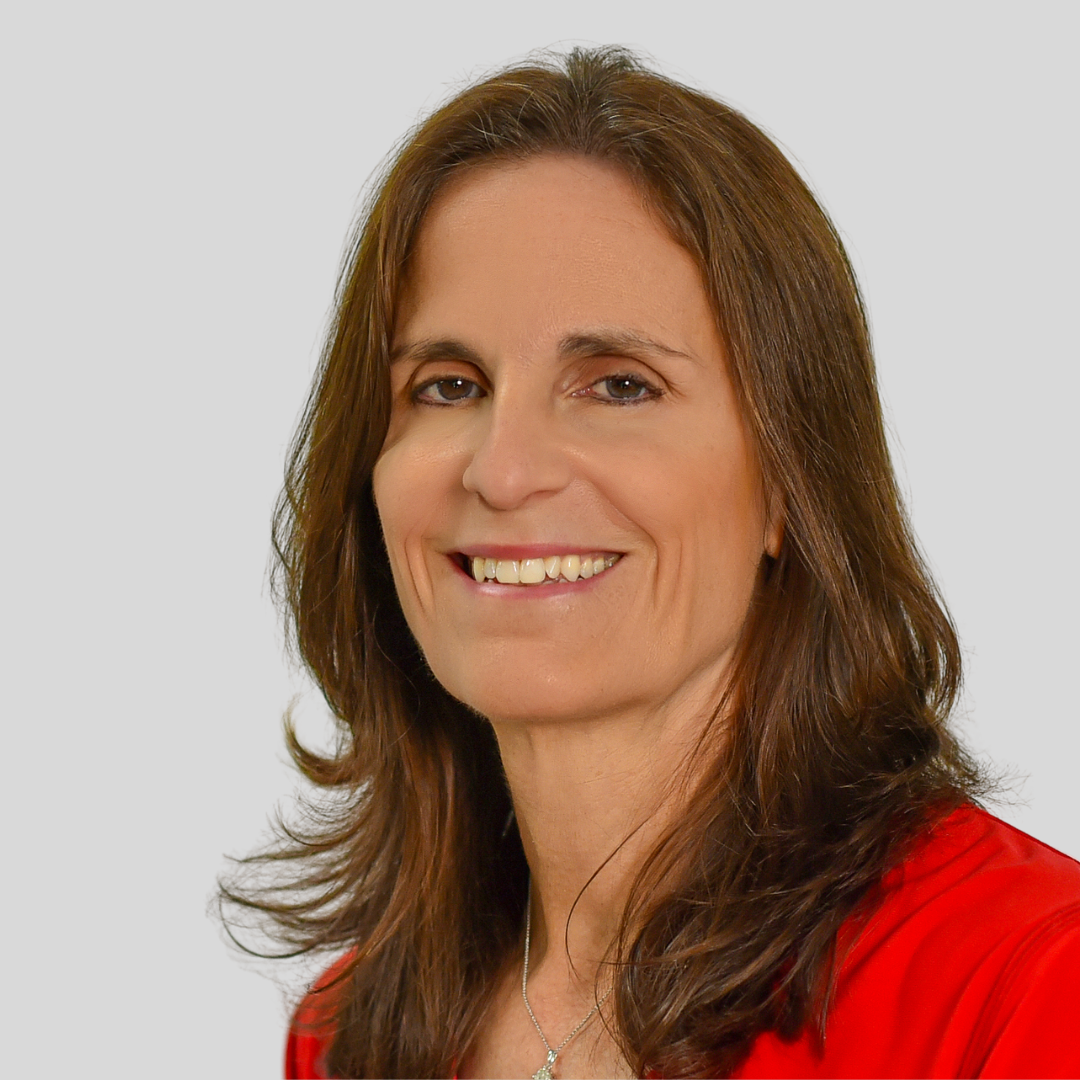
Nancy MacKay, PhD is the Founder and CEO of MacKay CEO Forums, a Certified B Corp driven by her mission to populate the world with inspiring leaders. Since founding the organization in 2005, Nancy has supported CEOs, executives, and business owners through confidential, high-impact, and time-efficient peer learning, building a community of more than 1,300 leaders across Canada. Today, MacKay CEO Forums is facilitated by 60+ Forum Chairs and delivers an independently measured ROI of 708%.

A seasoned CEO coach, keynote speaker, former university professor, and best-selling author, Nancy is known for translating the real pressures of leadership into practical strategies that drive clarity, performance, and resilience.

She is the co-author of I Don’t Have Time with Nico Human and has co-written The Modern Trusted Advisor and The Talent Advantage with Alan Weiss. Her forthcoming book with Forbes, It’s Lonely at the Top, explores how leaders inspire themselves and others while navigating the isolation of senior leadership. She also hosts the podcast It’s Lonely at the Top, featuring candid conversations with CEOs about the realities of leadership.

Nancy serves on the boards of the GenWell Project and the Rick Hansen Foundation Campaign Cabinet and co-chairs the Vancouver Committee for Canada’s Great Kitchen Party.

How Curiosity Transforms Companies And Cultures With Dr. Diane Hamilton

In a world drowning in information, a curiosity culture is a lighthouse, guiding organizations towards uncharted territories of discovery and growth. In this episode, Mark Cox welcomes back Dr. Diane Hamilton to delve into her latest book, Curiosity Unleashed: Achieving Business Excellence by Challenging the Status Quo. Dr. Diane explores how cultivating a curiosity culture within organizations can drive substantial financial gains and enhance employee engagement. She highlights the significance of emotional intelligence in sales and how curiosity can enhance empathy and problem-solving. With fascinating insights, Dr. Diane provides a compelling case for cultivating a culture of curiosity.

---

Watch the episode here

Listen to the podcast here

How Curiosity Transforms Companies And Cultures With Dr. Diane Hamilton

Introduction

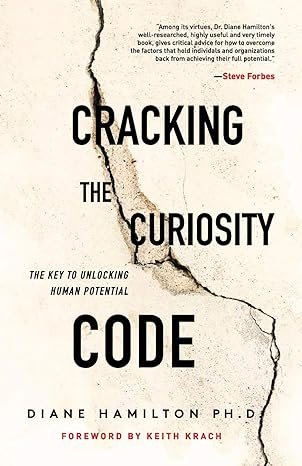
We've got a spectacular show for you in this episode of The Selling Well, with a return guest, Dr. Diane Hamilton, PhD. You may remember that about a year ago, we had a great conversation with Diane about her book Cracking the Curiosity Code: The Key to Unlocking Human Potential. Of course, curiosity is an unbelievably important trait in business, relationships, and professional sales.

That book discussed the history and importance of curiosity for human beings. This new book we're talking about in this episode, Curiosity Unleashed, picks up where the last one left off. It dives deeper into the value of curiosity and includes examples of individuals and organizations that have benefited financially from developing curiosity, as well as examples of those who failed by getting stuck in the status quo.

I love the way this book is structured because Diane is a nationally syndicated radio host of a show called Take the Lead. She's interviewed everybody, presidential candidates, celebrities, top business leaders, and entrepreneurs. She includes snippets of some of those best conversations at the beginning of the book.

She showcases questions about curiosity and leaders' responses, whether it's Amy Edmondson, Robert Cialdini, or Daniel Goleman, who created the concept of emotional intelligence. Then, she has ten sections in the book where she talks about the impact of curiosity on businesses, people, financial outcomes, and value systems. She also discusses how AI will play into the world of curiosity.

We also talk about some of the barriers to curiosity. What gets in the way of us executing our curiosity? You may remember from the first book that the acronym was FATE, Fear, Assumptions, Technology, and the Environment can get in the way. Overall, it was an incredibly interesting conversation with Diane. There’s more learning to do, but I learned a lot about curiosity. I think you're going to enjoy this episode, and when you do, please like and subscribe to The Selling Well podcast. Thanks for doing so. Here's Dr. Diane Hamilton.

Hi Diane, welcome back to The Selling Well podcast.

Thank you. I'm excited to be here.

We're excited to have you back. By the way, we're curious about your book. Folks, you'll remember we had Dr. Diane Hamilton on the show maybe eighteen months ago, and at that time, two things really stood out to me. One was that I had been listening to some of the broadcasts from Diane's Nationally syndicated radio show, where, by the way, you should check it out, Diane interviews everybody.

Every celebrity, presidential candidate, author, every big-league name you can think of, Diane has interviewed them. That show is called Take the Lead, and you should check out that nationally syndicated radio show. At the time, we were talking about Cracking the Curiosity Code. Everybody knows we've been talking a lot about the importance of curiosity in life.

Curiosity Unleashed

Cracking the Curiosity Code discussed the history and importance of curiosity, but Diane has just released a new book, Curiosity Unleashed, where we explore the actual impact on people, businesses, and innovation. We also touch on things that will happen with the advent of AI. Since we've got her here, Diane, what prompted you to write that second book, Curiosity Unleashed?

I thought that I had written everything I wanted to write about curiosity because the first book was exciting. What was interesting to me about writing the first book was that halfway through, I realized I had to address what was keeping people from being curious. That led to the creation of my Curiosity Code Index.

I mention that because that index helped me find out what inhibited people from being curious so I could help them build their curiosity. What I didn't anticipate was how much I was going to learn from all the training and speaking I did over the last five or six years, based on everything I had done with all the training courses and the questions I got. You can't answer everything in one book.

This new book addresses everything I've learned since then, based on all that. It ties in much more to financial connections because I got a lot of questions about that, and it turns into more stories of companies that either succeeded or failed depending on whether they embraced or resisted status quo thinking. That's how I define curiosity, it's the ability to get out of status quo thinking. It's not just about reading a new article or asking a different question, it's much more than that.

I took everything I'd learned from working with major companies, I created videos with Verizon, spoke with LinkedIn, did training with EO, went to Europe and did things with Thinkers50, and I found it was crucial to help people see the connection between building a culture of curiosity and how it helps financially, without being boring or just talking about statistics because people don't want that.

By the way, your books are anything but boring. Let me just jump in. We read a lot of books, and they’re anything but boring, especially in how they connect the dots between the core capability of curiosity and its connection to innovation, values, and business results. All of these things, and these real-world examples, are universal among the leaders and entrepreneurs you've spoken to. They all identify curiosity as a critical trait.

It's fun to incorporate something you mentioned. I've interviewed so many people, and I'd like to think I’ve interviewed everyone I wanted to. It feels like it. Everybody I've interviewed is interesting. I included a chapter right at the beginning, if you've read through some of the book I sent you. That was one of my favorite chapters.

I included some of the highlights of what some of the most curious minds had to say about curiosity when they were on my show, whether it was Daniel Goleman, the top emotional intelligence expert, Amy Edmondson, who is currently the top thinker in Thinkers50 and a Harvard professor, or even Albert Bandura, who was a top psychologist before he passed away.

Think about it, next to Freud, who do you hear about the most lately? He was sweet, too. He invited me to his house, and we talked, and he was just such a nice man. There's so much in there, Tom Peters, and just the names I was able to connect with to get their insights. To me, that's my favorite chapter, just because I didn't write it, they did. They offered such wonderful wisdom.

I found the same thing while reading it. In a second, I'll ask, how did you pick those six or seven? You've interviewed hundreds of people. Given the people you've had on your radio show and that you've interviewed, are you sure you made the right decision to join my show? Do you even know?

You're at the top of my list. I love selling. I’ve been in sales for most of my life, and I love what you do. How did I pick? I was looking for the most interesting statements about curiosity. I didn't always talk about curiosity with everyone on my show. In my talk with Steve Forbes, I didn't talk to him about curiosity. I would have loved to have included a clip from him, but it just depends on who I talked to and where the conversation went.

My shows are transcribed on my blog, so I started searching for the word curiosity, to see where it was showing up. I thought, “I forgot that conversation.” When you're doing the show, sometimes you forget what you're talking about because you're managing everything at the time, and it's good to go back and review. Reading some of the things Doug Conant, who turned around Campbell's Soup, or Zander Lurie, who was CEO of SurveyMonkey, said these people had such insights that I thought, “I wish I had said that.” So I kept it.

I love that. By the way, folks, this is at the start of the book. You mentioned Daniel Goleman. For those who don't know, Daniel Goleman brought emotional intelligence into the common nomenclature because he started with research in that area. Now, we use it in every performance evaluation we look at, but that wasn't the case 25 years ago. He was a leader in this. When you chatted with him, it's interesting. The quote I love from Daniel is, “There are two strategies that companies and people generally use in life. One is to exploit, and the other is to explore.” That knocked me over.

Yeah, and it's true. He talked about going into journalism and the things they wanted him to do versus different areas of his career. I love exploring. I love the ability to do that. I talked to many professionals where exploring is sometimes frowned upon. I'm going to be a keynote for international project management for their 30th anniversary. A lot of project managers don't want to get off track to get here, but they don't consider the opportunity cost. That need to explore sometimes gets filtered out of people depending on their profession. I had it in sales. I don't know if I shared it the last time I was on the show, but I had that experience where we had to say certain things, and I neglected to ask questions sometimes.

I did a lot of stupid things because of it. It was because we were drilled into our heads that we had to get this certain message out at any cost. That hurts. Going back to emotional intelligence and Daniel Goleman, all that is empathy. If we can't empathize in sales, that's a huge problem because we're just selling to them.

When we can't empathize in sales, that's a huge problem.

We're not asking them about their pain points. We're not doing anything but just getting our message out because we have to say these certain words fast. I was as guilty of that as anybody, but in your early twenties, they train you. You've gone through this great corporate onboarding, and you think you know it all, but unfortunately, we often don't.

Diane, you referenced one of the companies that took me through that onboarding. Unfortunately, they're one of the companies that stuck to the status quo. My first job ever was selling photocopiers for the Eastman Kodak company. By the way, I'll call it out. That organization had some of the nicest professional people I've ever met in my life, but they could not cannibalize their core business offering, which was traditional physical film. Although they invented digital photography, they didn't want to cannibalize their core business. They let others completely eat their breakfast.

Yes, that's such a sad story. Think about it, when you walked into every store, you'd get hit over the head with film. There was so much film everywhere. It happens everywhere. It blows my mind to not see it the way it was, but many companies like Kodak had this great success in the past. They think, “We've got to cling to that because it worked. We’ve got to keep repeating it.” What worked for you in the past could be the worst thing for you in the future. That's what people don't want to hear because they have that sense of safety.

What worked for you in the past could be the worst thing for you in the future.

It's hard because, again, you've got to be curious. I think having the trait of curiosity, as you aptly brought up in the first book, is something we're all born with. Being curious but applying that curiosity and living it as a core business value, as per Curiosity Unleashed, are two different things. Those are difficult things.

Just double-click on section one, and team, there are ten great sections of the book. We'll touch on a couple of them that are relevant here today, but I'll call it out again. Having just finished our book, Learn to Love Selling, Diane was one of the people who was very kind to provide a testimonial, thank you. I am aware now of what a well-written book that's enjoyable to read looks like.

I'm not sure we got there quite yet, but your books are absolutely in that category, folks. Both Cracking the Curiosity Code and Curiosity Unleashed, you won't want to put them down. It won't feel like work, you're going to enjoy them. One of our favorites, again, was when you talked about those quotes from your interviews at the beginning, Robert Cialdini.

Yeah, isn't he great?

I've always loved Influence even before I understood why. In the early days of my business career, I loved that book. Your question and response are fantastic. “In my research, I found the environment has a big influence on curiosity. Would you agree?” Then this is a question Robert Cialdini asked, and he came back and said, “It's a great insight.”

My clients will sometimes ask, “What's the one trait I should be looking for in a salesperson?” Folks, my answer is, “Empathy.” Someone who doesn't judge what is the most appropriate or likely effective approach in the situation by self-reflection or looking inside themselves, but by empathizing with the market.

You talked about empathy. Curiosity and empathy, in the early days of sales, we were just taught to pitch, but the truth is, those who understand the client better will do better, and not just listen, but understand. That's all driven by this authentic curiosity. I just love the section on Robert Cialdini, and so will our readers. They hear a lot about him on the show.

He's good. You can listen to the whole show if you want to on my website, but he's interesting. It's funny because my brother and sister took his course at ASU. I'm the only one who didn't get to take his course. I was the only one in business, and they weren't, but they became friends with him. He's a very interesting, smart, and nice guy.

He was wonderful to have on the show. Everybody knows who he is. I was very excited to have him on the show. I thought his insights were good because they tied so much into Influence. That's why all sales are important, but when he talks about empathy, it keeps coming back to how I got into any of this to begin with.

I wrote my doctoral dissertation on the impact of emotional intelligence on sales performance. That all came back to this. It got me interested in the emotional intelligence component, which is interesting. I don't know if I told you this before, but did I tell you how I got into writing about emotional intelligence? I don't think we covered that.

No, I don't think we covered that last time.

It's funny, I was taking a class for my doctorate, and it was the class where you had to decide your topic. I knew I wanted to focus on what correlated with sales performance. I had that in mind and wanted to know what made successful salespeople. I was trying to decide what to correlate it with. I had this teacher who was insane, this guy was just crazy.

I had one or two classes with him, but he was just bizarre. He would say things to me, like he’d make me call him about something, and he’d say, “Welcome to the cave. I'm going to eat you up like you’re a Jell-O pudding and spit you out. It's going to be such a hard class.” I thought, “I’ve got to get rid of this guy.” I would write a paper and turn it in fast because that's how I work, as you can tell by how fast I talk.

He would say, “This was great, but think how much better it would be if you'd taken your time and spent more time.” So, I would just write the same paper again and hold it for two weeks, then give it to him. He’d say, “See how much better that was?” He was that kind of guy. I was talking to him about what I wanted to do because it was the class where I had to pick my topic. I said, “I want to discuss the impact on sales performance.”

He just cut me off and said, “That’s such a great idea, you want to do emotional intelligence and sales performance.” I replied, “What?” I didn't even say that. As you said, Goleman's book came out in ‘95, and he had made it more of a mainstream topic, but I hadn't known much about it at that time. I thought, “Huh.” Right after I got off that phone call, because he was crazy, I dropped him and picked somebody else. And I cannot for the life of me remember what his name was because I want to go back and thank him.

It's a great story, by the way.

He was out there, but I think he hadn't even finished his doctoral dissertation, he was ABD or whatever it was. He was not even finished with his process. I don't know why I even had him, but it made me look up more about emotional intelligence. I thought, “This is such an interesting thing.” That's how I got into it. Because of that, I had to take training to become certified in emotional intelligence tests.

I had to look at the Mesquite versus the EQI and all the different sales tools and EI tools. Because I learned how to become certified in all those different assessments, I wanted to create my own. I found out how much harder it was to create one when I did it. It was tough because you don’t just want something cute to put on your website, you want a valid instrument that you can put in peer-reviewed journals and that people can use. I had to go through quite a bit, but I’ve got to thank that guy. I’ve got to find him.

What a great story. He was a quirky genius before he'd achieved genius level. I love those people, by the way. You take on their quirky attributes.

He might've just read a book that week, you know what I mean? You just don't know.

Curiosity Code Index

Someone who hasn't made it big but behaves like they've made it big. They get the secondary trait of being super famous before they get there, I love that. You were talking about the assessments, that's a nice lead into the CCI. For everybody reading this, and correct me if I'm wrong, outside of that background for creating the Curiosity Code Index, the second idea was not only were you interested in being able to measure your curiosity, but also to help others think about the barriers to curiosity. Is that right?

Right. There are other assessments out there. Kashdan and his group created this other model that is great for measuring how curious you are so you can find out your levels. I didn't want to do that. I wanted to determine the things that inhibited curiosity because to move forward, you have to figure out what stops you.

To move forward, you need to figure out what is stopping you.

My process was different. I hired all these people from unbelievable places to help me, but they were stuck in the status quo, and they kept giving me Kashdan’s model again. I said, “No, he did a great job with that. I don't need another one of those because that's already been invented.” See, his model works great with my model because if you use his model, you will find out your level. You need help in certain areas, you're okay here and not okay there.

Mine, on the other hand, tells you what’s keeping you from improving. Here's how you can do a personal SWOT analysis of sorts and create an action plan, and then you have a way to get better. It's not a DISC where you're a D, I, S, or C thing. It's more like an emotional intelligence test where these are your levels in different areas, and you could get stronger if you do these kinds of things. It was interesting to create it. I've created different assessments now.

I did one in perception, and these are very challenging to do. It takes years of research, and I studied thousands of people in different demographics. It takes a lot of tweaking of questions to figure out exactly how to get the factor analysis to work and all the geeky stuff that no one cares about. That was my process, and I had to fire all the statisticians I hired because they just kept doing the same status quo things. I said, “No, I'm going to take my own advice, and I'm going to do this. I'm going to figure out how to do it myself,” and I did.

By the way, you were referencing Kevin Kashdan. Kevin was on the show. What we'll do, team, is include the links to the CCI, the assessments that Diane's speaking of, and the references to her nationally syndicated radio show, Take the Lead, all those links are in the show notes. Maybe one path, and I know we covered this a little bit last time, but it's worth thinking about it again, are those barriers.

Barriers To Curiosity

When you start to think organizationally or at an individual level, what are some of the things that start to hinder or block this natural curiosity that we all have that you aptly point out in Cracking The Curiosity Code? When we're kids, we're naturally curious. We ask the five whys almost every time, but we start to lose that. What are these things that start to get in our way?

It's interesting looking at how it hits around age five. What was fascinating to me is that we start to lose our curiosity at that age because it's the same as creativity. It just mimics that same peak and then falls. You think about how you get into school, you do certain things at that time, not blaming teachers, but when teachers have limited time and they’ve got all these kids, they can't answer every single question.

There's some impact from education. We knew that from a lot of the research. Sir Ken Robinson's great TED Talk talked about that with creativity. It was interesting because if you look at George Land's TED Talk and the research he did with NASA, he looked at how creativity was super high when we were two, but by the time we were five in that age, it was already declining. Then you get to 31, and it's gone.

What I wanted to look at is, what happens to it? I found when I did the research that I kept thinking fear was going to be a big one because I'd asked a lot of people on LinkedIn and in different groups to give me the top things. I was surprised by at least one of the four factors that inhibit curiosity, and they are fear, assumptions, technology, and environment.

Four factors inhibit curiosity: fear, assumptions, technology, and environment.

I'll explain each of those. Fear is not surprising, nobody wants to ask questions in meetings. You don’t want to look stupid. You don't want to be in a sales presentation and have somebody ask you a question that you don't know the answer to. In sales, we were taught not to lie. Don't fake that you know it, tell them, “I don't know, but I'm going to get back to you as soon as I can.” You look a lot better than saying the wrong thing.

Nobody knows all the answers, but we’re all afraid that we don't. We don't want to volunteer information that could make us look unprepared, stupid, or whatever negative thoughts we tell ourselves. Fear didn't surprise me. Assumptions also didn't surprise me because they’re the thoughts in our head that say, “This is going to be too hard,” “They’ll turn me down,” or “If I ask this question, I’ll lose the deal.”

I'd rather lose the deal now than have it fall apart later because I didn't ask the right questions. You have to think about overcoming those assumptions. There’s so much involved in what we tell ourselves, and these factors overlap. Your assumptions lead to fear, and that's a problem.

The T in technology surprised me more than the others. It’s about the overuse and underuse of technology. We either want it to do everything for us, or we feel overwhelmed and avoid it altogether. We need to balance high and low use of technology, knowing when to rely on it and when to think for ourselves.

If I gave Einstein a calculator but never taught him the math behind it, would he be the greatest calculator worker? We need that foundation of knowledge before relying on tools. It's like an hourglass, you build the base and then build on top of that. It’s important to pay attention because some people love technology so much that they don’t get the results they need.

Stop thinking, or stop learning how to spell. We'll get to AI in a second.

Yes, I want to talk about some of my research with AI and chat. Remind me. The last one is “E” for environment. That was a big one for me, as I could relate to it. Environment includes everyone you've ever interacted with and how they’ve influenced you, friends, teachers, family, current and past bosses, social media, you name it. Anything can influence how you think. We experience confirmation bias and get all these reinforcements of our thinking. Your family might push you toward a certain job or career path, saying sales is the best or worst job, and that influences your decisions.

Exactly right.

When going through the nine sub-factors under each of these areas, we work on that. When I go to companies, they receive a big report similar to what you’d get if you took an emotional intelligence test or DISC assessment. We go over that, share insights, and then whiteboard ideas to create action plans to overcome these issues. The second half of the training is fun because we address the organization's issues, communication, turnover, emotional intelligence, critical thinking, whatever it is. We talk to leaders first to understand their top concerns, but we also get feedback from employees about what they think are the main problems.

Then, we come up with great ideas on how to build a culture of curiosity and identify what’s missing. We know from Harvard Business Review that leaders think they're encouraging curiosity, but when you ask their employees, they don’t agree. There's a disconnect, so you have to approach it from different angles.

What’s great is, whether I’m training or certifying others to do this, we create these reports for leaders. It's crucial because the feedback comes from employees anonymously. I think I mentioned in my book how Disney asked their employees for suggestions on improving their work environment. They got great solutions, like adjusting air vents and tables, which saved them a lot of money. This process is similar. You go directly to the source, get their input, and it translates into financial benefits.

I think when people hear curiosity, they think it sounds nice and cute, but they don’t fully understand what it means. It’s about being innovative, staying relevant, breaking out of status quo thinking, and saving the company money. For the individual, it increases their earning potential, especially in sales, because you build empathy, make better connections, and improve communication. Ultimately, it leads to making more money and being more engaged in your work because you’re better aligned with what you do instead of just repeating what someone told you to say.

By the way, thank you. There's much to unpack here, and we're going to circle back to AI in a second. For those watching on YouTube, you can see my dog-eared copy of Diane's book, Cracking the Curiosity Code, because I still read physical books. I highlight things and keep going back to them. Team, anyone reading this already knows the great feeling you get when you’re having a conversation with a client, prospect, teammate, or friend and you’re super engaged. You feel better. You’re learning and listening to understand. Diane points out in her book that this happens because dopamine is being released, and that’s why it feels so good. We love dopamine.

The second thing is the simple definition of curiosity, it's just a strong desire to know something. I think a lot of times, when we’re in a conversation, it doesn’t feel like authentic curiosity. Maybe in a selling environment, someone is asking questions that lead you down a path, but you sense manipulation. Every study I've read says we all repel being manipulated in any way. But when you’re having a conversation where someone is genuinely excited, you feel that energy and enthusiasm, and it’s contagious. You feel good as the recipient.

It was more interesting, too, and you don't feel that imposter syndrome where you're saying someone else's words. I found it very challenging in the pharmaceutical sales training I had, where they made us memorize long scripts that had to be delivered in a specific order and manner. When I got back in the field, my boss said, “Forget all that. Don't do any of it.” Two years of training, and suddenly, never mind, but it had such great insights.

He would go into offices and say, “Look at that Selling Well Podcast sign behind you, tell me about that.” He would be interested in what was on their walls or the plants they had. “I have a plant like that,” he’d say to make conversation. He didn't just start with, “This is why you need this,” the minute he knocked on the door. I learned a lot from watching him.

He's interested and interesting. You're trying to be both interested and interesting. As Dale Carnegie said a hundred years ago, you can make more friends in two months by becoming interested in someone else than in two years by trying to make them interested in you. It's still true a hundred years later.

He, Zig Ziglar, and all the famous figures said similar things. It’s evergreen advice because people are people and want to be related to in a certain way. Tony Alessandra's quote, “Treat people as they'd want to be treated instead of how you'd want to be treated,” is also important. I explored this concept in the book The Power of Perception with Dr. Maya Zelihic. We often forget that people don't always see things the way we do.

We often just forget that people don't always see things the way we want.

I remember calling on a doctor, thinking “I'm going to use this line, this is going to be good.” I had a migraine drug and said, “Do you know what? Your patients are calling you up in the middle of the night, waking you up. They'll have to go to the ER and all this stuff.” He replied, “I don't care if they go to the ER, it’s not my budget.” I thought, “I’m not going to you,” but more importantly, I realized you can’t assume everyone cares about the same things you do.

This brings us back to assumptions. You can go down a rabbit hole, assuming everyone cares about what you care about or shares your opinions. We’re learning a lot about this through social media. There's nothing you're going to be sure of until you ask people. You need the confidence to ask, without fear, because it's better to hear something you can't answer than to miss something you should have known.

Leadership 101, are we creating a situation where we want a bunch of yes-people around the table, or do we want to understand what's going on so that we can figure out what other questions to ask?

I don't know if you saw Travis Bradbury’s research, which he shared a while back, about CEOs having lower levels of emotional intelligence. This could be because they’re surrounded by yes-men or yes-women, leading to fewer meaningful conversations. Not having these meaningful conversations is a huge problem for emotional intelligence.

Not having meaningful conversations is a huge problem for our emotional intelligence.

You're right. On the leadership front, I think it ties back to something else you mentioned, with so much change and transition, many new leaders experience imposter syndrome. We all have it to some degree, no one is at zero on the sliding scale. But for new leaders, especially those in significant roles, there’s often a fear of being asked a question they don’t have the answer to. They want to keep everything in control.

No, you've got to hope they do ask tough questions because it helps you grow, and you’ll find the answers. The way you respond matters. If you fake it, you’re in trouble. You want to say, “That’s a good question. I’m sure others have it too. I’ll find out and get back to you today,” and then follow through. You can’t know everything, but we're so hard on ourselves, thinking we should. I think people appreciate humility. When a salesperson comes across as overly polished, it’s less appealing than someone with a humble quality who focuses on relationships.

That was one good thing about being a pharmaceutical rep, it wasn’t just about a one-time sale. It was about building relationships. Many of you might be in sales where it’s a one-time thing, but you never know when those customers might come back. High-pressure stuff might work in one-time sales, but in relationship sales, you can't do that.

Even with one-time transactions, people can sense your intent now. I walked into a retail store the other day, and the salesperson who helps me is great. I pulled something off the shelf and said, “I think this would look great.” He replied, “Let’s talk about what else you have in your closet before you buy that red jacket that always looks good to buy but that you’re never going to wear. Based on your color, there’s no way you’re wearing this thing.”

AI And Curiosity

The best people in life or your relationships understand the other side and see how they can help, even in one-time transactions. I know we’re running short on your valuable time, Diane, but I want to get this in. In section five, you talk about curiosity and AI. Will AI quell, contain, or expand curiosity? Now, I can get initial answers to almost any subject quickly. It can trigger my first line of questioning, leading to more. What’s your view on AI in this world of curiosity?

It's interesting. I sold computers in the early ‘80s, and everyone was freaked out, thinking they would lose jobs and that computers would take over. We didn’t know about social media managers or the other jobs that would be created. They’re saying it’s similar now, but it’s dramatically expanded since then, and maybe jobs will be affected more.

I use ChatGPT a lot to get ideas, especially if I’m preparing for a training session. I might think about what would be a good game to play. Whether I like what it suggests or not, it opens my mind to new possibilities. I usually take about 10% of what it suggests and then build something completely different because AI only knows what you tell it. It’s not going to know everything you can create until you put it into the internet somehow.

Recently, I did research on the financial impact of having a culture of curiosity from the C-Suite’s perspective. I asked C-Suite executives to tell me what financial benefits they received from creating a culture of curiosity. I was pleasantly surprised by the results. They reported making between $100,000 to over a million a year by implementing this in their organizations. It wasn’t just the CEO saying this, every C-level executive, from COOs to CHROs, echoed the same sentiment. I thought it was great.

I had a lot of correlative data, but I don't love doing statistics, it's not my thing. I asked for a chart to accompany my study, and it gave me one with my exact data. But then, it added fictitious information, like mentioning 250 CEOs when I only had data from 51. It was scary how it made up the data.

That’s a constant theme with AI, you always have to check everything because it can go completely off the rails.

I argued with it for a while saying, “No.” As a mother, I know how to argue with it.

I was just going to ask, “Did you win?”

I didn't win. I gave up because it couldn't do that. I think the way it's programmed is to make things look better than what you put in. They want it to be more glowing. They use certain words that are annoying after a while. The landscape comes up a lot. I don't even use that word. There are a lot of things where you can tell it's AI-generated, but I think the ideas it comes up with are important.

I think it's going to do a lot of things much faster than people can, but I think people will end up doing other jobs, just like we now have social media managers instead of people loading copy paper or whatever they were doing before. It's just going to be a different kind of world where you need the creative element. It's creative to some extent. I saw the movie made by George Carlin. I don't know if you saw that, but that was it.

No.

You’ve got to look that up. I know that Carlin's estate is suing them for it, but they took his voice and tried to replicate it to some extent. It sounds like him, but not completely. They wrote a whole comedic routine based on his past work and created it about today's issues. Since he's dead, he can't talk about these things. It was pretty accurate, the things he would have talked about and the style in which he would have given it.

It's going to take a lot of creative license, but it's only going to know what he used to think. It's not going to know what he might have developed into. It's got a scary element, no question, but it's also got a positive element because it enlightens you to some great ideas. I thought, “I hadn't thought about doing that in a workshop.” I'm like, “Give me an outline for a workshop. I want to do one about XYZ.” “I'm going to sell to this company. Tell me the most recent products they have and what this guy's background is or this gal's background.” “Give it to me in this format and certain ways.”

It just keeps things fast for you to do research or to do what you were going to do anyway. It just gives you more time to do it. There's the good and the bad with any technology, always. Everybody freaks out when new stuff comes out, and there will always be good and bad in all aspects. I think that right now, it is fun to see what it can do. I've been playing with it quite a bit just to see how to use it.

I think that's good advice, by the way. With any technology like this, it's going to be a mainstay. Play with it. Just get in and find some things. Certainly, for entrepreneurs, there's a productivity component in there. Basic marketing, you could put your book in there, you could ask for email blasts to market the book, and you could ask for sell sheets on the book.

The podcaster’s questions about the book, you could give that to the next person interviewing, saying, “These are twenty questions that might make sense for my book.” All of it comes in a minute. I find it's going to be interesting staying abreast of it. I like this theme of technology enabling your future, but I think it comes back to making sure it’s not one of your barriers. Make sure it's not the T in fate, Not too little or too much. By the way, we’ve hit the end again. What a pleasure speaking to you again. It’s great to see you, and thank you.

Thank you. I’m excited. The book’s out. Here it is. I’m sorry I didn’t get to give you an actual copy. It's very exciting to have it out. I don't know if you saw it on LinkedIn, but I did a promo offer for companies that want to build a culture of curiosity. If you have a larger number of people that you want to give this Curiosity Code Index to, I'm giving it away for free if they've bought 50 or more books.

I'm doing certain things that are a big value to people, but it's been a lot of fun. If you guys get a chance, it's out there. You can find everything. I created a special website that goes to my main website at DrDianeHamilton.com, but it's a special website just for that offer. If you want to look at UnleashedCuriosity.com, because Curiosity Unleashed was already taken, it's reversed. There's a lot to be learned about getting out of status quo thinking. I'm super excited about this book.

Closing

Team, every one of those links will be in the show notes for this episode. I can say with confidence that you're not going to regret reading either book, Curiosity Unleashed and Cracking The Curiosity Code. Great reads and interesting reads, you'll want to pick these up for sure. Diane, thank you again for joining us. What a pleasure chatting with you.

Thank you, and thank you for sharing your book with me. I loved it.

By the way, thank you so much for providing such a wonderful testimonial for our book. I appreciate it. Learn to Love Selling, folks, and team, thank you for joining the show. If you liked this episode, please share it with your friends, and then like and subscribe to The Selling Well podcast because that matters to us. That's how we get great guests like Diane, and thanks for doing so.

If there's something we can do to make this show more helpful for you, that growth-oriented sales professional, please let me know. My email is MarkCox@InTheFunnel.com. That comes to me. We love constructive criticism. We respond to every note we get. Some of the things we do on this show are because you gave us good suggestions. Please reach out to us if there's a great author we should be interviewing or a topic we should discuss. We'd love to hear from you. We'll see you next time on The Selling Well podcast.


Important Links

About Dr. Diane Hamilton

Dr. Diane Hamilton is the Founder and CEO of Tonerra, a consulting and training business. She has served on multiple advisory boards, including Docusign, the Krach Institute for Tech Diplomacy at Purdue, the Global Mentor Network, and RadiusAI. She is the former MBA Program Chair at the Forbes School of Business and Technology, a Fulbright Specialist, and continues to serve as faculty for several universities, including Duke Corporate Education.

She is a nationally syndicated radio host, keynote speaker, and author of multiple books required in universities worldwide, including Cracking the Curiosity Code, Curiosity Unleashed, and The Power of Perception. She is the creator of the Curiosity Code Index® assessment, the first and only assessment that determines the factors that inhibit curiosity, and the Perception Power Index, which determines the factors that impact perception.

Her groundbreaking work helps organizations improve innovation, engagement, and productivity. Thinkers50 Radar, considered the Academy Awards for Leadership, chose her as one of the top minds in management and leadership.

She was named to Global Leaders Today's list of top leaders along with Elon Musk, Jeff Bezos, Richard Branson, and Sheryl Sandberg; LeadersHum included her on their list of 200 Biggest Voices in Leadership and the Top 10 Most Powerful Women Leaders in HR, and Hiring Branch's Top 24 HR Influencers to Follow.

The Curiosity Code: Unlock Your Sales Superpower With Dr. Diane Hamilton

Struggling to capture attention in a world overflowing with information? This episode dives deep into the transformative power of curiosity in sales and beyond. Our guest, Dr. Diane Hamilton, the author of the acclaimed book "Cracking the Curiosity Code," joins us to shed light on why curiosity is a superpower for salespeople and individuals alike. Dr. Hamilton dives deep into her insightful FATE model, which identifies the four key factors that can stifle curiosity: Fear, Assumptions, Technology, and Environment. We'll learn how these elements can hold us back from asking insightful questions, and how to overcome them to unlock our full potential. Dr. Hamilton goes beyond identifying the roadblocks, offering practical strategies to cultivate curiosity. You'll discover how curiosity acts as the spark that ignites innovation, propels motivation, and enhances emotional intelligence – all essential qualities for success in sales and personal growth. So, get ready to ditch the script and embrace the power of curiosity!

---

Watch the episode here

Listen to the podcast here

The Curiosity Code: Unlock Your Sales Superpower With Dr. Diane Hamilton

Is curiosity important in professional sales? Is it important in life? Of course, it is. You’ve read a hundred times on this show that curiosity is the key component during discovery, where the client or prospect will feel literally that we care about them achieving a better outcome for their business. It turns out curiosity makes us feel good. It releases the enzyme dopamine, which is the pleasure enzyme. It makes us feel great when we eat a wonderful meal or even enjoy sex. Curiosity is good for us.

Curiosity is a critical success factor in business. In fact, a quote from a book that we’re going to review, “Next to integrity and trust is my curiosity and willingness to encourage my colleagues to challenge the status quo was one of the most critical characteristics that held us to whatever success we were fortunate enough to experience.” That quote came from Keith Krach, who wrote the forward to this book.

Keith is the Founder of DocuSign and Ariba. Ariba ended up with a $40 billion market cap. Whatever success, we were fortunate enough to enjoy. Keith enjoyed a lot of success. Keith was writing about Cracking the Curiosity Code: The Key to Unlo by Dr. Diane Hamilton and Diane’s our guest for this episode. An amazing conversation about curiosity.

We learned that as infants or children, curiosity is everything. We have an abundance of it. That’s how we learn and grow and develop. Over time, things get away and there are barriers preventing our curiosity. It’s so important for personal and professional success. Diane shares with us the four factors that get in the way, fear, assumptions, technology, either overuse of technology or underuse and even the environment, the messages we hear and the stories we’re told.

Diane is an expert on this. In fact, she’s a sought-after expert in curiosity, perception, emotional intelligence, and behavioral science. She’s got four decades of real-world experience and she’s written five books and we’re talking about one of those books. She’s amazingly recognized in this field. She was named to the Global Leader Today’s list of top leaders.

Other people on that list is Elon Musk, Jeff Bezos, Richard Branson, and Cheryl Sandberg. What company? She was also listed as one of the 200 Biggest Voices in Leadership and in the top 10 Most Powerful Women Leaders in HR. I enjoyed my conversation with Diane. I’m sure you will, too. By the way, Cracking the Curiosity Code should be required when reading in professional sales and maybe in business. If you like this episode as much as I do, please like and subscribe to the Selling Well Show because it matters to us. That’s how we get great guests like Dr. Diane Hamilton and here she is.

Diane, welcome to the show. Thanks so much for joining us.

I’m super excited to be here, Mark. Thanks for having me.

I’m super excited to chat with you. We’re going to be talking about Cracking the C. Diane, the folks who read our episodes knows me go on and add in fun item about the importance of curiosity and authentic curiosity in professional sales. It’s not about us. It’s always about the person we’re speaking to and having that authentic curiosity. You’ve got an amazing background. I wonder if you wouldn’t mind sharing the short story of your journey, your professional journey that led you to writing this book.

Diane’s Professional Journey

I come from a sales background for sure. Decades of sales. I’ve sold everything from computers, software to mortgage loans. You name it. I was in pharmaceutical sales for a long time. There’s so much that you do that is impacted by your sales background, which is wonderful. When I worked in pharmaceuticals, I worked for AstraZeneca. I worked in their AgChem division for almost 4 or 5 years, then they’re another 15 years in their pharmaceutical sales.

I learned a lot from that experience. One of the things I got out of it was they paid for my Master’s, which was wonderful. I never wanted a Master’s. I never thought about it. I never occurred to me to even go back, but I’m thinking, “If they’re going to pay for it, I’ll certainly get one.” I loved education and learning new things. I went back to see how hard it would be to get a PhD. That was my whole goal, just to see how the challenge behind.

I fell in love with online education in the process because I did my entire Bachelor’s at night. You work for 8:00 to 4:00 or 5:00, then you go to a school from 7:00 to 10:00 at night. You want to shoot yourself. I loved online education. I wanted to teach in that realm because I thought I want to help other people not have to do what I do to do. That got me into online education. I’ve been in that coming on many years. I don’t even know. I’ve taught thousands of online courses because I love it so much.

I ended up as the MBA Program Chair at the Forbes School of Business, which is out in the University of Arizona. It was a great experience but when I left, I thought I wanted to try to do some. I still work for them part-time. I teach for a bunch of different universities that have online departments. I’ve taught thousands of courses and I love it.

I wanted to develop my consulting and speaking business. When I went out of my own, I did so many different boards. I work on a lot of different boards from DocuSign. I was on their board advisors and different companies like RadiusAI and technology companies. Many wonderful things. What I do is I learn things and I share what I learn. That’s what I do for a living.

My main thing is, I have my consulting and media business and like you, I had a show like this that’s on hiatus because I’m doing shows for some other people. Mostly, I work with organizations to help them build curiosity. I created the Curiosity Code Index and wrote the book that you held up that goes along with that. It’s the first assessment that determines the factors that inhibit curiosity, which is pretty exciting because you have to know what stops you to get better.

It’s the first assessment that determines the factors that inhibit curiosity, which is pretty exciting because you have to know what stops you to get better.

How interesting in terms of the journey. The journeys on this show are fantastic and I’m sure you experienced the same thing. The list of the guests you had on your show is flabbergasting, as is the list of the testimonials for the book. Everybody’s provided an amazing testimonial, but you mentioned being on the board of DocuSign with Keith Krach who did the forward to the book. He’s such a fan of yours as well.

I’m a friend of his.

The interesting thing about that journey that I liked, Diane, and a little bit of alignment. I as well did an executive MBA. I’d been in my career for a while. I’d had a little bit of some modest success. I thought in my own mind I wanted to become a CEO. I thought I had a bit of a gap in terms of financial acumen. I ended up doing an executive MBA, which is evenings and weekends. You go and spend some time into a wall while working.

Reading your book, the one thing that jumps out at me is it was that experience for me that I’d say, reinvigorated my curiosity. Up to that point in time, up into my low 30s had some success. I thought I was having success because of my inherent capabilities almost Carol Dweck, a fixed mindset, saying, “I’m pretty good at this,” but it’s because of my inherent capabilities.

Cracking The Curiosity Code

I went to the MBA school to try and come back. Maybe become a CEO then I realized all I want to do is sales. It’s the only thing that’s important in a business. It’s the most important thing but it triggered this lifelong learning and this desire to keep growing. The fact, I love doing this show. It’s speaking to people like you to continually learn. Let’s zip around to the book, Cracking the Curiosity Code.

Cracking the Curiosity Code: The Key to Unlocking Human Potential

A couple of things that are interesting. At the beginning of the book, you’re trying to pursue this topic to understand, where do people fit on this spectrum of curiosity? Can being more curious make you a better leader or more successful, or help you address your fears? All these things that we should unpack as part of this discussion, but maybe the starting point is, how do we define curiosity? What is curiosity?

It’s funny, because I gave a big talk for Coaching.com. The very first thing I made everybody do was define a couple of words. What how do you feel? What was the definition for curiosity for you at work, especially? It’s fun to see everybody’s answers. A lot of it is exploring new things, asking questions, and doing things you haven’t done in the past. Those have come up a lot.

When I wrote the book, I always saw myself as a very curious person. I wanted to know why other people weren’t curious. I wanted to just delve into that a little bit more because I had all these people like Steve Orbs and billionaires on my show. Everybody’s super curious, wonderful, and interesting. I would teach some of my classes and some of my students maybe not as interested in looking. You’d want them to give them the fish instead of teach them to fish.

I wanted them to want that. I looked at curiosity like everybody else. It’s the desire to learn new things and all that. As I started to work with organizations and give them my Curiosity Code Index and find out what was slowing them down and talk to them about all these things. I see it so much as getting out of status quo thinking in organizations because blockbusters and the codex and the companies, Blackberry, that was a great movie. I watched how they all failed because they stuck with the status quo way of doing things.

If it worked great in the past, we don’t need to explore and look into new ways because we like those blackberry thumb buttons that we but then Steve Jobs ate their lunch. We have to realize that just because something worked in the past, it’s not going to necessarily work in the future. Having a strong sales background, I saw the importance of asking questions and all those aspects of curiosity. It encompasses all those words that everybody typed into the box.

We have to realize that just because something worked in the past, it’s not going to necessarily work in the future.

What an amazingly consistent theme out there, which is what worked in the past won’t always work in the future. That doesn’t mean we’re not going to take in some of the positives of the past or we’re changing everything. I do believe that in professional sales, particularly over the last 15 or 20 years, there have been significant meaningful changes that we have to respond and react to.

That’s a real challenge in professional sales because you’ve got well established mature folks who have a bit of that Kodak thinking. I was at Kodak at that time. It was interesting time I got hired into Kodak as my first job selling photocopiers back in the early ‘90s. It was quite interesting because they had this photocopy division that had a professional sales school and competed with Xerox. They had some technologies that did compete quite successfully with Xerox.

You could see that mentality if they didn’t want to disrupt their cash cow. It was always this discussion about the film business. As you aptly point out, they had the patent on digital photography and they would literally joke about companies like Sony and Agfa and some of these other competitors because they were so minor league in traditional film compared to Kodak then they ate their lunch.

I know. It’s crazy. I’ve had Jeff Hayzlett on the show. I’ve talked to him. He was the CMO of Kodak. It’s a common thing that a lot of companies have had. They’ve had such great success. You couldn’t walk into a Kodak store without getting a bunch of Kodak film landing on your head because it was so packed everywhere. It’s the thing that it’s hard to foresee the future of what’s going to change. What I found was interesting in sales that has changed so much is the teams are much more popular. When I was at the pharmaceutical rep, I started to see a little bit of that when I was leaving. This is more than twenty years ago than when I was doing that.

I loved having my own territory. I had nobody to bother me. I could do my own thing, then they go, “If one person calling on this doctor is getting such great results, let’s have two do it.” They would have me do it instead of every four weeks calling on somebody. My counterpart would go every two weeks and we would split it up. “That works so well. Let’s have four people.” By the time I left, there was eight of us calling on this guy or gal. It was a lot.

They got overwhelmed by it. It was interesting to see. My daughter is a big director of marketing sales for a company called Split and she’s been in sales forever. I get to see what they do and some of these teams. When I was selling loans, they threw you the phone books, “Here, dial for dollars.” Now, they’ve got this person gets the lead, that person closes the deal, and this person does this. That’s what I think is the biggest change in sales since I did it.

You’re right, that’s a huge change in sales. That came about with Salesforce. There was a guy named Aaron Ross, who helped grow Salesforce in the early days. He came to the conclusion that established sales reps wouldn’t do what’s called demand generation or what they used to call cold calling many years ago.

He came up with something, the specialist model where we have people who do demand generation. They passed the opportunity over to the more mature account executive because that person’s never going to do demand generation. I don’t agree with that, but they’re never going to do demand generation. A very famous book called Predictable Reve.

That triggered this specialist model. Part of this is damaged the sales community. That’s a different episode for a different time but that idea is interesting. That idea of this isolation as a salesperson as well. Curiosity comes into play there a little bit too and to a certain extent. extent. One of the things that we’re always surprised by in our training is that people get benefit from being a part of the community, even people who sell for companies in different divisions, different industries, and selling different products. There’s an amazing amount of consistency in terms of challenges or opportunities or the importance of the mindset.

They get real value understanding what different people do. You talked about, “I enjoyed being alone and being on my own,” then suddenly there’s eight people calling on that poor physician. Diane, in the book, you make these great connections. The book is such a great read. It’s so incredibly interesting because you make these great connections between curiosity and motivation, curiosity and leadership, engagement and emotional intelligence. All these things we want it success and we want to know about.

One of the most fascinating points you bring up that’s validated by the research is that and correct me if I’ve got this wrong, that children or babies are all about curiosity. By the time they’re three, they’re asking about 100 questions a day. Survival is based on curiosity and they’ve got this going for them. By the time they’re 12 or 13, that’s cut by 75% and they’re asking very few questions. It’s almost like the environments are bleeding the curiosity out of these kids as they grow up.

Emotional Intelligence

You bring up something that comes up in the Curiosity Code Index. The environment was one of the factors that inhibits curiosity. What was interesting to me was you mentioned emotional intelligence and some of these other things that we’re trying to develop at work. I wrote my doctoral dissertation on the impact of emotional intelligence on sales performance. That’s what got me into the interest of emotional intelligence, which I fell into randomly. I hadn’t even heard of emotional intelligence at that time. It was a long time ago.

I thought, “This is a cool and interesting topic.” I had no idea how big this thing flowed. As I was writing this, I’m thinking, “I like all this assessment stuff,” because I thought it was fascinating. I got certified in emotional intelligence tests and Myers-Briggs. Whatever was popular at the time. What I learned was emotional intelligence and motivation and all those things you mentioned are all the things people hire me to speak.

They’d say, “Can you speak about soft skills or whatever they call the different things?” As I started to look at some of these things, I realized that to fix any of those things, you’d have to fix curiosity first. Curiosity is the spark. I liken it to baking a cake. You want cake as your outcome. If you’re baking a cake, that’s your goal. You’ve got ingredients like flour, oil and eggs. You’re mixing them together and you put it in a pan. You put it in the oven and you want cake.

In the business environment, our cake is money and productivity. We want that. These are the ingredients, emotional intelligence, motivation, communication, engagement, and innovation. Everybody’s working on these things but nobody’s realized that they’ve put it in the oven. The oven’s not on. You got to have it on the oven with a spark of curiosity to get cake. That’s how it all ties together. That’s why I broke those things out into different chapters for that reason.

FATE

Let’s talk about the spark. We’ve got folks out there reading that might say and almost like Carol Dweck with growth mindset, “In one area of my life, I’ve got a real growth mindset. I’m a musician. I love learning, and watching online videos for drumming. I love getting better. I love improving. When I’m not playing well, I don’t see it as a scarlet letter. I go, this is part of my journey to getting better. I’m going to get better. Yet in business, I might have this fixed mindset and I’m not open to coaching. I don’t want to learn and develop.”

In Carol’s book at one point in time, she says, “One of the main ways of changing or triggering that growth mindset is understanding the difference between a fixed and growth mindset then looking at some part of your life where you have that growth mindset.” If people are reading and they say, “Maybe I have plateaued a little bit or regarding my curiosity, maybe it has diminished.” How do we re-trigger curiosity?

I use Carol Dweck’s work, George Lanky and Sir Ken Robinson. The last two have some great TED talks if you haven’t seen them. If you look at some of this stuff, in George Lanz’ work with NASA, he looked at creativity, which mimics exactly what we see with curiosity. It goes up about age five then tanks. In our 30s, we have very little left.

What he said is, “We come up with these great ideas, but at the same time, we over-criticize them.” It’s like putting on the gas and the brakes at the same time. You don’t go very far. How do we know if I’m a musician and I love that but I told myself in my head what you were saying, “In business setting, I’m not this.” That’s our assumptions that we have. That’s our voice in our head.

When I studied for the Curiosity Code Index, that’s my main thing that I work with organizations with. I give this assessment. The reason this assessment got so much attention is because there was nothing that determined these things that hold us back. We already talked a little bit about environment, but there’s four factors that you can figure out what’s holding you back from curiosity.

If you know these things, that’s how, as you said, awareness for from Carol Dweck. If you recognize these things, then you can move forward. I spent years studying thousands of people and this is all peer reviewed scholarly research that I had published because I wanted to not come up with an assessment that’s cute for my website. I wanted something that’s going to fix this. The four factors that inhibit curiosity are the acronym is FATE.

You have to recognize how fear, the F. A is the assumptions, which is that voice in your head. T is technology, which is over and under-utilization of it and environment is E, which is everybody with whom you’ve had contact who’s told you, “You shouldn’t like this or family all does that or I don’t have time to answer this.” All these can overlap a little bit. You talk about environment.

If maybe somebody has said or maybe your sibling said, “That’s a stupid thing to do.” You get all these people in your life. Your boss, “Don’t come to me with problems unless you have solutions,” or somebody said, “That’s a great question. I’ll make you the head of that committee and I’m not going to pay you to do it but here’s more work.” All these things have this voice in our head going, “I don’t like that or I’m not going to do that again.” That leads to fear.

We’re in the meetings and going, “I’m not going to suggest anything. The last time, they made me the head of that, or I don’t want to look stupid.” There’s all these things. It was so interesting to me to get it in writing like, “This is what holds you back under fear. Here’s what holds you back under assumptions, technology, and environment.” As you said, you know where you stand but as in an emotional intelligence test or an engagement test. You then can create a personal swat, look at your weaknesses and threats, then create smart goals to overcome them. That’s basically the process I go through within organizations with people.

That’s the process you go through. By the way, if we go online and we do the Curiosity Code Index, is there a tool online that we can self-assess and do these things?

Yes, it’s CuriosityCode.com.

Those links will be in the episode. Everybody should take a look and take that on. The acronym was FATE, fear, assumptions, technology, and environment. You start to think and all of these are cognitive biases. Many of these, anyway, at least environment cognitive biases. A lot of them apply, by the way, to sales. I think that environment and these voices you hear in your head, certainly when I started I’m not sure about you. I wasn’t very proud to be in a professional sales role when I started.

All my friends, looking back, had the worst jobs in the universe. They were MBAs who were the lowest level in terms of the financial community and investment banking, where they get abused for years. We had lawyers who were articling and miserable existence. I’m selling photocopiers into businesses all the time, dealing with people and learning about business, but it had a real self-esteem issue likely because of this perception in the universe of what sales is. The stereotype from many years ago like Gil from the Simpsons. It wasn’t very good. By the way, there’s still a little bit of that out there.

A long time ago. It was Willie Lohman and death of a salesman.

There you go.

I watch Glenn Gary and Glenn Ross. You watch these things and you go, “It sounds awful.” I believe that every should have a sales background to some extent. It’s the most helpful thing. I had Barry Ryan on my show. He teaches curiosity and sales at Stanford. Some of this stuff is fascinating to see how much sales helps you.

For me, the biggest thing that helped me in sales was questioning to develop my empathy, which is a big part of emotional intelligence. What was interesting, when I worked for AstraZeneca. They rated us on our concern for impact. This was like 1980 when I took the first assessment with them. They were way ahead of their time. How I came across to other people was huge for them.

I thought, “That’s such an important part.” Emotional intelligence is your ability to understand yourself and others and those emotions and react appropriately. In sales, if you don’t know how you’re coming across to other people, that’s a problem. It’s also in sales, you need to develop this empathy to be able to know what your customers even need. It’s so complicated. Even though sales has got that Willy Loman thing to some people.

In sales, you need to develop empathy to be able to know what your customers need.

To me, you’re bringing in all the money for the company. You’re the heart of everything. People are starting to see that this is so important that we need to have people trained and have them understand. I have a sales story. I share this more than one as a pharmaceutical rep. I’m young doing this. I was just out of college. I had never sold anything.

I went through their intense training program. I’ve never had better training in anything in my life. They’re like, “You’re going to say this. You’re going to do that. It’s going to be this order. You’re going to talk about this product.” I went through all that training. It was years of training in some respects, but my first call or so, I’m in a building. It’s like a three-story building. I get up there and I’m in the waiting room. You’ve got to wait for these, it was a guy at that time that I had to call on.

You had to wait for him a long time and you’re all nervous going, “I’m going to say this. I got to talk about this product and that product.” I got in front of him finally and they told me, “You don’t know how much they say. This guy’s got five seconds. He’s not going to want to talk to you. You’re going to have to do what your best. Chase him down the hallway. Whatever you have to do.” For some reason, I was able to sit in an office with him, which was unusual. I got through three of the products. All three, that was the goal. No one gets through three. I got through this one and that one. I walked out of that office. I was so proud of myself like I had just done the most amazing presentation.

You just pitched.

It was wonderful. I closed him. I did everything you’re supposed to do, but I had to go get my samples. I go down and get in the elevator to go down to my car. As the door’s closing, a guy gets on the elevator with me. I’m such an extrovert, I can’t go three floors without talking. I look at him and I go, “Sir, do you work in the building?” He looks at me, so mortified. He goes, “You just sold me your products.” That’s the same guy.

You never looked up.

I look at him.

Fantastic.

The worst thing. I died. Wouldn’t you? It was the worst sales call you could ever have. I didn’t ask him any questions. I often think about if you hadn’t gotten the elevator, you don’t know how bad you are sometimes.

First of all, what a tough lesson to learn and how spectacular to learn it on your first call for the rest of your existence.

It helped me.

Change In Professional Sales

By the way, Daine, what you described is the biggest change in professional sales in the last 30 years. There was a time where that person on the other side of the table needed you to explain what products were out there. The difference now is everybody knows everything. They don’t need you to explain what products and services. This is a problem. Most people still want to pitch but the reality of it is, this is where curiosity comes in. What they want to know is, how can you help me run a better business?

Whatever it is you do, can you help us run a better business somehow or help me achieve the goals and objectives of my division? If I’m a doctor, help me run a better practice. That’s where the shift where you interviewed at the end of our show. Sales is management and consulting now. He said, “Used to be pitching and all that but all that’s going to get taken care of online by AI.” By the way, thanks for sharing that story. We’ve all got them.

You get a real groan from the audience when you share that one in a sales group because it’s just awful.

We’ve all got them and you’ve got those things where you were so nervous. You did what you’d been taught, “Better know my product. Better pitch. Get better. Keep going.” This is why it’s lifelong learning doing this. This is a hard thing to do.

It’s a funny aspect to look at how things have changed, as you said that because a lot of people don’t ask the questions that they need to ask. Back then, you would ask different questions. Again, we’re getting on a status quo. You have to know the kinds of things to find out how to help them with their practice. I can remember a doctor I called on.

I got better and started asking him questions. I start painting the picture they used to teach us to paint the picture. I’d say, “If you use my migraine drug when your patients come in and they have this horrible headache. They call you in the middle of the night and wake you up because you have to send them to the ER. It’s all this money it’s going to cost them. They’re going to have all this.” I painted this big picture. The guy says to me, “I don’t care. That comes out of somebody else’s budget.” I’m like, “First of all, it might be not to go to you.”

You don’t care about your patients.

Sometimes painting the picture helps bring out the questions. That’s another way to explore what their pain points are.

Sometimes, painting the picture helps bring out the questions. That’s another way to explore what their pain points are.

I had this experience where we have a networking touch point with somebody. They’re extraordinarily successful individual. We had a great conversation, but somebody thought we should chat. At the end, they went, “I’m thinking about this. Why don’t you let us know what you do there?” I thought to myself, “I’m not going to give too much data here. I don’t know anything about your company. I’m not going to go too deep.” I sent this note over and I literally got this email with probably 35 points attacking what I’d sent over. I sent a quick email back going, “Fantastic thoughts. Let’s chat live about it.” As soon as you start pitching anything. It’s very easy for somebody to come back and go, “I don’t like this.”

You don’t know what they even want.

We have no idea what they want. My email back was going to go, “I agree with all your points. What problem you think you’re trying to solve?” You asked for this but if you don’t know what problem we’re trying to solve, then I can’t help. Your book would be so important for everybody reading. There’s a difference between a line of questioning that is meant to trigger an answer that leads to the problem I solve and me pitching again.

By the way, through Dr. Morgan’s work, the book’s called Can You Hear Me? People are always sensing the intent of someone else. Consciously and subconsciously, we can tell their intent. The second these they start to think that we’ve got commission breath, a wall goes up. You’ve come across those people that have that authentic interest in you and your business or what’s going on. That’s the skill to try and cultivate, which is have a unique interest. Try and understand what’s going on.

Do your research to earn the right to understand. understand. The outcome down the road might be an opportunity for you. If you’re constantly focusing on trying to figure out how to add value to somebody else or some other business or a buyer, things will work out for you down the road. Even if it’s not an immediate sale for you. That’s one of these key lessons that is also new in sales. I don’t think people get that.

We learned a lot from the focus on culture and perception and some of the things I wrote about after my Curiosity book. I wrote a book on perception because I thought it was so important what you’re talking about to recognize this. The power perception and the perception power index is all based on recognizing that perception is a combination of IQ, EQ, emotional quotient, CQ for curiosity quotient and for cultural quotient.

As you look at all these aspects, sometimes you can put yourself in somebody else’s shoes a lot more easily when you recognize perception is a process. My acronym for that is EPIC. It’s evaluate, predict, interpret, and correlate to come up with conclusions. There’s so much of our backgrounds and culture. It doesn’t matter if it’s religious or female or male. All these different factors of how we were raised can impact so much of what we think the other person’s thinking.

Again, it comes back to the assumptions and the curiosity thing. We assume that this is their problem. We assume all these things without asking. It all comes back to asking questions and building that empathy and our perspective. We all sit on this world in a different spot. I see you’re selling the Selling Well show from this angle but somebody sitting here might see it from here. When we think about that, it’s so easy for us to assume everybody else is thinking the same thing we’re thinking and they could be on completely different plane.

It’s such a great point. By the way, because of the forgetting curve with Herman Ebbinghaus, we constantly have to reinforce this or reengage this or recommunicate it, frankly. Whatever conversation we’re having because we’re also busy. What might resonate and stick to one person at one point in time. Particularly, he says, “You come and see them three weeks later.” You think they understand your value proposition to the market in your company and your product. They don’t even remember your name.

Curiosity And Leadership

You think, “We’ve already been through this.” I’m going to tell a very short story because it leads to curiosity and leadership. On chapter four in the book, curiosity and leadership but everybody in this podcast has heard very quickly. I was the worst sales manager ever in the year 2000. Pretty sure in the history of time, there was nobody worse because I’d been this very strong superstar salesperson, who gets promoted into being a sales manager.

I thought it would be Shangri-La. Now I’m responsible for eight people. All I want to do is tell them exactly what to do all the time. I want them to do it as I used to do it. They can’t do that, so I’m miserable. They don’t want to do that, so they’re miserable. In big companies, when you perform badly, you keep getting promoted. Within about a year, I got promoted to run a division that I knew about whatsoever.

I’m managing a team and every time I’m working with them, they say, “Here’s my situation, what should I do?” All I can do is go, “I don’t know. What do you think you should do?” Suddenly, management became easy. They were happy and engaged. They felt empowered and I started to slowly learn the business. Tell me a little bit about the chapter curiosity and leadership, some of the connections of these great leaders. What did you found there?

Leadership was such an interesting thing. When I had Francesca Gino on my show, who’s a big Harvard professor, who did the case study for curiosity in HBR article, which I love. Everybody should read that. We talked about how leaders think that they encourage curiosity if you research them, a lot of them. when you interview the people who work for them, they think, “Not so much.”

There’s a disconnect in leadership. What leaders want to know about curiosity when I work with them is how does it impact the bottom line? They want to know a lot of that data when I’m talking from their perspective. What is interesting now that ChatGPT is such a hot topic. If you type into chat and ask you know how does this help leaders? How does this promote the bottom line to have curiosity? It almost tells you like, “It’s intuitive, dummy.” When it comes back what it says to you it’s funny.

It helps with communication and emotional intelligence and emotional stuff. There’s not a lot of data out there, which I love that Francesca had some for leaders that we’re seeing some of this. I work with big companies like Novartis, Verizon, and LinkedIn. I speak and go around the world and talk to these companies and give this assessment. I get to talk to a lot of leaders and they all have a different way of promoting curiosity within the workplace.

At Verizon, they sent me back and I created these videos. These small little teaser videos that they play in their onboarding sessions. They can share the value of curiosity in a couple of minutes from me talking. They’d have an employee who was super successful and they give their story of how they became successful based on their curiosity. They create these little videos. They play them all throughout all the stores and all their onboarding sessions.

They’re sharing the culture of curiosity. That’s Verizon’s way of doing it. Novartis pays 100 hours of education a year to their employees. They all have different things that they do. It’s emulating what you want to see if you’re a leader. You have to ask the stupid questions. You mentioned Keith Krach and I’m on a lot of boards with him. I’m at the Krach Institute at Purdue. It’s a technology awareness company that he’s created and Global Mentor Network. He grade him on that one.

What I loved about Keith is his leadership style. That’s why I asked him to write the forward of the book. Whether he was the CEO at DocuSign or undersecretary in Washington, he’s stayed very humble. He doesn’t say he knows everything. He gets these giant boards. When I was at the board at DocuSign, there was like 250 of us. I’m with sharks and McDonald’s. I’m like, “What am I doing here?” In a way.

He gets media people, scientists, and technology. He gets all these people together and he doesn’t say he knows everything that everybody knows. He knows a lot more than he pretends because this guy’s the smartest guy I’ve ever met. He’ll be very humble about it and say, “I hire these people around me that know all this, who all are all knowledgeable in these areas.” Leaders need to recognize you can’t know everything and you don’t know what you don’t know and that comes up a lot. If you surround yourself with great mentorship, you can build your curiosity and utilize everybody else’s curiosity, your advantage.

What resonated with me about the chapter, Diane, was all of the amazing leaders Keith and others that you’ve interviewed. When they talk about some of the most important traits on leaders, curiosity ends up being one of the biggest ones. They’re not in meetings telling everybody what to do. As you know and I know now, but it’s a hard learning curve. Nobody capable wants to be told what to do. Generally, capable people want autonomy to grow themselves, to achieve, be creative, and have flexibility.

No one wants to be told what to do even in your earliest days selling for AstraZeneca. You wanted to be left alone. That’s how you phrased it. One of the important things, the best leaders are, they ask the right questions to challenge the team and elevate the team. They do have that core capability, experience and intelligence to assess to a certain degree what’s coming back because at some point in time, we want to be curious. We want to get facts, but eventually we have to make a decision and you raise that in the book as well. We can’t get paralyzed by curiosity where it’s analysis paralysis.

When I was speaking to that group, you reminded me. I had shared a story of Doug Connect and how he turned around Campbell Soup by asking. I teach so many courses where they have that case study in there. It’s because he took engagement and drastically improved it. Everybody was walking dead going to work. What he did was ask people about themselves and learn about them. He wrote them handwritten notes. He wrote 30,000 of them in his time there.

You should see his face when he talks about it. It was more than he expected but it completely turned around the culture. You can’t assume you know the answers to what motivates people. I’ve had more people offer me tickets to basketball games or dinners at night as a reward for my sales output. I want to go bed at 8:00. That’s not rewarding to me. When you’re talking to motivate people, you got to find out what they care about.

By the way, we’re cut from the same cloth. The early the bed, early raises the thing. It’s interesting you talk about something like that note what motivates people, even that note. We’ve done maybe 100 of these episode and wonderful people. Every conversation is great like this one. I had Stephen Covey booked for six weeks out or eight weeks out or something. First of all, I get his book in the mail. He sends me his book in advance. There’s a nice little inscription on the front and I thought, “That’s nice.”

Amazon doesn’t have to come to the house this week. The next thing, a week later, a letter comes in the mail. He said, “I’ve been watching what you’ve been doing. You’re knocking the ball out of the park. I can’t wait to have a great conversation.” I still have that. I kept that letter somewhere but it’s just this meaningful impact. It’s funny in this world, you bring it up quite a bit that gratitude matters so much to Millennials and so on and so forth. I’m not getting rid of that letter in the short term. That was such a nice thing. You can be darn sure I was as prepared as you can ever be for that episode.

I understand what you’re saying. I’ve had like Tom Hopkins and different people. When I was a kid here in Arizona, Tom Hopkins was like. I wasn’t even a kid. I was in college and whatever but he was so big. It’s so fun to see the Zig Ziglar type people and what their little things that they do. We can learn from so many of these sales gurus out there.

I attend a lot. I think a lot of salespeople don’t attend enough training. I’ve gone to Tony Robin’s things or whatever things. You go to a different things and you get bits and pieces because you can find, “This piece works for me. Maybe that works for this person.” That’s one thing I liked at pharmaceutical sales. Before they hired you, they made you ride in the car with 3 or 4 different salespeople. You spent three different days to decide if this is the job for you.

I remember the first person. She was like, “This is the worst job watching her.” I thought, “I’m never taking this job.” The second person, I’m like, “This is the best job ever,” because I hated the way she did things. It was like, “This is not how I could do this.” She was inefficient. It was awful watching her but I could take a couple things that she did. I could take a couple things that this guy did. You take them and you go, “This makes it right for me so that I’m most effective.”

All those folks you talked about, by the way, I love the testimonial from Tom Hopkins. Tom Hopkin is a total legend in professional sales with those same people from 30 to 40 years ago, but amazing things. One consistent theme from all of them become a lifelong learner. No one’s a know-it-all. You’ve got to be a learn-it-all. This is why the book is so important. Everybody’s heard me chat about books, but when we’re on the show and the joy the show is I have to read these books to prepare for the episode.

Sometimes I’m delighted. I got to call it out with Cracking the Curiosity Code. This is a fantastic book, folks. We didn’t have time to get into everything but Diane makes this very detailed fact-based and research-based connections between curiosity, motivation, leadership, engagement, intelligence, creativity, innovation, age, or maintaining health. What’s that connection? What holds you back from being curious? We start as infants where we’re nothing but curious.

Suddenly over time, it diminishes, how do we retrigger it, curiosity, and technology. In chapter seventeen, that’s where we talk about the Curiosity Code Index. An interesting thing to go through. We’ll have the links in this episode so you can go find it. This is a great book, folks. Diane, thank you the show. What a pleasure speaking with you.

Thank you, Mark. This has been so much fun. I love talking to salespeople. This is so important for everybody. I thoroughly enjoyed the experience here.

Thank you so much. How do people learn more about you? What’s the easiest way to connect with you?

The easiest way you can find me on social media is at Dr. Diane Hamilton. My website is DrDianeHamilton.com. For curiosity, you can go to CuriositCode.com, which is part of my main website. If you go to DrDianeHamilton.com, you can get there that way as well. The most important thing on the site is to start with the Curiosity Code Index because it goes along with the book. That’s the most important aspect of how you can develop your curiosity is the Curiosity Code Index. I hope they check that out.

Thank you, Diane.

---

As always, the intention of the show is to increase the performance in the professionalism of B2B sales and improve the lives of professional salespeople in doing so. I know the conversation with Diane would have helped you in that regard. I also know I can get better at running this show and you’re the folks who can tell me how to do it.

If you like this show, please like and subscribe to it. That matters to us but if there’s things that we can be doing to make this show even more effective for you, please let me know. My email is MarkCox@inthefunnel.com. That’s my personal email that I checked. We love constructive criticism. Send us a note and give us some ideas on how to improve the show. Everyone who sends some ideas to us, get a response from me directly and thank you for doing that. In the meantime, I hope everybody continues to have a great time and good luck selling.

Important links

About Diane Hamilton

Dr. Diane Hamilton is the Founder and CEO of Tonerra, which is a consulting and media-based business. She is a nationally syndicated radio host, keynote speaker, and the former MBA Program Chair at the Forbes School of Business. She has authored multiple books including Cracking the Curiosity Code: The Key to Unlocking Human Potential, and The Power of Perception: Eliminating Boundaries to Create Successful Global Leaders. She is the creator of the Curiosity Code Index® assessment, which is the first and only assessment that determines the factors that inhibit curiosity and the Perception Power Index, which determines the factors that impact the perception process.

Her groundbreaking work helps organizations improve innovation, engagement, and productivity. Thinkers50 Radar, considered the Academy Awards for Leadership, chose her as one of the top minds in management and leadership. She was named to Global Leaders Today's list of top leaders along with Elon Musk, Jeff Bezos, Richard Branson, and Sheryl Sandberg, LeadersHum included her on their list of 200 Biggest Voices in Leadership and in the Top 10 Most Powerful Women Leaders in HR.