
In the competitive landscape of B2B, mastering win rates in sales is crucial for long-term growth and sustainable business success. Join host Mark Cox as he sits down with Andy Paul, the renowned sales expert and author of Sell Without Selling Out, to challenge the status quo of modern selling techniques. Instead of relying on top-of-the-funnel activity, discover why shifting your focus to "change conversations" and optimizing your current pipeline is the key to true sales productivity. This episode provides actionable strategies for leaders who want to stop discounting products and start closing deals effectively by truly understanding the ROI for their buyers.
—-
Watch the Episode here
Listen to the Podcast here
Why Your Win Rates In Sales Are The Real Productivity Metric With Andy Paul
The Legend Of B2B Sales Podcasting
What a show we've got for you because we've got Andy Paul. All of you know the name Andy Paul. Andy is by far the goat of B2B sales podcasting, and it's not even close. He's the greatest of all time in terms of business-to-business sales shows. He actually had three shows. He had a show called Accelerate that then became the Sales Enablement Podcast and finally had the Win Rate Podcast. The combination of those three probably did somewhere between 1200 and 1400 shows. Everybody who was anybody in B2B sales or leadership or coaching was on that show.
Andy's also the author of three fantastic books, Zero Time Selling, Amp Up Your Sales, and then the book with the greatest title of all time for selling, Sell Without Selling Out. I met with Andy eighteen months ago in New York City. Coincidentally, right after that, he took a sabbatical. I hope it had nothing to do with meeting me, but he took a sabbatical from our industry. Although you'll hear in this episode what he was up to, I always knew he'd be coming back, and I'm so thrilled that we've had a chance to get him back into the industry and starting with this show.
He's working on a new book that he talks about during the show. We really talked about a couple of things in this episode that I think will be very interesting. Andy takes an approach that we actually do not need to go up the funnel. Andy's approach is that when we look at win rates for most businesses, they're somewhere between 20% and 30%. They're just way too low. Andy's focus is how do we actually just get better at winning what's already in our funnel? That way we're not dramatically increasing the cost of sales. It can have a real impact on a business.
Really interesting discussion, as you would expect with someone like Andy. The second thing Andy zones in on is the cost of sales, but the true cost of sales or sales productivity makes a very interesting recommendation that we should actually allot our selling time to particular deals to really understand who's actually investing what time and what deals, and are we getting a return on it? It’s a really interesting conversation.
I happen to like that idea because I think in some cases our most important deals, we may not be investing enough selling time. We're so focused on solutioning. I do not know how much time we're spending on selling. There are so many different interesting conversations we have, folks, because Andy's absolutely on fire in this episode. You're really going to enjoy this one. I continue to learn every time I have a conversation with Andy. I hope you learned from this episode too. If you do, please like and subscribe to the show because that's actually how we get fantastic guests like Andy Paul. Here he is.
Andy, welcome to the show.
Reflections On A Sabbatical And Intellectual Curiosity
Mark, thank you for having me. It's been a while.
It's been a while on two fronts, actually. One, we took a pause on the show. You and I connected face to face in New York a little over a year ago, maybe a year and a half ago. We paused our show for a little bit. You've taken a little bit of a sabbatical. What have you been up to?
I paused. Trying to decide what I want to do with the rest of my life. The real answer. I've been working on a novel, which I've always wanted to write. Learning a lot there, which is what I always think of the famous Mark Twain quote, "I wanted to write you a short letter, but I didn't have time. I sat down, wrote you a long one instead," which is the story of my novels. Overwritten and way too long. Yes, working on a new sales book as well.
When we talked a year ago, and you said you were hearing a change ago, you're talking about the novel. In the back of my mind, I thought he's not done. I was just thinking, we'll stay close or we'll stay connected. There's lots more value to come in. For folks tuning in, you go back into we'll have the links to the past discussions with Andy. We're not going to get too many more interviews with someone with Andy's depth.
I'm going to talk about Andy's books in a second, but Andy, for those who do not know, is the world's top sales podcaster. You can have debates and argue with anybody. Andy ran two shows that were the best sales podcasts out there. One was called Accelerate, which merged into the Sales Enablement Podcast, and Andy combined 1200 episodes or more?
When you include that, then I started a new podcast after I left the Sales Enablement Podcast, yes, the Win Rate Podcast. Yes, more than 1200 episodes altogether.
When you start to think of the number, one of the things that I was always so amazed by, because I really enjoyed the podcast, I was likely to be a guest on the podcast a couple of times. We'll do those in the links too. One of the things I was amazed by was just the continual interest and excitement with every new guest. The other thing, even me in my earliest days, no book, no methodology, nothing, just getting started, you just had this sincere appreciation for the perspective of a guest. It almost felt like in the early days when we had nothing behind us, you treated me like one of the top global guests you had. I loved coming on the podcast for that, which I really appreciate, and thank you for that, by the way.
I enjoyed the conversation so much. Part of that, I think, is that if you want to be successful in podcasts or creating content, you cannot take it from the perspective that you know everything. For me, every time I met with someone on the show was a chance to learn something new and a new perspective, and everybody delivered on that. Give people a chance because you never know where the next great idea is going to come from. It's not necessarily somebody with 30 years of experience or more. It could be somebody that's got a fresh new perspective on the approach to sales. For me, it was just like, “I want to talk to as many people, widespread people, and see what I can learn.”
Meeting someone is a chance to learn something new and a new perspective. You can't take it from the perspective that you know everything.
What a great and absolutely spectacular approach. I'll be honest with you, that was something I stole and mirrored, and I learned it from you. The other thing I found, Andy, in the earliest days of doing my podcast, I'd study the person's book or their multiple books, a few of their books, and learn that from you. Not all podcasters did that. In the earliest days, I was pretty judgmental about some of the books. I'd be cramming a book and reading a book, and I'd be going, "I know more than this. I know a lot more than this. How does this person have a company ten times my size?"
You get the person in a discussion, and you go, "They really have some great context and experience and something to offer." The more I did them, the more I realized I got a chance to learn from everybody I'm speaking to, which completely changed my mindset, completely elevated my joy of doing the podcasts. Again, not air made delivers. I've had some rough conversations. By the way, did you have a couple of confrontational conversations or something that you could never air?
I have one or two. Where someone just was determined to talk only about themselves. I wasn't there to be a promotional vehicle for them. Certainly, if they had a book or something they wanted to talk about, we'd do it. For a couple of instances, somebody just wanted to make it all about that. Just never aired it. We could finish the conversation, but I made the choice not to put it up. It's funny, I developed this reputation of being a challenging interview. People didn't respond well to it. That's, by and large, most people did. I loved it.
One time somebody, LinkedIn F, had been a guest and said, "I survived my interview with Andy Paul." I never got a gotcha question or an attempt to be unfair. What I just expected from guests was that if they had a point of view, they could explain it. That there was a justification and a rationale behind it that made sense. If there was a hole in it, I was not afraid to say, "This part doesn't seem to make sense,” or “I really don't buy into that."
Most people got it right now, and we're perfectly willing to engage in the conversation. They have a small handful of 1200 guests. I think there are only 2 or 3 episodes I didn't air. Once I had some egg, it was a fairly well-known name at the time that, when I published the episode, they called me and said, "You need to change this part." I said, "What do you mean?" My answer to this question ran counter to what I'd just written about in my book.
Not my job to edit your responses. You made that response, that's and it really got almost to the point where they're threatening litigation. I said, "Fine, won't show. We won't air it." It had already gone out, but I took it off the inventory. A few people are sensitive. Again, by and large, most people have the same desire as everybody else does. As an author, I always tell people, people say, "What's this book about?" I said, “Let's have a thousand people read it first and then I'll find out what it's about."
The Evolution Of The Sales Mindset
How interesting you say that. That's a great number, by the way, one or two for 1200 plus interviews, not too bad at all. After our first interview, I didn't find you a challenging interview once I understood who you were and your perspective. The first time we had an interview together, I was really just starting the business thirteen years ago. We had people who booked me on the show. Somebody who worked for me booked me into ten podcasts. It was the early days of podcasting. This probably was 8 or 9 years ago.
I did 4 or 5, and they were the easiest discussions I'd ever had. What are you trying to do in sales? I'm just walking into these things. I'm not prepping for them. I'm not checking anybody out. I got so complacent that they booked me in with you when I was literally on a client site consulting with somebody. I had to go into a different room, jump on this thing, no prep, jump on. You said something about, I think it was something I should go back to, but it was, "Tell me, what do you look for when you're recruiting people?" I gave an answer like, “I read Who by Geoff Smart.”
I was so arrogant and confident in the answer. You said, "It's pretty interesting. Stanford just released a report,” which was almost completely counter to everything I just said. Also talked about how meaningless an interview process was, because it's like flipping a coin. I remember hitting the mute going, "Holy s***, I'm in a different type of interview here." Suddenly all my adrenaline comes up. Now I'm in fight or flight, trying to figure out, “I better wake up for this interview.” There were 2 or 3 after that, but it was just great.
I enjoyed it from the first time we spoke and identified a kindred spirit, which not everybody was, and that's fine. I said we all come from different perspectives about what it's required to succeed in this business. There is no one path, as I wrote about in one of my books. I just want people to be thoughtful about it, though. Unfortunately, over the last twenty years in particular, everybody thought we could take this game that's so highly personalized as professionals, highly personalized, and just turn it into a cookie-cutter business, and we've suffered from it.
Nolan, I do not think anyone would really make an argument that that has not been the case. We've seen win rates fall. We've seen quota performance fall. Yet there are people who think that the problem is salespeople or sales managers as opposed to what we're trying to do and what we're trying to teach people to do and how to enable them to do it and so on. It requires new perspectives, requires a different way of thinking about it. Recently, I've been doing work on a new sales book. I found a better way to express what I think the real issue is and how we address it. It takes time.
I'm going to circle back, by the way, to some of the earlier books, but let's go on that. What are you writing about, and what is the different way to express it? What is the real problem?
The real problem is that we're fundamentally doing the wrong things. I'm working in terms of what the new paradigms are. Paradigms exist really to change and challenge persistent problems that exist and big problems. It's really what's required. We've done this incremental change, just tweak here, tweak there, tweak there. It's like, now that things are more fundamental, we're just not addressing them, and they filter through the entire sort of sales ecosystem. One example, and it's funny, shocked audiences when I talked about this, but I said, “One of the real problems in sales is we've lost the ability to win.”
It's about that.
It's become a lost art. In most sales organizations, you can see this pervasively on LinkedIn and so on is, somebody, a seller, has got a 30% win rate. They're our top people. I cover the perspective and the experience in the background, which is that the minimum acceptable win rate for an individual seller is that you win more than you lose. Full stop, 50.1%. That should be the culture of the organization. That is what we stand for as an organization. If you have an opportunity, a qualified opportunity, you're going to win more of those than you're going to lose.
The impacts filter down. I was talking to senior-level executives about this, and they were taking them back a little bit because they correlate that with winning at all costs. It's like, “No, it's not winning at all costs.” Actually, it's just sort of the opposite. To win successfully, high level win more than they lose. It's the opposite of winning at all costs. You're so focused on activity. I said, “What are the circumstances on which you fire a salesperson?”
They miss quota.
They lose. They do not win. We pay salespeople to win, full stop. You do not win. You lose your job. That's not the culture that's in these organizations. Everything should be focused on winning more than you lose. That said, the trickle down impacts that are, if you have a sales team where, by and large, people are winning more than others, you're going to sell more with fewer people. The holy grail is basically, how do we sell more with fewer people? Increase your win rates. How do we increase our renewal rates? The data will show you that renewals won by deals with sellers with high win rates renew at higher rates than low win rate sellers.
The holy grail to selling more with fewer people is to increase win rates.
It’s because they sold with a proper business case in the first place. There was a real return on investment. It's easier to renew because we're actually solving a real problem.
Exactly. When you talk about management, why do you want to increase win rates? Your renewal rates are going to be higher. It's like no one's ever thought about that. There are other reasons to trickle down. The fact is that the other one, too, is individual productivity. The seller will go up. What I mean by that is, and you and I have touched on this in the past, I believe, but we should, as a management, be focused on what I'd like to reduce it to a number. What is the revenue that a seller generates per hour of selling time? Consulting firms, they track this.
Professional services, law firms, etc.
I had the benefit back years and years ago of working for a company that was in defense work in the United States. When you sell to the Department of Defense, everybody has to track their hours in the company. Not just the people working on the project, because those who weren't on the project, the hours are collected and used to calculate the overhead rate they got applied to the bids that you made to the Department of Defense. That was all audited and so on. As a sales guy, even though I wasn't working on defense business, I was still keeping a time card every day, eight hours.
I was charging an overhead account. Finally, one day when I took over this group and was leading us, I looked, and I said, "Why don't we assign job numbers to every qualified opportunity in the pipeline?" People charge their time, both the sellers and support, and so through others. Everybody charges their time to the job. It's not rocket science. Say consulting companies, everybody does it. Suddenly I knew to the hour how much time it took to generate X amount of revenue. I knew by individual how much time they took to generate a certain unit of revenue.
The Math Of Sales Productivity: Revenue Per Hour
I could tell, “Generate a million dollars with twenty hours of selling time. This guy's doing it with 40. Maybe this guy, what this one knows that this one does not. Why does this one require more support from the organization?” Much insight into what's actually happening when you do that. Now, the other insight you get, which is, again, one of the changes we need to make in sales, is you begin to understand that a sales cycle is not a duration. It's a quantity.
Tell me about that. Quantity of the aggregate hours?
Yes. The fact that it takes place over a month or two months or three months does not really matter. What you find is, “We're limited by hours.” Now, if I know that my sellers individually say, “Can generate X number of dollars per hour of selling time, I know at the beginning of the year, I can calculate how much they're going to sell accurately, barring a change in how effective they are in front of the customers.” I talked to companies about this. I say, "That's great. I know how many dollars they generate per hour of selling time. I'm talking more hours." I said, "That's not changing their productivity. Their productivity is still the same."
Have you ever rolled this out with somebody?
Just to come out of my own companies I've worked for.
Just your own company, the ones internally.
This is not because companies are not doing that. I've spoken with all the major big consulting companies. They fundamentally do this. Why it has not transitioned, why I'm able to translate this into just conventional B2B selling, is beyond me because the tools exist. The tools exist more easily than before. We were doing physical time sheets in Excel when I first started doing this. Now it's a no-brainer. This is data. Why wouldn't you want this? Why wouldn't I want to know that this salesperson requires 50% more support from the rest of the organization? Maybe that's good if they're generating 75% more revenue per hour of selling time.
You say, "They're making really good use of the resources of the organization, whereas maybe this other one is not." I said, why wouldn't you want that data? That really speaks to performance about how effective a seller is with a customer. This idea is, "We've got a 90-day sales cycle." No, you do not. You probably have a 30-hour sales cycle. When you look at a composition, your pipeline, does it really matter how it spreads out? Not necessarily, but you say, "Great. If we're trying to serve, get these decisions made within a certain timeframe.
The answer is, you see what most companies do. We're going to discount, or we're going to throw more people at the problem. We're going to make it more expensive." One client that celebrated, a software company, celebrated getting their first $300,000 deal, and they did a really good job of documenting. All the processes they went through and all the meetings they had and so on. When they did a debrief, and I was a consultant, I talked to the CEO. I said, "Congratulations. We had a great time." I said, "You're not going to do another one of these deals this year."
It’s because it took too much time.
When you track that, though, then you say, "Good. We need to change.”
Why change your ideal client profile? You might have to go after smaller deals.
How are we interacting with the buyer? This gets back to another fundamental change I think that we need to make, we absolutely have to make, we do not really change things, is we train our sellers from this perspective that your job is to go sell a product. That's a problem because that's wrong.
The seller’s job is not to sell a product, but to make a change.
What are they doing?
That's what they're doing. It's not what they should be doing because we have this whole idea of like we're monitoring intent data. We get these signals from our buyers. They're in the market to buy. No, they're not. They're in the market to make a change. Dramatically different, because we say, “Look, they're in the market to buy. I'm going to throw you into my sales process.” Try to make my first call. I'm going to try to make a discovery call. It's like, “Hold on a second. What they really want to do is they want to make a change from what they're doing.” They want to achieve a different outcome in some portion of the business than what they're getting.
What's that change they want to make? The conversation you have, what I call a change conversation versus a sales conversation, leads you down a different path. What I'm trying to do is I'm trying to instead of discover what the problem is, which we can get back to because think discovery is such a huge problem with us today, is what I want to do is I want to help the customer define the outcomes they want to achieve, the changed outcomes, and the change path they're going to use to get there. We go in now today in sales and say, “I've got this ICP, and everybody shares this one problem.” No, they do not.
Of course not.
Shifting From Sales Conversations To Change Conversations
What people are trying to do is they're trying to make a change. Where we get the cart before the horse is we think, “If we can identify the problem, we can identify a prospect and the path to selling. You really do not know what the problem is until you understand where they want to go because when you understand and help them define where they want to go, the problem is, what's the obstacle keeping me from getting there? If we can be the seller that helps to buy our approach from that standpoint, let's define where you want to be. Let's define how we can get there. We're going to provide some perhaps new thoughts about how to do that. The decision they're making is, are we going to change or not? Not, are we going to buy this product or not?
Am I going to invest in achieving that desired outcome? Actually, do I believe you can help me get to that desired outcome?
My experience has been pretty successful. It's a whole lot of stuff in my career. In almost all cases, being an underdog working for small startup companies, but selling a hundred-million-dollar-type systems in some cases, a million dollars, the largest, a well over a hundred million. It's all the same. If I could help the buyer define what it is that change they want to make. The way I do that is I build trust with them, and through the trust, I build my influence with them.
That's what buyers do is when you build trust, what they're saying is I'm going to open the doors to your influence. If I can do that, it doesn't matter how big a company I'm selling to the customer. I have the inside track because I'm not saying you have this problem. I’m saying let's define it together. Let's work together on where it is you want to be. This is an opportunity to invest, not just put a Band-Aid on a pain point.
When you build trust, buyers are going to open the doors to your influence.
This also ties back into our conversation at the beginning. Salespeople today, what do they do? They discount, or they try to give things away because I have no idea what the desired outcome really is. I'm pitching a product, and somebody said they had a modicum of interest. I'm to fire a proposal over fast enough, as fast as I can. Why? It’s because one of the main metrics I get tracked on is the size of my funnel. We start to track all these things. We're tracking the wrong ones. This is really such an interesting idea. This productivity, you talked about professional services.
Way back when, a few years back, when we had Dan Pink on the podcast, and we were talking about To Sell Is Human and his latest book, at the end I go, “Why are you so interested in sales?” He didn't, of course. He didn't grow up in sales. He said the whole idea of writing the book the first time was that he was seeing a huge gap between this stereotype of sales and what he knew. He had friends who were in sales. At the end, he said he went through this list of what his friends really are, problem solvers. They have huge levels of business acumen. They're smart.
They're forward-thinking. They're innovative. He said, “Today, B2B sales is management consulting.” Management consultants track their time. Management consultants have nothing to sell. They actually come in, and they work with you to understand what's going on with your business. Usually, they'll come in and say, based on public disclosures, you're lagging in your industry against a couple of metrics. Let's talk about it. They'll get pointed down a direction to say, "Let's get a room and see, figure out if there's a way of helping you achieve these meaningful business outcomes."
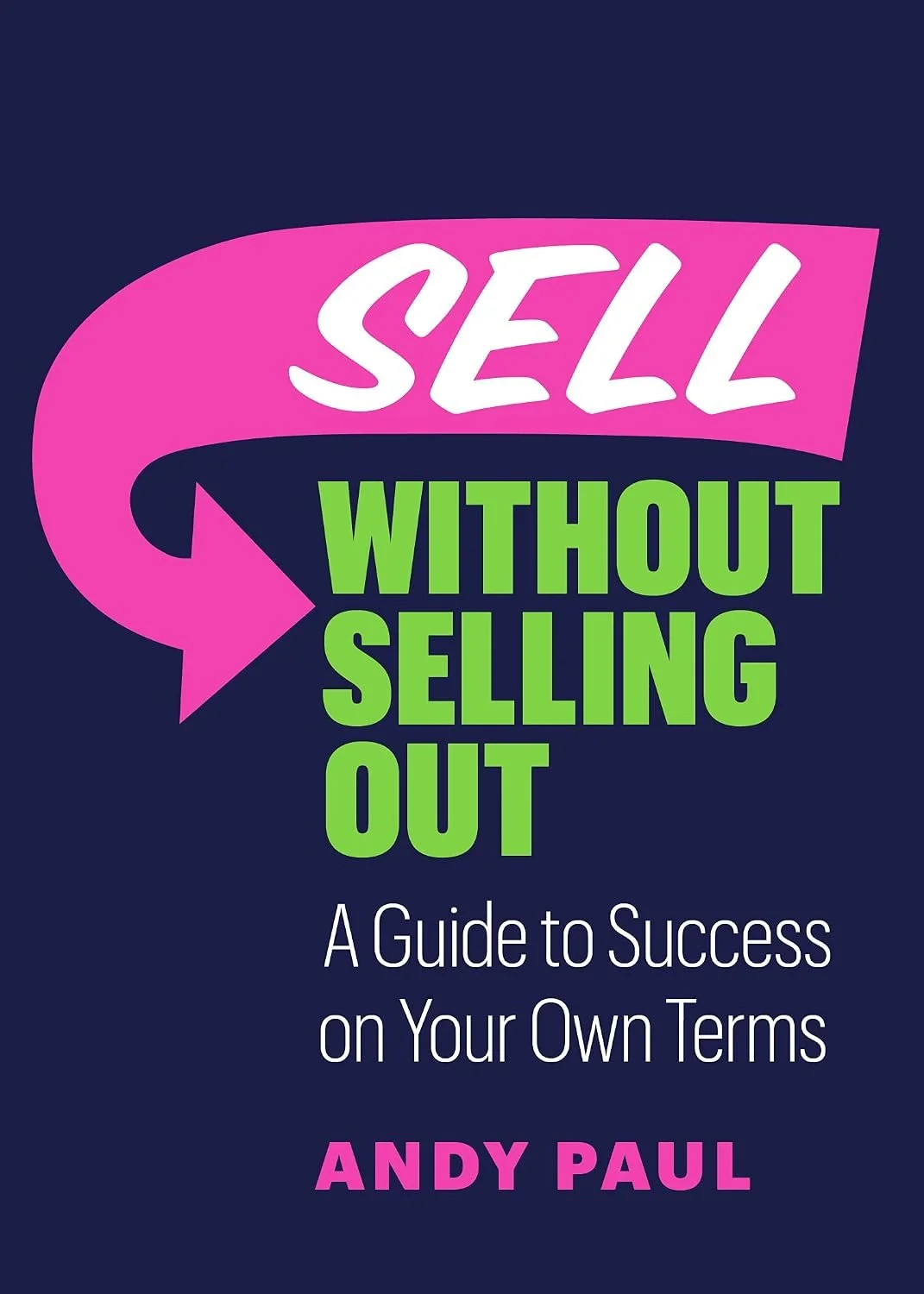
Sell Without Selling Out
That's really this idea that I mentioned before about selling a sales conversation. Let's have a change conversation because, to that point, I wrote about what you just talked about, and Sell Without Selling Out was that I spent a chunk of my career working with these startups. Where often we didn't have the product yet. My job was to go out to one company. I got hired to start a division of the company that was selling.
They were the offense company. I was starting the commercial side of things, and the CEO said, “Go sell to whoever you want as long as they pay for the development of the product.” I'm like, “Okay.” That's what I did. I didn't have a product to sell. When you have to put yourself in that situation where you do not have a product to sell, you really open, first of all, it's way more fun than actually selling an actual product.
B is, you have to be more creative and more innovative and more thoughtful about how do I surface something that resonates with them that represents a change from what they're currently doing that they would perceive to be a great investment opportunity, great way to allocate their capital. That is the perspective that every seller should have on every single deal. I wrote that in Sell Without Selling Out. it approaches every deal as if you do not have a product to sell. I'm there to help you think about the outcomes that you want to change and how to achieve them.
For the folks who help us with editing, that's the blurb, by the way, for the podcast. Approach everything you do in selling as if you have no product to sell. I love that idea, Andy. Immediately, what it takes away from us is that most of the time, based on the way our brains work, I'm just waiting to interrupt you. I'm talking to a buyer. The way the brain works, they speak at 125 words a minute. My brain processes at 400 words a minute. I cannot stay focused. I just want to interrupt. All I want to do is pitch a product. Particularly the newer I am in sales, that's all I know how to do. I do not have business acumen. Maybe I have this much industry acumen. I learned my product because that's what they taught me before they unleashed me.
Again, not to hike my books, it was part of my just basic philosophy through all my books. I thought about self-outselling out is, there's four core strengths or skills you need to have as a human. Connection, curiosity, understanding, generosity.
That's great.
Your ability to connect with another human being to build trust. The trust leads to influence. Curiosity, not just the superficial curiosity that we see in discovery questions, really to connect with them, really understand where it is they want to go and where they see across the spectrum of stakeholders, where they see the opportunities in their business, which is not about fixing a problem. It's about what's the opportunity, which is we have to go away from being so problem-centric to being opportunity-centric. You have to fully understand it.
I talk about the book. It's certainly true in my experience. Again, being the underdog and the vast majority of deals that I've won, convenience, big tech companies of the day are, and ask the customer, “Why did you choose us?” I said, “It’s because you're the only one that made us feel understood.” You have to bridge that gap between knowing something and really truly understanding it. You have to be generous in how you help the buyer make these decisions to make change. People do not always connect generosity with sales. It fundamentally means that you're giving without the expectation of getting something in return.
Win Rates: People don't always connect generosity with sales, but it fundamentally means that you're giving without the expectation of getting something in return.
Tough, right?
It's not like you're not motivated to get them to do business with you, but it's just not a quid pro quo that's so pervasive in sales. If you can do that, even without business acumen, you can go and have a great conversation with someone. Business acumen will make it much better over time. As a new seller, I'm going to think back to my own experience because I graduated college with a history major. I know nothing about business to speak of. When I got a job, everything seemed to be in sales, right?
Other than having no discernible skills, curiosity a mile wide. I am very competitive. My first year selling computer systems, on-premise big computer systems, 50 years ago, was just listening to these CEOs and these founders of these companies that I'm assigned to talk to me about their business. What I found was that if I just showed up and was authentically curious. I was asking questions that just were not designed to elicit a response of, "Are they a fit for us or not?"
They spent as much time with me as I could, as I needed. No, never had anyone throw me out. Here's a kid. I was 21. Seriously, I looked 16. Yet they gave me their time because I showed up connected, and I was sincerely interested in understanding what was happening. I was willing to ask the questions, and it pays dividends. This gets back to the topic I talked about before is we really need to think, and again, I wrote about self-hustling. Expanding on what I'm working on now is moving beyond this idea of persuasion, really to think about influence.
Persuasion Vs. Influence: Measuring Real Impact
What's the difference?
One is coercive. The other is helping people change their point of view in a more collaborative fashion. There's a book by The Catalyst written by this professor from UPenn, Jonah Berger, who said that found in some research that 100% of human beings instinctively resist being persuaded. If you build trust and the customer says, “Let's talk about that or tell me what you got.” That's different. You're influencing. You can measure influence. Challenge managers tuning in to the show. I challenge managers I work with. Tell me what your win rate is on deals that you didn't influence the buyer's definition of what it is they're trying to achieve.
It's that your win rate is going to be zero. It's very close. It's going to be very low.
As I said, how do you measure your influence? I said, it's very simple. You do not even think of talking about this before. Just create a little simple table. Two columns, three rows. Could be a couple more. The first row is what the buyer's definition of the changed outcomes they want to achieve was before you talk to them? In the second column, you put what their definition of the changed outcomes they want to achieve is now. If there's no gap between the two, you have no influence. It's that simple.
The second row, second line is, what was the buyer's definition of how they wanted to achieve the change before you talked to them? What is that definition now? If there's no gap between the two, you're just competing on features and price. Why do you want to do that? You can actually measure influence. It's tangible. You say, “Let me go look at the deals we're working on right now. It doesn't have to be after the fact.” Their definition of what they want to achieve, their vision of what they're going to achieve. If we have no influence, odds of winning are pretty low.
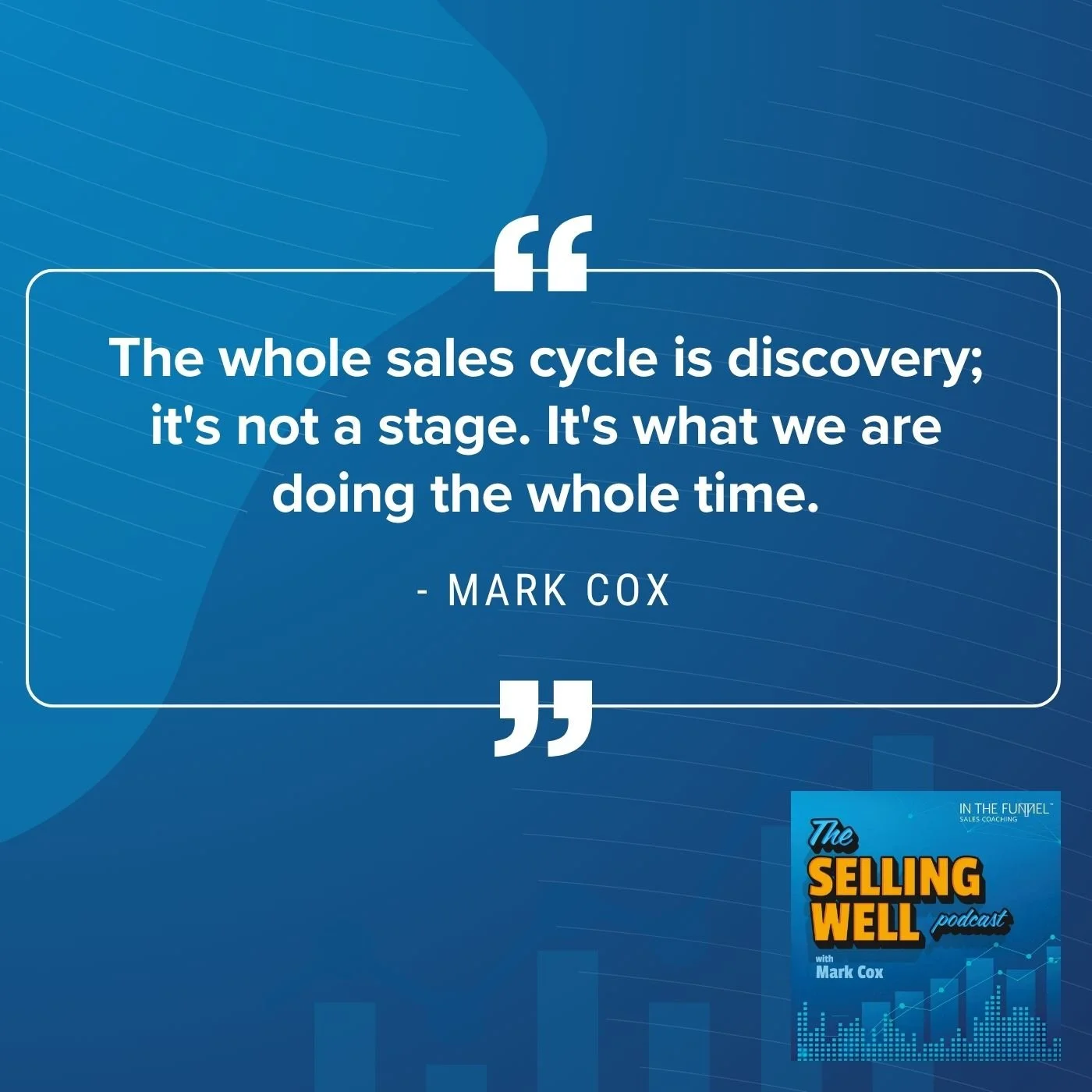
This does lead though, Andy, like this leads a lot of the time to any point how you look at it, somebody's definition of a business case or an ROI, or these are things you work with the client on during discovery. I know you see discovery as a bad word. I do not because for me, the whole lifecycle is discovery. Actually, it's not a stage. It's what I'm doing the whole time.
I agree. You're always learning. Here's where I'll draw the distinction. There's a certain amount of, I'll say, journalistic discovery we all want to do. There's a certain set of facts that we need to understand about the buyer. That's a discovery. Beyond that, we're trying to help the buyer. We're trying to work with the buyer to help them define what it is they want to achieve. What is the opportunity that would come from making a change in their business? That's going to lead to, “There's a business case.” Actually, writing and spelling out in the new materials, there are actually two business cases.
The first business case is what I call a ballpark business case. We're going to get to a certain point, and I'm going to say to the customer, we'd find where you want to go. We're going to learn more. To your point, we're always discovering, so on. Based on where we are now, this is the business case we put together. If we get to the end of this process and we're still within plus or minus viewpoints either way, will you commit today that you're going to make a change? Not that you're going to say goodbye to me, but that you'll commit today that you will make a change.
If they say no, for me, oftentimes that's a disqualifier for them. I do not have time for you right now. Again, my limited inventory as a seller is my time. If I'm going to be as productive as possible. These guys may have to go back to a different status on my pipeline. They're not ready because if I push it from that point, I might get no decision. You have to do this preliminary business because I learned this from one of my early bosses. It's just genius. You weed out things pretty quickly. The thing is, you want to get there as quickly as possible. This is the other part that I think has to be changed.
It starts with this idea that, and again, I wrote about it, it's all about selling out. If I bring this basis forever, if the customers are not trying to make the best decision, they're trying to make a good enough decision. Herbert Simon, Nobel Prize winner, did extensive research on this. I have two types of people. Maximizers, satisficers, people who look at every alternative and make sure they make the absolute best decision. Satisficers, which are people who will look until they find something that satisfies requirements and suffices to meet their future needs. That's actually a lot of people.
It's actually probably more people. It's somewhat situational for business people. If people are looking to make a good enough decision, we're going to look until we find something that meets these requirements, satisfies requirements, and suffices to meet future needs. Where's the urgency? The urgency is I need to be the first to build trust. If I can be the first one to build trust, then I can be the first one to build influence. If I can be the first one to build influence, then I can be the first one to help the buyer define what it is they want to do and have an understanding of it.
They're going to reach that point of satisfaction first with me, then they will with other people. Given what Simon wrote about, we're going to research that until he finds it and satisfies us. We're going to pull the plug. We're going to go for it. I experienced that so many times in my career. Sometimes there was a gap where I basically knew I was going to win the order. Got told I was going to get the order. It might take a while to work through the system. You want to be in that position. Even if it takes another two months to work through contracts and legal and so on.
Of course, once you're through that, that's different.
As a seller, your goal should be that I want to be the first to trust, I'm going to be the first to influence, I'm going to be the first to define change if I can do that. First of all, in this preliminary business case, I'm going to win more often than not. This goes back to what we talked about in the beginning. We're here to win. Our sales processes that are set up are not set up to win. They're set up to complete a series of steps. I wasn't interested in that. I wanted to win.
The Sales Leader’s Mid-Year Pivot
Maybe. Your definition of what you're trying to do is actually my definition of discovery in our process. We've got people tuning in, Andy, like the running sales teams right now. We know most of them, you and I know most of them, are sweating. We know most of them are sweating. We're just finishing the middle of the year, and smart companies are doing a Q3 sales kickoff. Not so smart companies are taking it easy and going light on the kickoff, and they think they can make it up in Q4, and Q4 is just a panic the whole time.
What would one of those leaders running a team of 8 or 10 today say, because they're all experiencing that's a universal problem. When rates are dropping, no decisions, probably increasing, all those bad signs, we forecast a deal, and they went quiet on us. If you've got any trust and influence, people do not go quiet. They'll give you a bad decision, like something happened or the business changed. They will not ignore you.
Very rare.
What would you suggest? It's pretty hard, as much as I'd like to get you back to what you did to me eight years ago and dispute this stuff. It's pretty hard to dispute these things. We want trust. We want influence. What does the leader do right now? They're in the middle of a game. They're in the middle of a year. Maybe they're sweating. They still have some time left in 2026 to make an impact. What would you do if you took over a sales organization right now?
These are longer-term structural things we're talking about. In the short term, I want to look at the people in the deals. Understand whether these are deals we should be working on or not.
There you go.
That, to me, is first. Decide whether we're really in touch with the things that are going to drive the customer to make this decision to make a change. For me, these are these definition points. The buyer. We have this issue that we think buyers still are going to make monolithic changes. Are making monolithic decisions. We're making a product purchase decision. It's like, “No. They're making 4 or 5 decisions first.” The first one was, what's the change you want to make, and how do I get there? Three, what are the obstacles in our way? Four, does the business case make sense? Five, is this the vendor we want to work with?
Those are distinct decisions they have to make that you need to be focused on. How do I win each of those decisions? It starts with, is this something that's really somebody we should be selling to? Do they really belong in our pipeline? If they do, then where are we in terms of building a level of trust and influence to say we're going to have an impact or have the ability to impact those decisions they make? It's talking to the sellers, it's talking to the prospects, it's talking to people within the organization that maybe have been talking to the prospects as well.
You'd be surprised how they get different feedback from the customer. "John's not really doing that great a job with our CEO," or whatever. You just have to get in and investigate what's happening and then make some tough calls. It could be that you've got some good deals that you got the wrong people on and you need to make changes. That's hard, tough. What's at stake is your job and the health of the company and so on. You need to do what's best for the company. Interestingly, these days, too often you say, "We're going to give this to our sellers who've got a 30% win rate." It's like, no, that's not the person to give these deals to.
Chances are, you've got people in the organization who, if they were pointed in the right direction and given the right support, would not really understand what it is they're trying to do. The things I talk about are trying to build this trust and influence. We're trying to help the customer define what it is they're trying to do. We're just not going and saying, "We've got the answer." You may find people much better suited to the job than you and make a mid-course change. I made a career out of bringing people from electrical engineering into sales.
Really? By the way, you wouldn't think traditionally when you think of the attributes of a salesperson that people think of that stereotype. It wouldn't be an actual electrical engineer.
Just to give one example, as one client, that client ran sales for about four years on a two-day-a-week basis and doubled, more than doubled sales. We sold the company for a big chunk of money. We brought a guy in from engineering to be the lead salesperson. He was pathologically shy. I could sit in the lunchroom with him after working with him for years, and he still would not say hi to me. When he talked to the customer, he understood. He understood what it was they were dealing with. He understood their challenges.
He understood where they thought they wanted to go and how we might be able to help them with that. It didn't matter at that point. He just crushed it. Have example after example. I remember one engineer, as I was recruiting to come in to work for me at one point. He said, "I cannot do that." What he means is, "I cannot try to persuade people to buy something they do not want to buy." I said, "That's great, because that's not your job." Your job is to help them identify the opportunities and the better path forward and try to be more efficient or effective or whatever.
I said, "Isn't that what you do as an engineer every day in your designs?" He goes, "Yes, I can do that." One came in, “I took over, sir.” Not quite mid-year. It actually was. It was halfway through the second quarter, just changing people out. We could have kept the course. That wasn't a huge organization. It was five salespeople. I looked at it and said, "I could do this work myself. I can do the work of at least four of these people myself." I did. We then brought in people who could take their place. We started by the end of the year, we were staffed. In the next year, this was an organization we had. I took it over. They had done six million dollars in bookings. When I took over partway through the year, the next year we had about 175 million in bookings.
What? I hope you had a piece of that company.
None of the salespeople were salespeople. Engineers. The number one guy was actually a marketing guy that converted, and he was just dynamite. Again, he wasn't the typical salesperson, but very methodical, really understood what it was we were trying to do, working on big deals that he had never worked on before. He understood what we're trying to do is help this idea of them trying to make a change. They're not trying to buy a product. They're trying to make a change.
Engineering High-Performance Sales Teams
If we can help define what that change is, then we've established influence, and we're on the inside track to win. They crushed it. My advice is to look at the people hard. Do not be afraid to make changes. You may have to pick up the slack yourself a little bit, depending on the size of the organization as a VP. Tough. Go out and do it. If you do not know how to sell a product, that's your problem. Build the team with people who are, call it curious, open-minded problem solvers. I do not want to overdo the problem-solving too much, as curious, open-minded.
Maybe opportunity spotters are the better way, because that's what you're really trying to help the customer do. I say this with all sincerity. In my career selling the better part of a billion dollars, closing, I never once had a customer that said, "We're buying to fix a pain point." We're buying to take advantage of this opportunity that presents itself to ourselves by making a change. In the process, we may be fixing a problem that's the obstacle preventing us from getting where we want to go. It's not the problem that's driving it. It's the opportunity.
It's a better future.
People are to invest in that.
By the way, talk about jumping in deep right off the deep. It's not a minor change. It's suddenly we're just measuring hours in sales productivity. What are the things, by the way, about the sales productivity that's just stuck in my craw the whole time we've been talking? You talked about saying, we might find out we're investing way too much time in the wrong opportunities. One thing that jumps out at me is I think in some cases we're not actually spending enough real time on the most important opportunities.
We'd actually look at it and go, "This thing does have legs. It actually qualifies as an opportunity." Outside of solutioning, we're not actually spending enough time helping the client's influence and earning trust and helping them identify that better future and actually building the business cases with them and actually getting through their internal processes, depending upon who they are. In some cases, we'd find the opposite. Do not actually log time on deals. We do not spend enough time.
We've had enough of the right time. With the right people.
With the right deals.
Doing the right things. This has actually come up several times in conversations I've had with people in the last few weeks. This idea that you have to be selective about who you sell to. Everybody's talking about going to market, and now we've got an AI-driven GTM. When win rates are so low, the issue is not the pipeline. You've got more than enough prospects. I'm winning the average win rate in B2B sales is less than twenty percent. It's not that you do not know prospects. It's that you're not doing a good job of working with the people you have.
If you've really dialed in on your ICP, you're just executing horribly, and there's no excuse for that. You may have to be more discerning within that pipeline, even saying, "Look, we're trying to work too many opportunities. We should be working fewer and doing a better job of it." The vision I like to give people is that you're the bouncer at the head of the velvet rope and the club is your pipeline, and not every new person gets in because as a seller, you've got an inventory of hours. That's all you've got. How are you going to use those in that inventory? Unfortunately, people use it the wrong way. You talk about no decision rates.
We've all had no decisions. I've had very few in my career, but people misunderstand it. They think that status quo is the competition, and it's not. As long as you think it is, you're going to run into this time and time again. When a customer says, "We're going to stick with what we have." What they're not saying is that what we're doing is fine. What they're saying is you didn't convince me that there's a better reason, the reason to do something better. A no decision is a loss. Full stop. We're an offer. The buyer made the decision to not buy. Sellers and managers have to adopt that instead of saying, "Moral victory, there's no decision.”
A no decision is a loss, full stop. The buyer made the decision to not buy.
It didn't go to the competition.
It's like, bulls***, right? You lost because you didn't do a good enough job of helping define where it is they should go and how to get there and make the compelling business case to do that.
Andy, first of all, completely agrees. Secondly, I influenced you to get back into the game. I'm going to take full credit for that from that lunch in New York eighteen months ago. I'm so excited to hear you're working on another book. Team, by the way, we referenced a few times, but Andy's books include Amp Up Your Sales, Zero Time Selling, and one of my favorite books, by the way, that has the best title ever. This is the best sales book title ever. Sell Without Selling Out.
There is no better title ever than that book. By the way, it's also one of my favorite books. It reminds me of the Michael Bungay Stanier book, The Coaching Habit. Great read, easy read, easy to go back to. My books are always dog-eared and highlighted. I still like holding books and highlighting them. The links to all those books are going to be in the episode here, and you and I, as usual, could keep talking for another hour.
I'm surprised it's been almost an hour already.
It's just unbelievable. How do people get in touch with you when they inevitably want to learn more? How do they get in touch with you or follow your best thoughts?
The Future Of Selling In The Age Of AI
As I said, I've taken a bit of a pause. Not a lot of new content on LinkedIn. LinkedIn is probably the best place to message me if you want to connect with me. My website's a little out of action at the moment. Go to my LinkedIn page and message me there if you want to. You can message me at Andy@AndyPaul.com. Those are the best two ways to connect.
Listen, by the way, sabbaticals work. Look at the energy, the enthusiasm, the focus. It's like you never missed a beat. A little break is a great thing. We should all be so lucky.
As I told you when we had spoken a couple weeks ago, it's like, part of it was I looked at and said, "I've been gone for a year, and you guys still have not learned anything." I cannot. Do not be accountable for all of that. I'm trying to fix my little piece here. Just the things that have been a problem prior to every heavy adoption of AI are still a problem. If we're fundamentally doing the wrong things, AI is not going to fix it. If we're so focused on pushing and persuading people to buy our products, and we're just going to use AI to amplify those motions, our win rates are not going to get better.
If we're fundamentally doing the wrong things, AI is not going to fix it. If we're so focused on pushing and persuading people to buy our products, our win rates aren't going to get better.
We're going to find ourselves in a situation where, if the win rates continue to be low, why do they need you at all? If you can only win one out of every five deals, the machine can do that. We do not need you for that. Sellers are digging themselves a hole. There is research that Gartner put out that said, “Look, in 2022, everyone will be self-service.” They said in 2030, I think 75% of B2B buyers predicted that they'd want a human involved, that they would not want a pure AI interaction. That mirrors other research in other fields.
Trust in AI only goes so far, and we all have good reason not to trust it or to be completely trusting, let's say. There's a role for humans that I've always advocated. That role of that selling's become more human, not less. It's certainly successful selling. You have to continue to think for yourself. You can be creative and innovative. Use the tools to provide you with ideas and ways to think more broadly. That's one of the beauties of AI. I use it for that, but there's still a big role for humans if we're doing the right things. Again, what would be the focus of this book is just, yeah, these are things that real sellers have been doing. The working title of the book is Real Selling.
Great title.
It presupposes that something is not real. I believe that people who are selling with low win rates, that's not real selling. That's unreal selling. It has no value to them really and no value to their customers. Let's change that. There are a lot of things to change. You can pick just a few and start, and they'll make such a qualitative difference and a substantive difference in your enjoyment of the process and the buyer's experience with you. At the end of the day, as long as the human's involved, the buyer's experience with that human is going to be the primary reason that they make their decision.
I completely agree. Listen, we're going to hear lots more about that. Folks, we've got something exciting coming. We'll share more in the coming weeks. Andy, just a great discussion again. As always, I learned something when I'm chatting with you, and it's super fun. Thank you. We didn't even get a chance to talk about the World Cup. Next time.
Spain won.
Spoiler alert, if you recorded these games.
I have all this more free time in my day now because I'm on schedule and watch all these matches. Now the Tour de France is taking up a lot of it. That's ending soon too. I can be more productive again shortly.
Actually, we've had a couple of guests too who got the chance to win the lottery to do the legs of the tour. Punishing. The elevation on some of those legs. Just punishing.
I'm doing some of those on my Zwift.
How fun.
It's not. The scenery is not quite as good in my room as opposed to being outside the Alps. Still fun.
Andy, thanks again. We'll be chatting soon.
Thank you very much.
Team, thank you. As always, thanks for joining the show. We run this show to try and improve the performance and professionalism of B2B sales because we think that, in doing so, we actually improve the lives of everybody in sales. Thanks for tuning in to the show. If you like this episode, by the way, please like and subscribe to the show because that's actually how we get great guests like Andy to join.
If there are ideas you have for the podcast that can help us make this better, we love constructive criticism. My email is MarkCox@InTheFunnel.com, personal email. I respond personally to every bit of constructive criticism, saying thank you first. By the way, the way we run the podcast now is a function of some of the feedback you've given us already. Thanks for joining. We'll see you next time on the show. Take care, everybody.
Important Links
About Andy Paul

Andy is the author of three Amazon best-selling books on B2B selling:
Sell Without Selling Out: A Guide To Success On Your Own Terms
Amp Up Your Sales: Powerful Strategies That Move Customers To Make Fast, Favorable Decisions; and,
Zero-Time Selling: 10 Essential Steps to Accelerate Every Company’s Sales.
He previously was the creator and host of two top-rated sales podcasts, The WIn Rate Podcast and Sales Enablement with Andy Paul. With more than 1,200 episodes produced and millions downloads, Andy’s podcasts remain a go-to resource for sales leaders and top sales producers.